
AU Bank vs Standard Chartered: Dining and Grocery Caps Compared Line by Line
5 November 2026 · BestCard Editorial Team
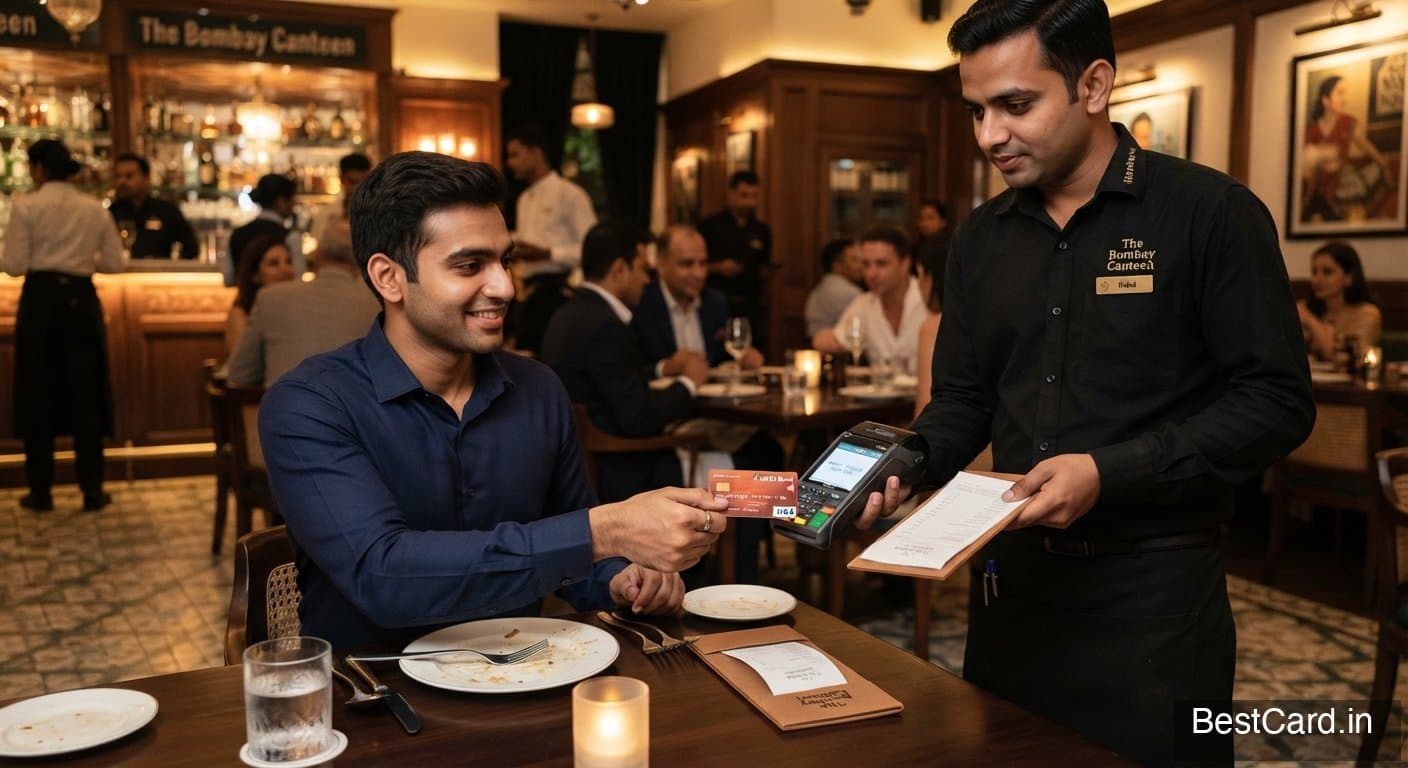
If most of your card spending is groceries and eating out, this pair is worth reading closely. Both banks have cards for those categories, but the caps, fees and conditions differ enough to change which one pays you more.
Dining
AU's LIT is lifetime-free and pays 5% on dining and online shopping, capped at ₹500 a month in each. Altura costs ₹199, waived at ₹40,000, and pays 4% on dining with a ₹1,000 monthly cap. Standard Chartered's Platinum Rewards costs ₹250 and lists dining and fuel at 0.83%, which is far below AU. The DigiSmart gives 10% on dining but caps it at ₹150 a month. AU leads on dining.
Groceries
SC Manhattan costs ₹999, waived at ₹1.2 lakh, and pays 5% on groceries, with a ₹1,000 minimum bill and a cap around ₹500 a month. AU Altura pays 3% on groceries (₹1,000 monthly cap) for ₹199, and Laksya at ₹1,000 pays 1.25% on groceries. Manhattan wins on the rate; Altura wins on cost. For a household that spends ₹10,000 a month on groceries, work out whether 5% with a cap beats 3% with a larger one.
Online shopping
Standard Chartered Smart costs ₹499 and pays 2% online, capped at ₹1,000 a month, with 1% on utilities. DigiSmart costs ₹588 a year (billed ₹49 a month) and pays 10% on online shopping up to ₹1,000 a month, aimed at Blinkit, Zomato, Ola and INOX. AU's CheQ pays up to 12% on online shopping and utilities, lifetime-free, capped at ₹5,000 a month. AU leads clearly.
Premium cards
SC Ultimate costs ₹5,000, needs ₹150,000 a month of income, and pays 5 points per ₹150 on everyday spend. AU's Zenith costs ₹7,999 with 5% on travel and 4% on dining (₹1,500 monthly cap), and Zenith Plus offers 16 lounge visits of each type a year. These are different bets: Ultimate gives steady points on all spend, while Zenith pays on travel and dining specifically. Ultimate is simpler; Zenith Plus offers more lounge visits.
Lounge access and relationships
SC's Priority Visa Infinite is free for Priority Banking customers, and Beyond costs ₹25,000 a year with unlimited lounges. AU's lounge access is spend-conditioned but built into mid-priced cards. If you already bank with Standard Chartered at that level, the relationship cards can be good value; if you do not, AU is easier to buy.
Reader verdict
A diner who wants low fees should take AU LIT or Altura. A grocery-heavy household should compare Manhattan with Altura. A high-income buyer wanting one card should look at SC Ultimate. A traveller wanting lounge volume should look at AU Zenith Plus.
Where to read next
The AU Bank credit cards guide and the Standard Chartered credit cards guide cover every card. For a wider look at SC, see the Standard Chartered cards lineup guide.
Related reading
- Yes Bank vs AU Bank Credit Cards: ₹299 Lounge Cards Against Yes Bank's Unlimited Reserv
AU puts spend-gated lounge visits on ₹199 and ₹299 cards, while Yes Bank offers unlimited access at ₹2,499. Fees, forex and income floors compared card by card.
- AU Bank vs HSBC Credit Cards: 12% on a Cap or 10% With a Bigger Budget
AU's CheQ and LIT lead on headline RuPay cashback; HSBC Live+ and TravelOne cost more and need higher income. See which suits your monthly spend.
- Axis vs AU Small Finance Bank Credit Cards: Does AU Zenith Plus Undercut Atlas?
AU's Zenith Plus offers 16 domestic and 16 international lounge visits for ₹4,999, a pointed challenge to Axis Atlas. We compare it and the cheaper tiers.