
Credit Card Video KYC: How It Works and How to Pass
27 May 2026 · BestCard Editorial Team
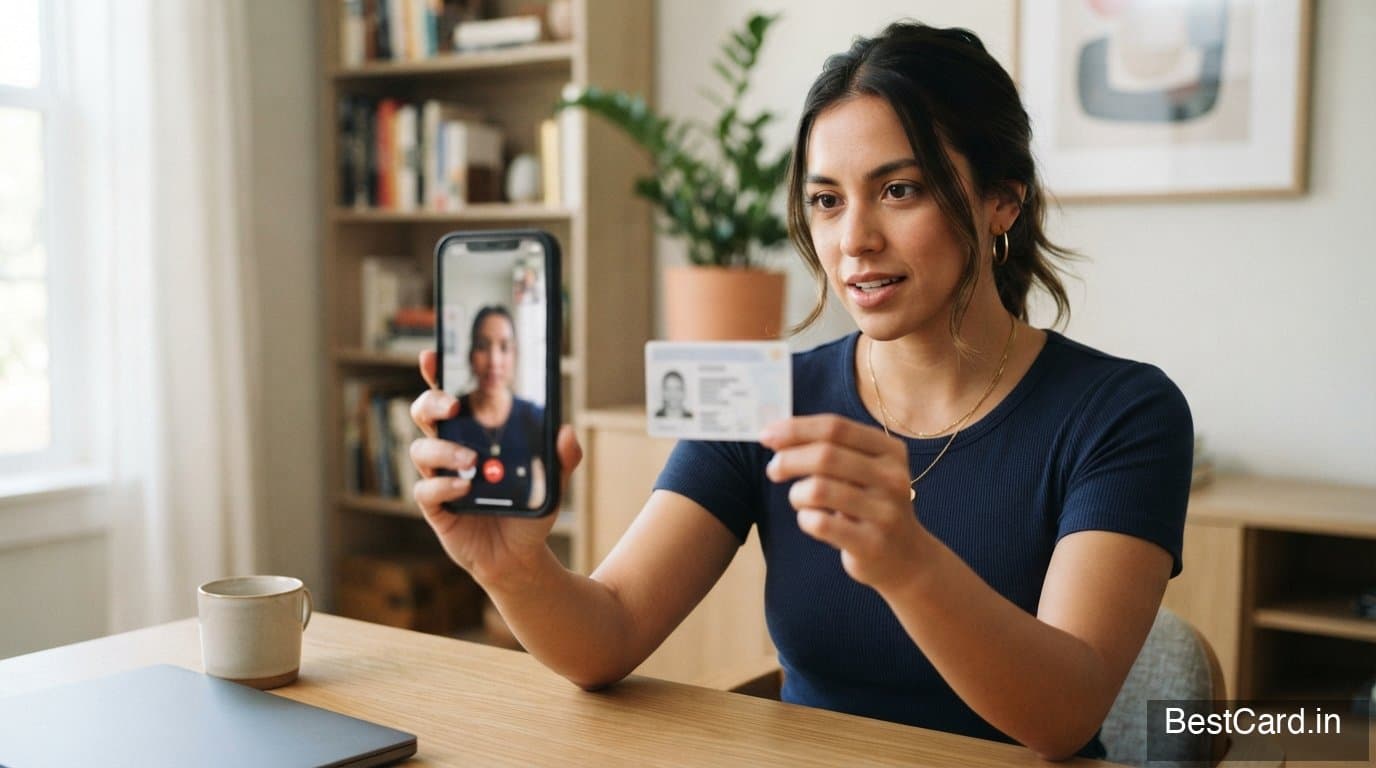
Not long ago, a credit card application meant a bank executive visiting your home or office to check your documents. Today most issuers offer video KYC, where an officer verifies you on a live video call. It is quicker, but it fails more often than people expect, usually over small things. Here is how it works.
What video KYC is
Video KYC is a live, recorded video interaction between you and a bank official, used to confirm your identity and address. RBI's KYC rules allow regulated lenders to do this, and banks use it for new credit cards, especially when you apply fully online. It replaces the physical visit, not the checks behind it: the bank still verifies your PAN and Aadhaar details against official records.
What you need before the call
- Original PAN card in your hand, not a photocopy or a screenshot. The officer may ask you to show it clearly to the camera.
- Aadhaar, linked to a mobile number you can access, since the bank may send an OTP or use an offline Aadhaar file.
- A blank piece of paper and a pen, because you may be asked to write your name or sign and show it on camera.
- A smartphone or laptop with a working camera and microphone.
- A stable internet connection. A dropped call usually means starting again.
- A quiet, well-lit room. The officer must clearly see your face and the documents.
What happens on the call
- You open the link sent by the bank and allow camera, microphone and location access.
- The officer confirms your name, date of birth and application details by asking simple questions.
- You show your PAN card and any second document, front and back.
- The officer may take a live photo or screenshot of you holding the documents.
- Your location may be recorded, because the bank needs to confirm you are in India for the call.
- You may get an OTP to enter, which you share only inside the app or page the bank opened.
The whole thing is recorded and stored by the bank as part of your KYC file.
Why video KYC fails
- Name mismatch. "Rajesh K. Sharma" on one document and "Rajesh Kumar Sharma" on another can stall the process.
- Poor lighting or a blurry camera, which makes the PAN card unreadable.
- Wearing a cap, mask or sunglasses, or sitting against a bright window so your face is a silhouette.
- A moving background or someone else speaking, which can look like prompting.
- Location permission denied, which many systems treat as a failed check.
- Different details than your application, such as a changed employer or address.
Safety rules
Video KYC is also a favourite theme for scammers. Keep these in mind:
- Use only the link from the bank's official app, website or registered SMS and email. Do not trust a link sent from a personal number.
- The bank will never ask you to share your card PIN, CVV or banking password on a KYC call.
- If someone calls you first, claiming to be a bank officer and asking for an OTP, hang up and call the bank's published number. Our guide to OTP fraud and scam awareness has more.
If you would rather avoid it
Some banks offer an in-person verification, a physical visit or a tie-up with a courier agent, though it tends to be slower. Existing customers of the bank can sometimes complete the process through net banking or the mobile app with a one-time check, because the bank already holds a verified KYC file. For the document list itself, see documents required for a credit card in India.
The bottom line
Treat video KYC like a short interview: original documents, good light, steady internet, and the same details on every form. Do that and it is usually over in minutes, and your card dispatch can start the same day. To compare cards before you apply, see our guide to the best credit cards in India.
Frequently asked questions
How long does a credit card video KYC take?
The call itself is usually a few minutes. The wait for an available officer is what varies, so choose off-peak hours if the bank lets you schedule.
What if my video KYC is rejected?
You can usually retry, and the bank will tell you the reason, such as a poor connection or a mismatch in details. Fix that point and redo the call, or ask for a physical verification instead.
Is video KYC safe?
It is a regulator-permitted process and the call is recorded by the bank. Use only the link sent from the bank's official channel, and never share an OTP with anyone who contacts you first.
Related reading
- Documents Required for a Credit Card in India (2026)
The exact documents banks ask for when you apply for a credit card in India: ID, address, and income proof for salaried, self-employed and first-time applicants.
- Credit Card Lost or Stolen Abroad? What to Do, Step by Step
Lost your card overseas? Block it, call your issuer, use the network's emergency replacement and know your liability. A calm checklist for travellers.
- Festive Sale Credit Card Offers: Read This Fine Print First
Festive card offers promise 10% off or 5X rewards, but caps, exclusions and returns can shrink the savings. What to check before you buy.