Direct Bank Swipes vs. Priority Pass: Decoding Your Credit Card's Lounge Access Mechanics
6 May 2026 · BestCard Editorial Team
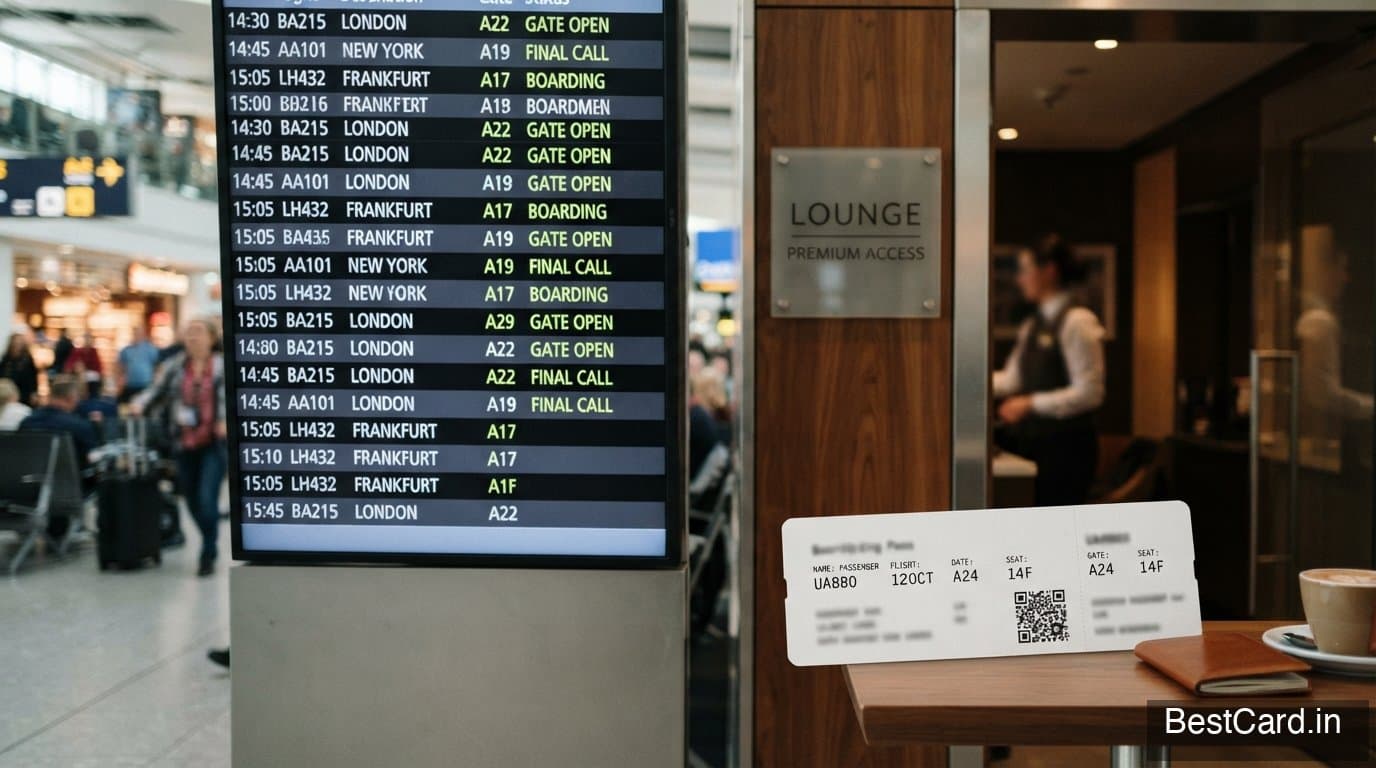
Ask most cardholders how their lounge access actually works and you'll get the same answer: "I just show my card." Underneath that simple gesture, though, there are at least three completely different mechanisms in play, and which one your card uses determines how reliable, how global, and how easily it can be revoked or changed.
Mechanism one: direct bank swipe
This is the newest and increasingly common model. Your physical credit card itself is registered with a specific lounge or lounge chain under a contract the bank negotiated directly. You show the card, the lounge scans or swipes it, and the system checks your eligibility against the bank's own database in real time — including any spend-threshold conditions layered on top. There's no separate membership card, no app, no third-party network. The upside is a single, seamless swipe; the downside is that eligibility rules can change without warning, since the bank controls both the contract and the terms with no aggregator standing between you and a rule change.
Mechanism two: DreamFolks-style aggregator networks
Here, your card is linked to a broader network — DreamFolks is the dominant one in India — that has separately contracted with lounges across many airports and even internationally. Access usually happens via a QR code generated in an app or sent by SMS, scanned at the lounge counter. The advantage is breadth: a single aggregator relationship can cover dozens of airports a bank could never negotiate with individually. The trade-off, as covered in our piece on the DreamFolks transition, is that banks are increasingly peeling high-traffic airports away from this model into direct contracts, shrinking what the aggregator still covers.
Mechanism three: Priority Pass membership
This is the oldest and most globally recognized model, mostly reserved for premium and super-premium cards. Your card entitles you to an actual Priority Pass membership — a separate physical or digital card with its own number — that works at over a thousand lounges worldwide, entirely independent of which bank issued your credit card. Because Priority Pass is a standalone global membership rather than a bank-specific arrangement, it tends to be the most consistent option for international travel, though banks increasingly cap the number of complimentary Priority Pass visits per year even on premium cards.
Why the mechanism matters more than the marketing copy
A card's marketing page will just say "airport lounge access," but the mechanism behind that phrase determines what happens when something goes wrong. A direct bank swipe that fails at the counter can often only be resolved by the bank's own customer service since no third party is involved. A Priority Pass failure can usually be resolved through the globally staffed Priority Pass helpline instead. Knowing which mechanism your card uses before you travel — not after a lounge rejects you — saves the argument at the counter.
How to find out which one you have
Check your card's welcome kit or the benefits section of your issuer's app: if it mentions a separate Priority Pass number, you have the membership model; if it references a QR code or a partner app, you're on an aggregator; if it simply says your card itself grants access at named lounges, you're on a direct contract. For a broader look at which network-level perks stack on top of whichever mechanism your bank uses, see our guide on network-level lounge perks from Visa, Mastercard, and Diners Club.