Secured vs Unsecured Credit Cards: Which Should You Get
27 November 2024 · BestCard Editorial Team
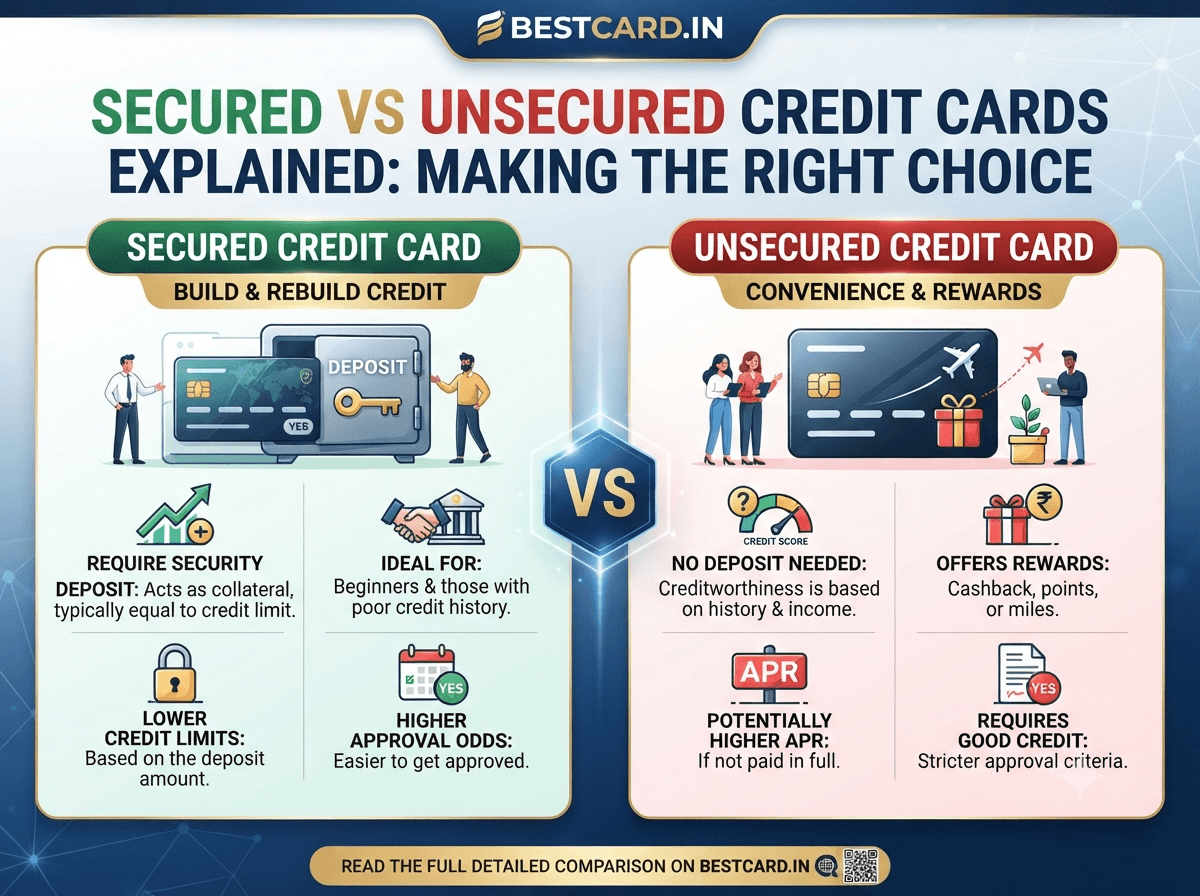
The difference between a secured and unsecured credit card comes down to one thing: collateral. A secured card is backed by a fixed deposit you open with the issuing bank, and your credit limit is set as a percentage of that deposit. An unsecured card is issued purely on your income and credit history, with no deposit involved.
Why anyone chooses secured over unsecured
Secured cards exist for people who'd otherwise get rejected — thin credit files, low or irregular income, or a recent credit history that's still recovering from a rough patch. Because the bank's risk is covered by your own FD, approval odds are dramatically higher, often near-automatic, and the same card still reports to CIBIL every month like any unsecured card would.
The trade-offs that matter
Your money is locked in the FD for as long as you hold the card, earning FD interest rather than sitting liquid — a real opportunity cost if you need that cash for something else. Credit limits are also capped to your deposit size, so a secured card won't scale the way an unsecured card can as your income grows; you'll eventually want to graduate.
When secured is the better call
If you're new to credit entirely, rebuilding after a default, or simply can't clear the income bar for an unsecured card yet, a secured card is the fastest legitimate way to start building a credit history — 6 to 12 months of on-time payments on a secured card is usually enough to get approved for an unsecured card afterward.
Where to go from here
Read our dedicated guide to FD-backed secured cards for issuer-specific details, and if this is genuinely your first card, choosing your first credit card walks through the decision from scratch.