Credit Card Annual Fee: When Should You Pay It?
28 April 2026 · BestCard Editorial Team
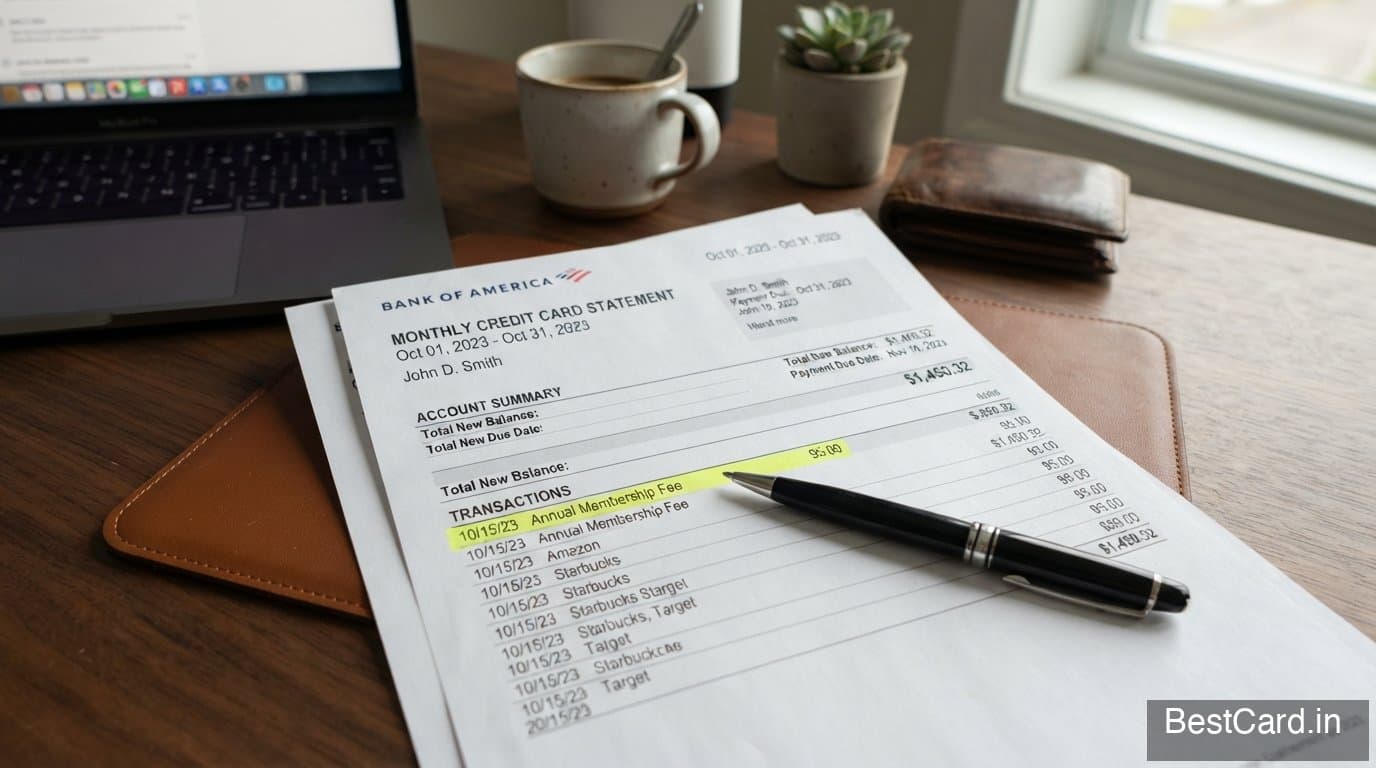
Most advice on annual fees is about how to get them waived. That's useful, but it skips a more basic question: should you even be trying? Sometimes chasing the waiver costs you more than just paying the fee.
When paying outright is the smarter move
If you're ₹8,000 short of a ₹3 lakh spend threshold in November with your renewal in January, don't manufacture spend to close the gap. Buying gift cards you don't need or moving planned next-year spend earlier just to hit a number is spending money to save money — the fee you're dodging is often smaller than the cost of forcing the spend. In that situation, just pay the fee.
The same logic applies if the card's benefits already clear the fee on their own. A card with a ₹5,000 annual fee that hands you a ₹4,000 milestone voucher, decent lounge access, and a fuel surcharge waiver you actually use has already paid for itself before you factor in any waiver at all. Chasing the waiver on top is a bonus, not the point — don't distort your spending to get it.
When to avoid a fee-bearing card altogether
Early in your credit journey, before you have a year or two of actual spend data on yourself, a fee-bearing premium card is a bet on a spending pattern you haven't proven yet. If you don't know whether you'll consistently spend ₹40,000+ a month, a card that only earns back its fee at that level is a gamble. Start with a no-fee or low-fee card, learn your real pattern for a year, then upgrade with actual data instead of a guess.
This is also the case if your spending is genuinely lumpy — heavy in wedding season, light the rest of the year. A card built around consistent monthly spend to unlock its value won't reward that pattern, waiver or not.
The sunk-cost trap
Once you've paid a fee, there's a strong pull to keep spending on that card to "earn it back" — even after it's clear the card doesn't fit how you actually spend. That's sunk-cost thinking. The fee is gone either way; more spend on a mismatched card doesn't undo that, it just adds to it. If a card isn't working for your pattern, the right move is to stop using it or downgrade, not to chase more transactions to justify a decision already made.
A related version of this: some cards, like the SBI Card range, offer waivers tied to spend thresholds that reset each year. Deciding in month one whether that threshold fits your realistic annual spend — rather than in month eleven when you're scrambling — avoids both the manufactured-spend problem and the sunk-cost spiral.
A simple rule of thumb
Before your renewal date, do the math once: total benefits you actually used this year, versus the fee. If benefits win comfortably, pay the fee and move on. If it's close, decide based on next year's realistic spend, not this year's leftover threshold. If it's a clear loss, downgrade rather than chase a waiver you'll probably miss anyway.
Where to go from here
For the mechanics of how fee waivers and joining fees actually work, see credit card annual fee waivers explained and joining fee vs annual fee.