
Axis Bank Cashback Credit Card Review: 5% Online With a Cap You'll Rarely Hit
19 May 2026 · BestCard Editorial Team
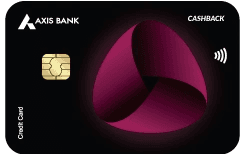
The Axis Bank Cashback Credit Card is exactly what the name says: a direct-cashback card with no points, no conversion tables and no redemption catalogue. You get 5% back on online spends, 1% on almost everything else, and the money lands on your statement automatically. It's aimed at people who shop online regularly and want a predictable return without thinking about it. The short verdict: the 5% online rate with a roomy ₹4,000 monthly cap is the real draw, and everything else about the card is deliberately plain.
Fees and eligibility at a glance
The card has a ₹1,000 joining fee and a ₹1,000 annual fee, and the fee is waived once you spend ₹4 lakh in a year. That's roughly ₹33,000 a month, achievable if this is your main card but a stretch if it only handles your online orders. Eligibility asks for a credit score of 720 or above and a minimum monthly income of ₹25,000, with salaried and self-employed applicants aged 18 to 70 accepted. It runs on Mastercard, the forex markup is the standard 3.5%, and interest on revolved balances is listed at 3.5% a month, so like any cashback card it only makes sense if you pay in full.
Rewards and how they actually work
There are three tiers. Online spends earn 5% cashback, capped at ₹4,000 a month. Utility payments earn just 0.5%, capped at ₹100 a month. Everything else earns a flat 1% with no cap and no category restrictions.
The online cap is the headline number, and it's generous. To earn the full ₹4,000 you'd need about ₹80,000 of online spend in a single month, which very few households reach. In practice it's a ceiling you'll rarely touch, so for most people the effective rate on online shopping really is 5%. Someone putting ₹15,000 a month online and ₹20,000 offline would earn ₹750 plus ₹200, about ₹950 a month or ₹11,400 a year, and at ₹4.2 lakh of annual spend they'd clear the fee waiver too.
The utility rate is the odd one out. At 0.5% it's half the base rate, and the ₹100 cap is reached at ₹20,000 of bill payments. Pay your electricity, broadband and phone bills with a different card.
Cashback is credited as a statement credit with no redemption fee. There are no points to expire and nothing to claim.
Fuel and the small print
The card includes a 1% fuel surcharge waiver, capped at ₹400 per statement cycle, which applies automatically at the pump with no registration. Cash withdrawals cost 2.5% of the amount, minimum ₹500. That's about it. There's no lounge access, no welcome benefit, no milestone bonus and no insurance cover. Axis has built a cashback card and left out everything else.
How it compares with Axis ACE and SBI Cashback
Axis ACE is the obvious in-house alternative. It costs ₹499 and is waived at ₹2 lakh of annual spend, half the Cashback card's threshold. ACE pays 2% on general spend, double the Cashback card's 1%, plus 4% on online shopping and 5% on bill payments made through Google Pay. The catch is that ACE's bonus categories share a ₹500 monthly cap, so on online spend it stops being competitive beyond roughly ₹12,500 a month. If most of your spending is offline, ACE wins comfortably. If you spend ₹20,000 or more online every month, the Cashback card's ₹4,000 cap gives it a clear edge.
SBI Cashback is the closest like-for-like rival: 5% on online spend, 1% offline, and a ₹999 fee waived at ₹2 lakh. The difference is the cap. SBI limits online cashback to ₹2,000 a month, which you hit at ₹40,000 of online spend, while Axis allows double that. SBI's lower waiver threshold suits moderate spenders. Axis's higher cap suits heavy online shoppers.
What's genuinely good about this card
The ₹4,000 monthly online cap is unusually roomy for a mid-tier card, and it means the 5% headline rate holds up in real use. The 1% base rate is uncapped, so offline spend never stops earning. Cashback arrives as cash on your statement, so there's no point valuation to second-guess and no ₹99 redemption fee eating into small balances. The fuel surcharge waiver works without registration. And at ₹1,000 a year, the card undercuts many cashback cards in its tier, with a waiver route if you use it heavily.
Where it falls short
The ₹4 lakh waiver threshold is high for a ₹1,000 card, especially when ACE and SBI Cashback both waive at ₹2 lakh. The 1% offline rate is ordinary. Utility payments earn less than the base rate. The 3.5% forex markup rules it out for international spending, and the complete absence of a welcome benefit or lounge visits means there's nothing here beyond the cashback itself.
Who this card actually makes sense for
The Axis Bank Cashback card suits someone who spends ₹15,000 or more a month online, wants the simplicity of straight cashback, and is likely to clear ₹4 lakh of total annual spend. It works well as the online half of a two-card setup, paired with a card that pays more on offline spend and bills. If your online spend is modest, ACE or SBI Cashback will give you a similar or better return with an easier fee waiver.
Where to go from here
For the wider field, see our best cashback credit cards in India for 2026. If you want to understand how monthly caps change a card's real return, read credit card reward caps explained. For the rest of the Axis lineup, the Axis Bank credit cards guide is the place to start.
Related reading
- Axis Bank Airtel Credit Card Review: Big Cashback on Airtel Bills, Not Much Else
An honest review of the Axis Bank Airtel Credit Card: 25% cashback on Airtel recharges and bills, 10% on Airtel Thanks partners, a low ₹500 fee, and the caps that limit it.
- Axis Magnus for Burgundy Review: The Invite-Only Card Worth Chasing?
A look at Axis Bank's Magnus for Burgundy Credit Card — its Travel EDGE value, unlimited lounge access, and why you can't just apply for it.
- Samsung Axis Bank Signature Credit Card Review: Great for Samsung Upgrades, Thin Elsewhere
An honest review of the Samsung Axis Bank Signature Credit Card: 10% back on Samsung purchases within a ₹2,500 monthly cap, partner points, lounge visits, and when Flipkart Axis does better.