
IndiGo Axis Bank Credit Card Review: Entry-Level BluChips for Occasional IndiGo Flyers
8 June 2026 · BestCard Editorial Team
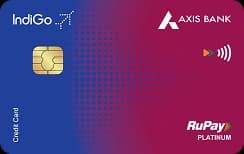
The IndiGo Axis Bank Credit Card is the entry-level half of Axis's co-brand pairing with IndiGo. It earns IndiGo BluChips at an accelerated rate on IndiGo bookings, pays a flat 1% elsewhere, and keeps the eligibility bar low. It's built for people who fly IndiGo a few times a year and want their ticket spend to earn something back without paying for a premium travel card. The verdict is simple: if IndiGo is your default airline, the card earns its keep, and if it isn't, there's very little reason to hold it.
Fees and eligibility at a glance
The standard annual fee is ₹799 with no spend-based waiver, although Axis has been running lifetime-free offers on this card, so check whether one is live when you apply. To stay on the safe side, the math below assumes you pay ₹799 a year. Eligibility is accessible: a credit score of 700, a minimum monthly income of ₹20,000, and an age range of 18 to 70, open to salaried and self-employed applicants. The card runs on RuPay, so it can be linked to UPI for credit card payments at merchant QR codes. The forex markup is 3.5%.
Rewards and how they actually work
IndiGo bookings earn 4 BluChips per ₹100, which works out to a 4% effective return. All other spending earns at a 1% base rate. BluChips are IndiGo's own loyalty currency, and they redeem directly inside the IndiGo booking flow for flights, seat selection and baggage, with no separate redemption fee.
The math is straightforward. Spend ₹20,000 a year on IndiGo tickets and you earn roughly ₹800 worth of BluChips, about the same as the ₹799 fee. Spend ₹50,000 and you're looking at around ₹2,000, so the card is clearly ahead. Below about ₹20,000 of IndiGo spend a year, the fee eats most of what you earn unless your everyday spending on the card is meaningful too.
New cardholders get an IndiGo BluChips voucher and a 6E Eats voucher on card issuance, which gives you a head start before your first statement.
Lounge access and other perks
There's one complimentary domestic airport lounge visit per quarter, but only if you've spent ₹50,000 on the card in the preceding three months. That's around ₹16,700 a month, a real hurdle for an entry-level card used mainly for flights, so treat the lounge visits as a bonus rather than a reason to apply. The card also includes a 1% fuel surcharge waiver at fuel stations across India, capped at ₹400 per statement cycle. Cash withdrawals cost 2.5% of the amount, minimum ₹500.
How it compares with the Premium variant and IndiGo SBI Card
The IndiGo Axis Bank Premium card is the step up. It charges ₹5,000 a year with no waiver, earns 7 BluChips per ₹100 on IndiGo, cuts the forex markup to 2%, and offers 2 domestic lounge visits per quarter (on the same ₹50,000 quarterly spend condition) plus 2 international visits a year through Priority Pass. It also asks for ₹75,000 of monthly income. The extra 3% on IndiGo spend only covers the ₹4,200 fee difference once you're spending around ₹1.4 lakh a year on IndiGo, before counting the lounge and forex benefits. Most occasional flyers are better off on the base card.
The IndiGo SBI Card costs ₹1,499 a year with no waiver and earns 3 BluChips per ₹100 on IndiGo, a lower rate than the Axis card. In return it gives 2,500 BluChips on joining and again each year on renewal, 4 domestic lounge visits a year with no spend condition listed, and lost check-in baggage cover of up to ₹72,000 on IndiGo travel. On fee and earn rate, the Axis card is the stronger pick. SBI's version suits someone who values the renewal bonus and lounge visits that don't depend on quarterly spend.
What's genuinely good about this card
A 4% return on IndiGo bookings is a solid rate for an entry-level co-brand, and better than the IndiGo SBI Card's 3%. BluChips redeem inside IndiGo's own booking flow with no fee and no conversion step. The eligibility bar is low, the welcome vouchers arrive on issuance, and RuPay means the card can double as a UPI credit line. The fuel surcharge waiver is a small but useful extra.
Where it falls short
The card's value depends entirely on flying IndiGo. BluChips can't be used anywhere else, so if you switch airlines or fly rarely, the rewards are close to worthless. The 1% base rate on other spending is unremarkable. Lounge access is gated behind ₹50,000 of quarterly spend, which most people using an entry-level airline card won't reach. The 3.5% forex markup makes it a poor choice abroad, and if you don't get it on a lifetime-free offer, there's no spend-based way to get the ₹799 fee waived.
Who this card actually makes sense for
This card suits someone who flies IndiGo a handful of times a year, spends ₹20,000 or more annually on IndiGo tickets, and wants a low-commitment airline card alongside a general cashback card. It isn't for frequent flyers who'd benefit from the Premium's lounge access and 7% rate, and it isn't for anyone who books whichever airline is cheapest on the day.
Where to go from here
For the upgrade path, read our IndiGo Axis Bank Premium review. To compare airline co-brands across banks, see the best co-branded airline credit cards in India, and for broader options, the best credit cards for domestic flight bookings. The Axis Bank credit cards guide covers the rest of the lineup.
Related reading
- Axis Bank Miles & More Card Review: Direct Lufthansa Miles, Worth ₹3,500?
How Axis Miles & More's direct Lufthansa Miles & More earning, lounge access, and low forex markup stack up against the ₹3,500 annual fee.
- IndiGo Axis Bank Premium Credit Card Review: Worth the Step Up From the Base Card?
The premium IndiGo Axis co-brand card adds lounge access and a 7% BluChips rate for a ₹5,000 fee — here's who that trade actually favors.
- Axis Horizon Credit Card Review: The Mid-Tier Travel Card With Serious Lounge Access
A detailed review of the Axis Horizon Credit Card: 5x EDGE Miles on travel, up to 40 lounge visits a year, 1:1 partner transfers, and how it compares with Axis Atlas and Select.