How Annual Fee Reversal Spend Thresholds Actually Work
29 December 2024 · BestCard Editorial Team
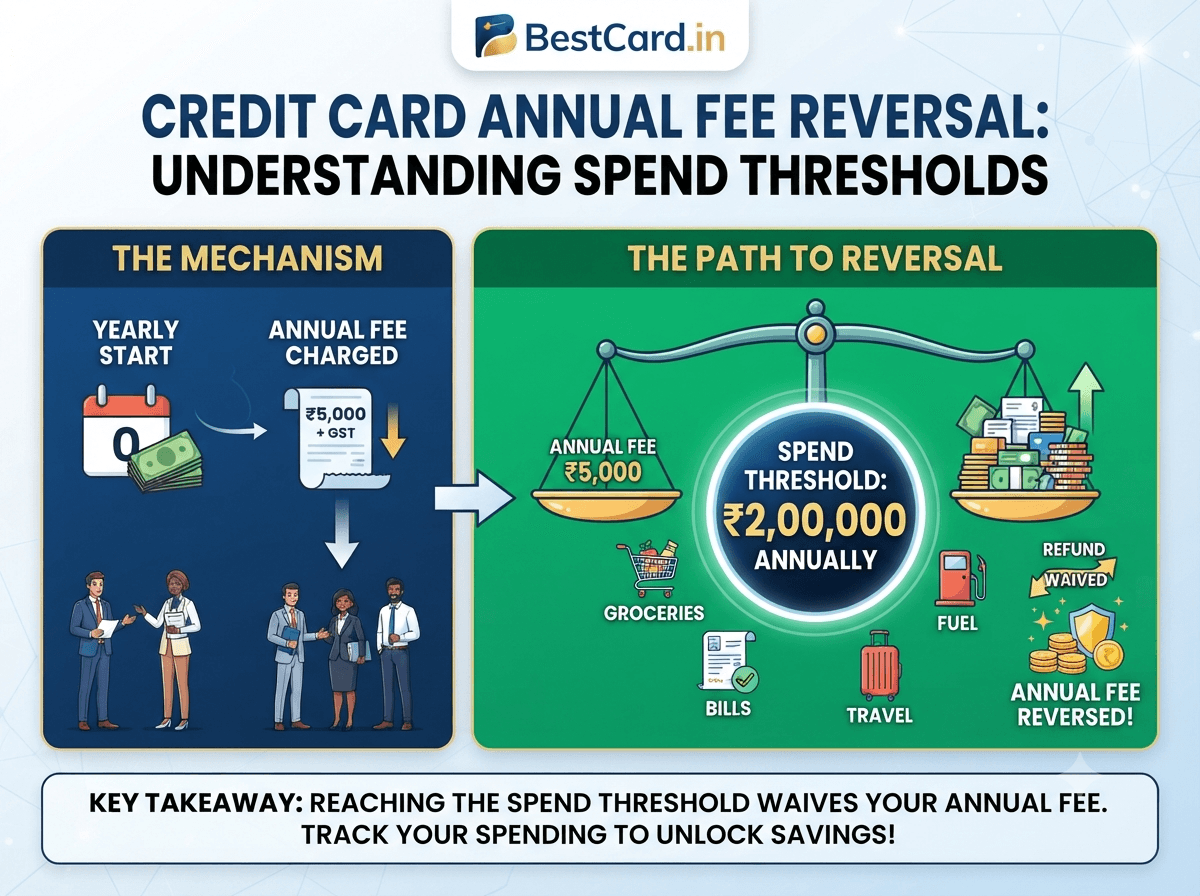
Most premium and mid-tier Indian credit cards advertise an annual fee that's "waived on spending ₹X in the year" — a real benefit, but one with enough fine print that people routinely miss the reversal without realizing it.
What actually counts toward the threshold
The spend threshold usually counts retail transactions only, excluding fuel purchases, wallet loads, rent payments, government transactions, EMI conversions, and sometimes even utility bill payments — categories that generate low or no interchange revenue for the bank. If your spending pattern leans heavily on excluded categories, you can hit the headline number on your statement while still falling short of the actual qualifying spend the bank counts.
Timing matters more than people think
The threshold is measured over your card's fee cycle, typically the 12 months from card issuance or from the last annual fee date — not the calendar year. Spending ₹90,000 spread across a fiscal year that straddles two fee cycles doesn't help if neither individual cycle crosses the required amount; the spend has to concentrate inside one cycle.
What to do a month before your renewal
Check your card's statement or app for a running total against the reversal threshold roughly a month before the annual fee is due — most issuers show this, and if you're close, a planned purchase or two can close the gap before the fee posts. If you've missed the threshold and the fee posts anyway, calling to request a manual waiver based on relationship tenure sometimes works, though it's never guaranteed.
Where to go from here
Read our broader guide to annual fee waivers for reversal mechanics across issuers, and when should you actually pay the annual fee if you're deciding whether a fee-bearing card is worth it at all.