Credit Card APR Explained: What the Number on Your Card Actually Means
30 May 2025 · BestCard Editorial Team
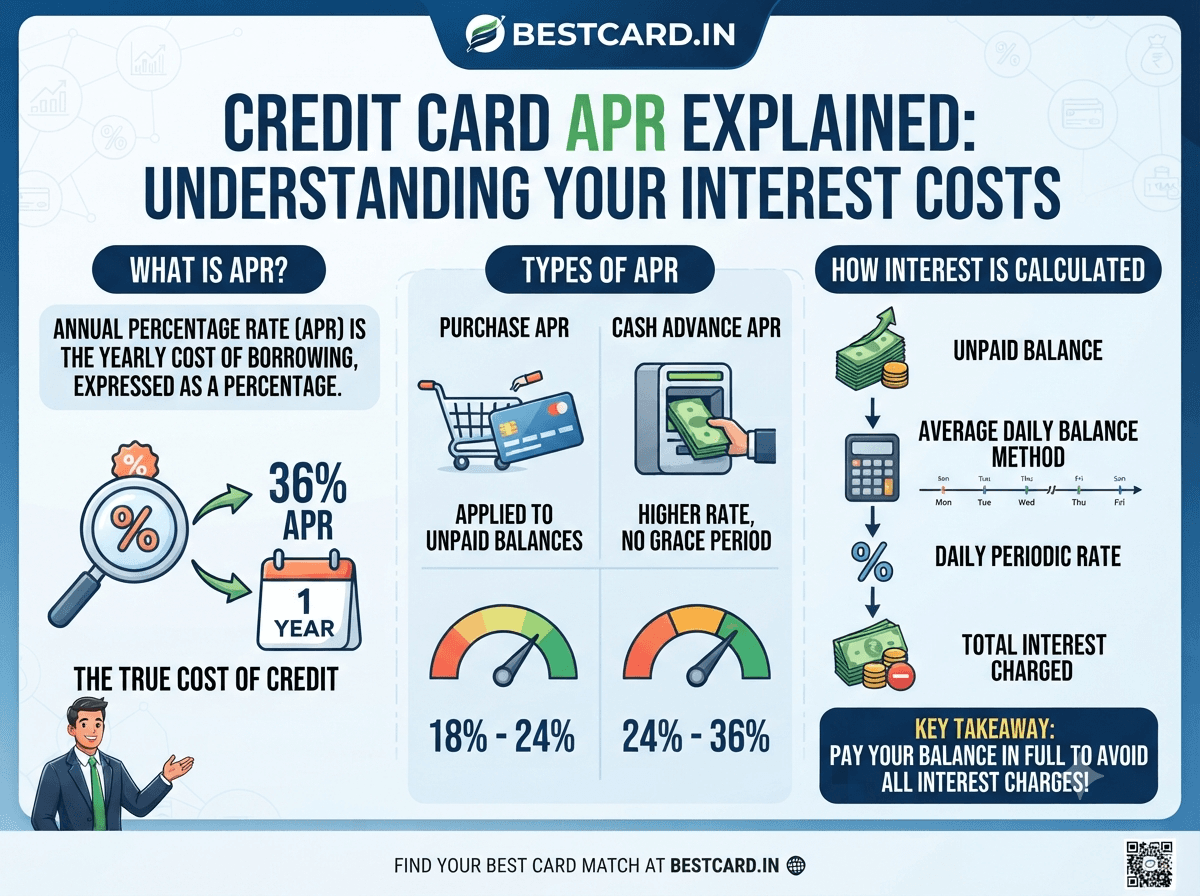
APR — annual percentage rate — is the number printed on every card's terms and conditions, and it's meant to represent the yearly cost of carrying a balance. In practice, it's a headline figure that hides more detail than it reveals, and Indian card issuers apply it in ways that differ from how APR works in some other countries.
What APR includes and doesn't
In India, the APR quoted by most issuers is essentially the interest rate charged on revolving balances and cash advances — it typically does not fold in annual fees, late payment fees, or other charges the way some regulatory APR definitions elsewhere require. That means comparing two cards purely on quoted APR can be misleading if one has a much higher annual fee or steeper late fees that don't show up in that number at all.
Different APRs for different transaction types
Many cards apply different rates for retail purchases, cash withdrawals, and EMI conversions — cash advances in particular often carry both a higher APR and no grace period at all, meaning interest starts accruing from the moment of withdrawal rather than after a missed due date. It's worth checking your specific card's terms for cash advance APR separately, since it's usually the steepest number on the card.
Why the quoted range is so wide
Cards often list a range like "up to 42% p.a." rather than a fixed number, because the actual rate applied to your account can depend on your credit profile at the time of approval — a detail buried in the terms that most cardholders never actually confirm for their own account.
Where to go from here
Read how credit card interest is actually calculated for the daily compounding mechanics behind the APR figure, and the consequences of late payment for how APR interacts with late fees.