How Credit Card Interest Is Actually Calculated
25 March 2025 · BestCard Editorial Team
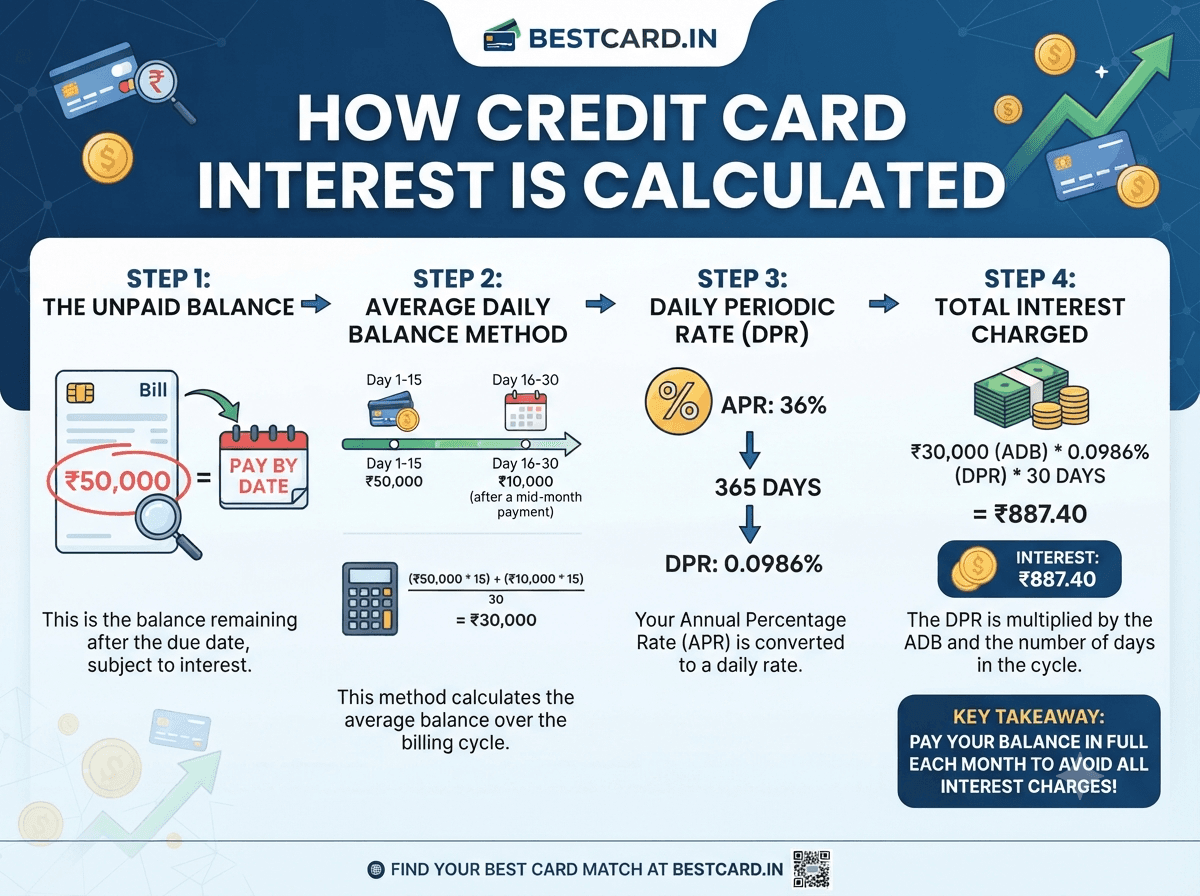
Credit card statements quote an annual interest rate, usually somewhere between 30-46% in India, but almost nobody actually pays that rate as a simple annual number — the real mechanics are daily compounding, and that detail is what makes carrying a balance so much more expensive than it looks.
The daily rate hides the real cost
Banks convert the quoted annual rate into a daily rate and apply it to your outstanding balance every single day, compounding as it goes. A 42% annual rate works out to roughly 0.115% per day, but because interest is charged on the running balance including previously accrued interest, the effective annual cost you actually pay is higher than the quoted number once you carry a balance across multiple cycles.
Why paying only the minimum due is a trap
Interest doesn't just apply to the amount you've carried forward — most Indian issuers charge interest on the entire transaction amount from the date of purchase once you fail to pay your bill in full, not just on the unpaid portion. This is the part people miss: paying 95% of your bill and carrying only 5% forward can still mean interest accrues on the full original amount, not the small remainder, depending on your issuer's terms.
Where the grace period disappears
Your interest-free grace period — usually 20-50 days from the statement date — only applies if you pay your full bill by the due date every single cycle. Miss it once, even partially, and the grace period vanishes on your next cycle too until you clear the balance in full again.
Where to go from here
Read our detailed breakdown of the minimum due trap and how the grace period actually works to avoid these two mechanics working against you at the same time.