Credit Card Chargeback vs Refund: What's the Difference
15 October 2024 · BestCard Editorial Team
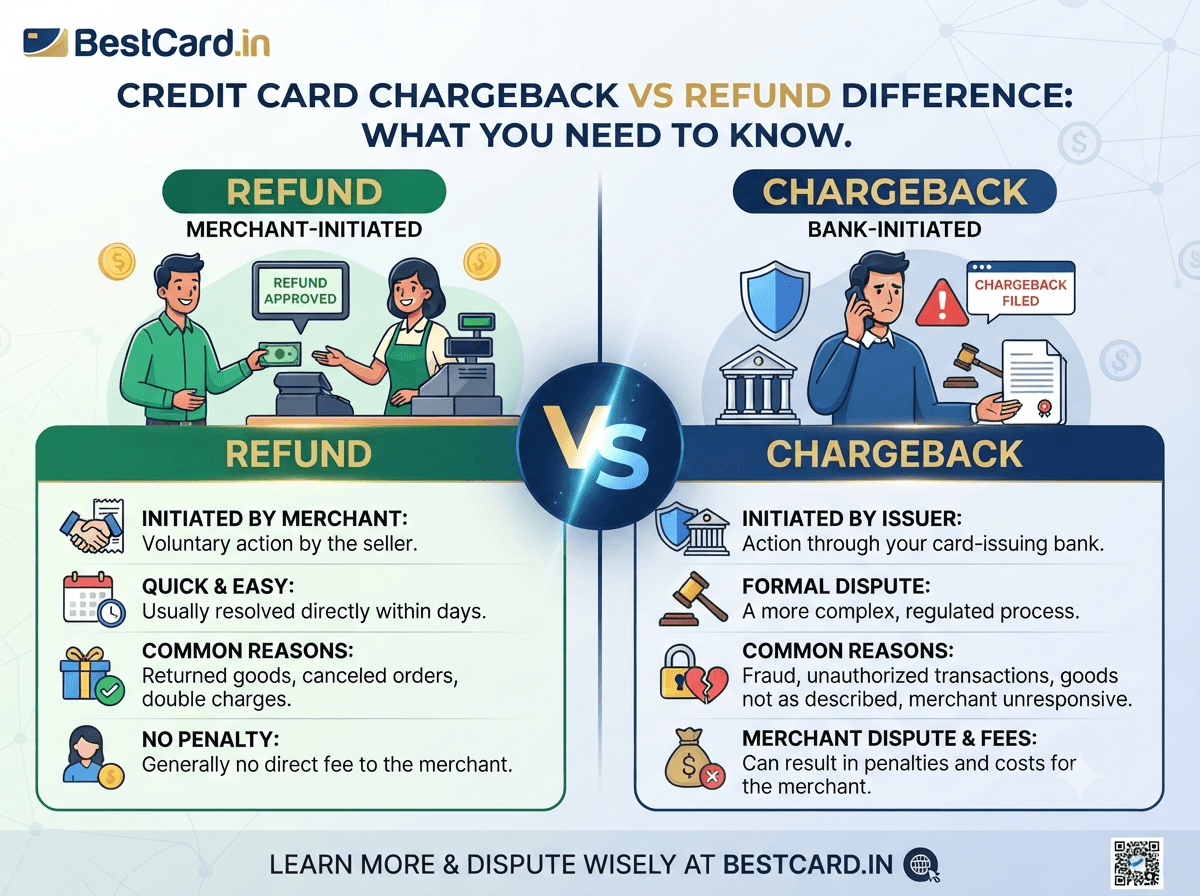
A refund and a chargeback both end with money credited back to your card, which is why people use the terms interchangeably — but they're initiated by different parties, for different reasons, and knowing which applies to your situation changes how you should act.
A refund is merchant-initiated
A refund happens when the merchant themselves agrees to reverse a transaction — you returned an item, cancelled a booking within their policy window, or they made a billing error and corrected it. It's a cooperative process: you contact the merchant, they process it on their end, and it shows up on your statement within a few days to a couple of weeks depending on the bank's processing time.
A chargeback is a dispute you file with your bank
A chargeback is what you file when the merchant won't cooperate — they've shipped a defective item and refuse to refund it, charged you for a service you never received, or a transaction on your statement isn't one you authorized at all. You raise this with your card issuer, not the merchant, and the bank investigates by contacting the merchant's bank on your behalf, which can take weeks to resolve and sometimes requires supporting evidence like screenshots or delivery records.
When to use which
Always try a refund first — it's faster and doesn't strain the merchant relationship if you might use them again. Escalate to a chargeback only when the merchant has refused, gone unresponsive, or the transaction is genuinely fraudulent, since chargebacks are a formal dispute process the bank takes seriously and doesn't want to see used casually.
Where to go from here
Our full dispute and chargeback process guide walks through filing one step by step, and secure online payment habits help you avoid needing one in the first place.