Best Credit Cards for Side Hustle and Freelance Income
24 May 2026 · BestCard Editorial Team
Freelancers and people running a side hustle alongside a regular job have a spending pattern that doesn't fit neatly into either "personal card" or "business card" categories — and most credit card advice is written for one or the other, not both at once.
The specific problem with irregular income
Card issuers evaluate applications largely on stated income and existing credit history, and irregular freelance income can make it harder to get approved for a high credit limit compared to someone with an equivalent but steady salary. If you're just starting out with side income and don't yet have a strong credit file, a secured card against a fixed deposit can be a practical way to build credit history while your income stabilizes, before applying for an unsecured card with a higher limit.
What actually matters in a card for this pattern
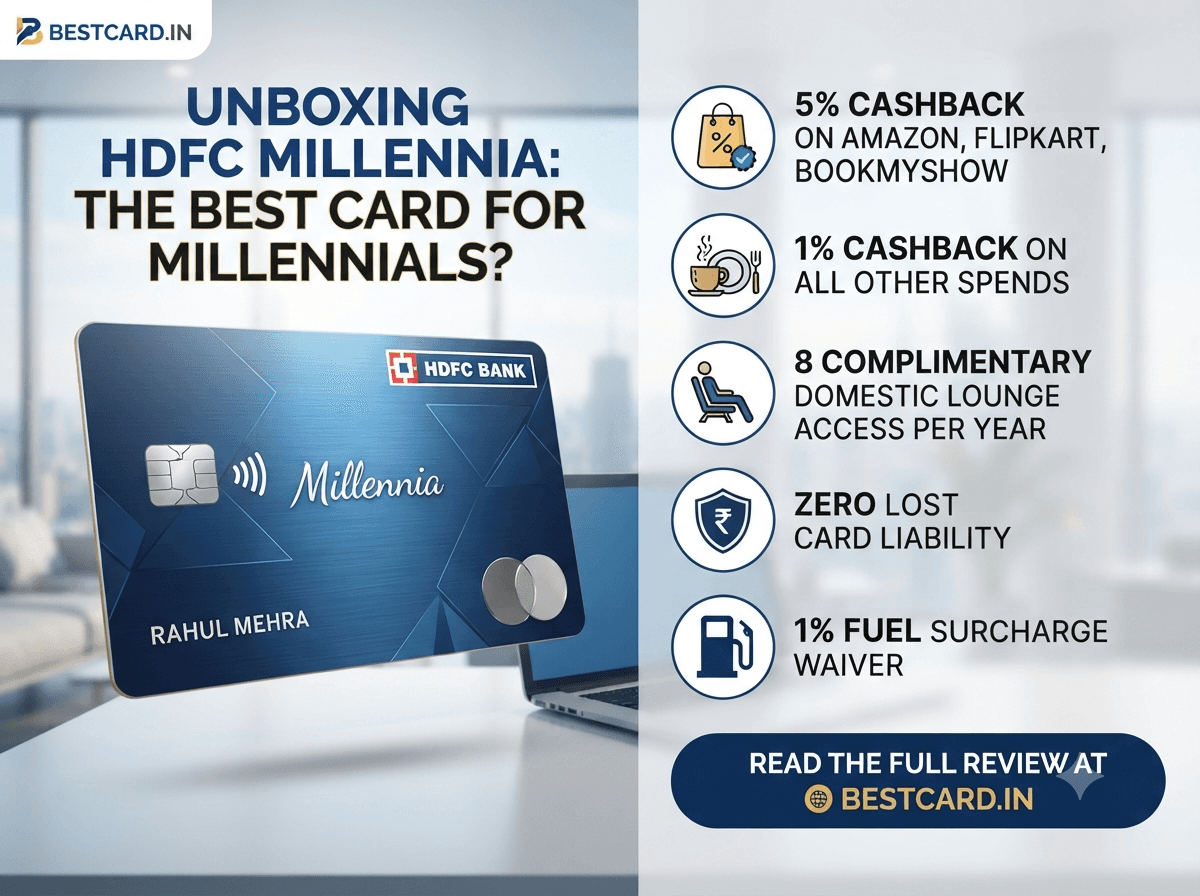
Look for a card with strong rewards on categories that dominate freelance and side-hustle spend — software subscriptions, online advertising, courier and shipping costs, and often significant online shopping for supplies or equipment. A card like the HDFC Millennia, which rewards online spending broadly, tends to suit this pattern better than a card built around dining or travel rewards that a freelancer might use less often. Cashback structured as a flat rate across categories is often more useful here than a points program with narrow bonus categories, since freelance spend tends to be more varied than a typical salaried professional's.

Keeping business and personal spend separate
Even without a formal business entity, it's worth using a dedicated card exclusively for side-hustle expenses rather than mixing them with personal spending on the same card. This makes tax-time expense tracking dramatically simpler and gives you a cleaner picture of whether the side hustle is actually profitable once you can see its expenses in isolation. If the income becomes substantial enough, this also sets you up well to eventually apply for a proper business credit card once you have a formal registration.
Managing cash flow around irregular income
Freelance income often arrives in lumps rather than steady monthly amounts, which makes understanding your statement generation date more valuable than usual — timing bigger equipment or subscription purchases just after your statement generates gives you the longest possible runway before payment is due, which can matter when you're waiting on a client payment to land.
A word on credit utilization
Because freelance income can fluctuate, it's easy to let a card's utilization ratio creep up during a lean month and forget to bring it back down once income picks up. Since utilization is a meaningful factor in your credit score, it's worth checking your balance against your limit more often than a salaried person might need to, especially if you're using the card to smooth over a genuinely lumpy income pattern.
The bottom line
The right card for side-hustle income isn't necessarily a business card — it's a card with broad, flexible rewards on online and subscription spend, held separately from your personal spending, and managed with extra attention to utilization given the income's natural unpredictability.