Credit Card Foreign Transaction Fees: What You're Really Paying
9 May 2026 · BestCard Editorial Team
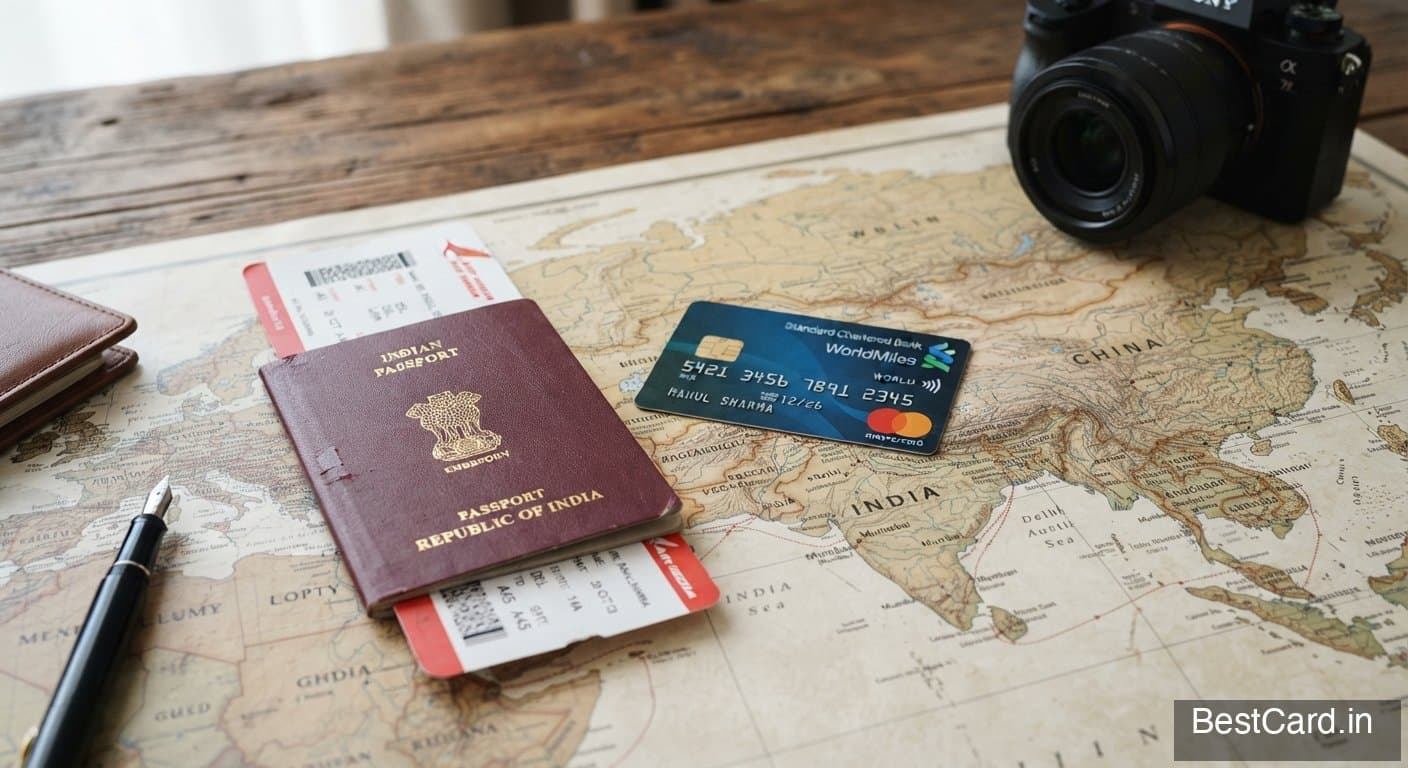
If you've ever come home from a trip and found your card statement a little higher than expected, the forex markup fee is usually the culprit. It's a charge most people never notice until they read the fine print, and on a big international trip it can add up to a meaningful amount of money.
What the markup fee actually is
Every time you swipe an Indian credit card for a purchase in a foreign currency, the issuer converts that amount to INR using a rate from Visa or Mastercard, then adds its own markup on top — typically between 1.99% and 3.5%. This is separate from GST, which is also charged on the markup amount itself. So a ₹10,000 foreign spend at a 3.5% markup effectively costs you around ₹10,350 plus GST on that fee, before you even look at how the card converted the exchange rate.
The tricky part is that this fee rarely shows up as a single visible line — it's baked into the converted INR amount on your statement, so unless you compare the transaction date's actual exchange rate against what you were charged, it's easy to miss entirely.
Which cards charge less
Markup rates vary a lot between issuers and even between cards from the same issuer. Premium travel cards usually carry the lowest markup, often around 2%, since travel spending is the audience they're built for. Entry-level and cashback cards tend to sit at the higher end near 3.5%, since foreign spend isn't their focus.
If you travel internationally with any regularity, it's worth checking your current card's forex markup specifically rather than assuming a "premium" card automatically means a low rate — some premium cards still charge full markup and instead earn their fees back through lounge access and other perks. Our guide to travel credit cards with lounge access covers a few options where the markup tends to be more reasonable.
Zero forex markup cards
A small number of cards in India are explicitly marketed as zero or near-zero forex markup, usually positioned for frequent international travelers. These typically come with a higher annual fee, so the math only works out if your annual foreign spend is large enough to offset it — do a rough calculation: multiply your average forex markup savings (say 3%) by your typical annual foreign spend, and compare that to the annual fee difference.

RuPay cards and forex
RuPay cards are increasingly common in India, largely thanks to UPI integration, but international acceptance and forex handling can vary more than with Visa or Mastercard. If you're weighing a RuPay card for its UPI benefits, our RuPay credit cards and UPI guide walks through where that makes sense and where a Visa or Mastercard product is still the safer pick for travel.
Don't get double-charged by DCC
Dynamic Currency Conversion (DCC) is a separate trap: some foreign merchants or ATMs offer to bill you in INR instead of the local currency "for your convenience." Always decline this and pay in the local currency — DCC adds its own markup on top of a worse exchange rate, stacking on top of whatever your card already charges. This one habit alone can save more than switching cards.
Card choice for a trip
If you're planning a trip abroad, it's worth checking whether your SBI Card or Axis Bank credit card has a lower markup tier product, since both issuers offer travel-focused variants alongside their standard cards — check the current terms before you travel rather than assuming your everyday card is the cheapest option for the trip.
Where to go from here
Before you finalize which card to carry abroad, compare it against our roundup of best travel credit cards with lounge access, and if you're building your very first card and want to keep things simple, our choosing your first credit card guide is a good starting point.