Credit Card Due Date vs Billing Date: Why the Difference Matters
26 August 2025 · BestCard Editorial Team
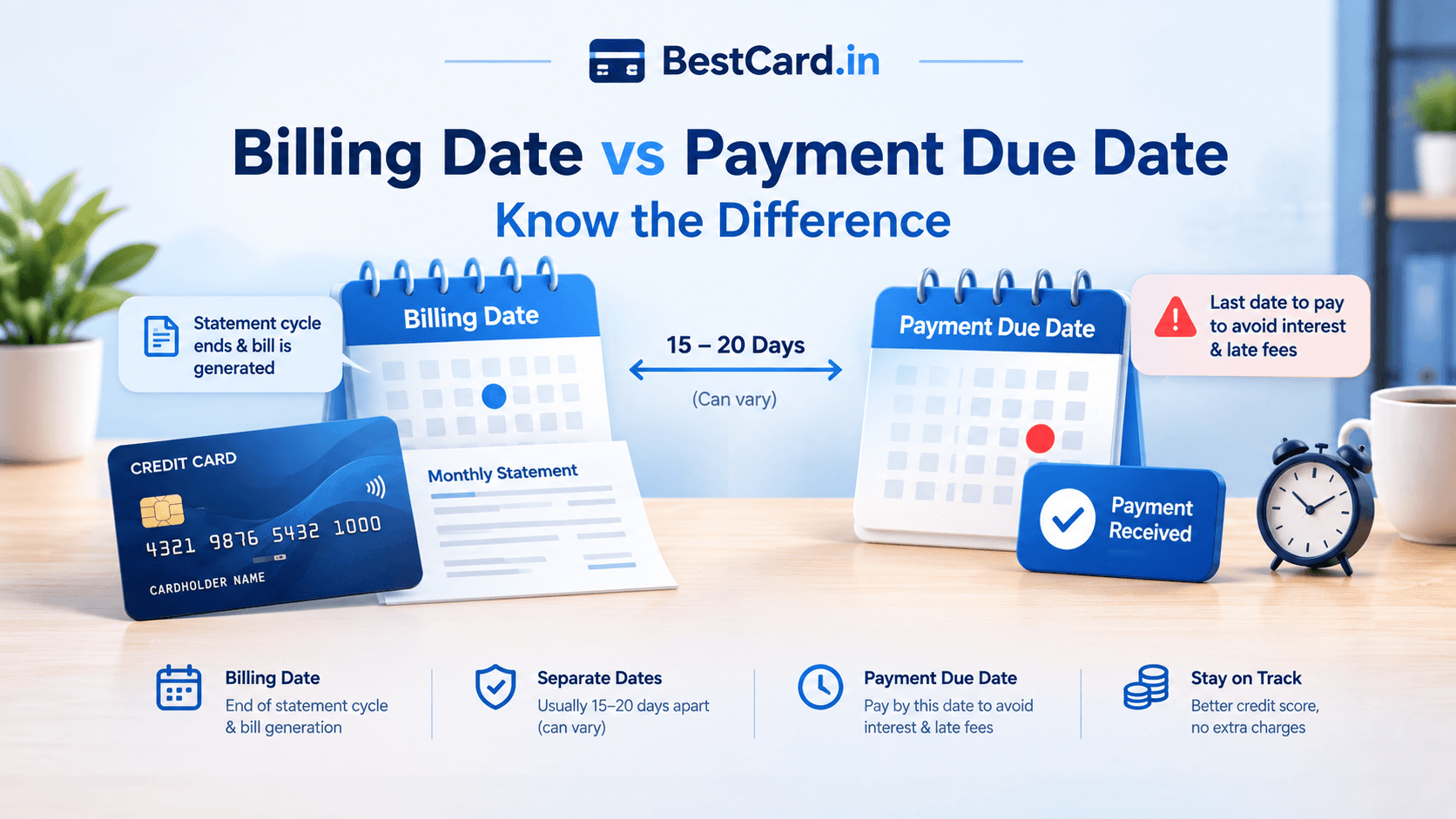
One of the more avoidable mistakes cardholders make is confusing the billing date — when your statement is generated — with the payment due date — the actual deadline to pay without penalty. They're always different dates, usually 15-20 days apart, and mixing them up is a common way people accidentally end up paying interest or a late fee on a bill they thought they'd already handled.
What each date actually represents
The billing date marks the end of your statement cycle and the point at which your bill amount for that period is finalized and sent to you. The due date is a separate, later deadline — the actual date your payment must be received by for you to avoid interest and late fees. Paying on your billing date does nothing; the bill isn't even generated as final until that date closes, and payment before the due date is what actually matters.
Why this confusion causes real problems
Some cardholders set reminders or auto-pay based on the billing date rather than the due date, assuming they're the same or close enough — a mistake that can mean paying up to two weeks later than intended relative to the actual deadline, sometimes past it entirely. Auto-pay set up incorrectly against the wrong date is a particularly quiet way to rack up a late fee without noticing until the next statement.
The safest habit
Set your payment reminder or auto-debit specifically against the due date printed on your statement, not an assumed gap from the billing date, since due date length can vary slightly cycle to cycle for the same card.
Where to go from here
Our statement cycle explainer covers how these dates interact with your interest-free window, and the consequences of late payment covers what happens if you do miss the due date.