Credit Card Statement Cycle Explained: Dates That Actually Matter
7 August 2025 · BestCard Editorial Team
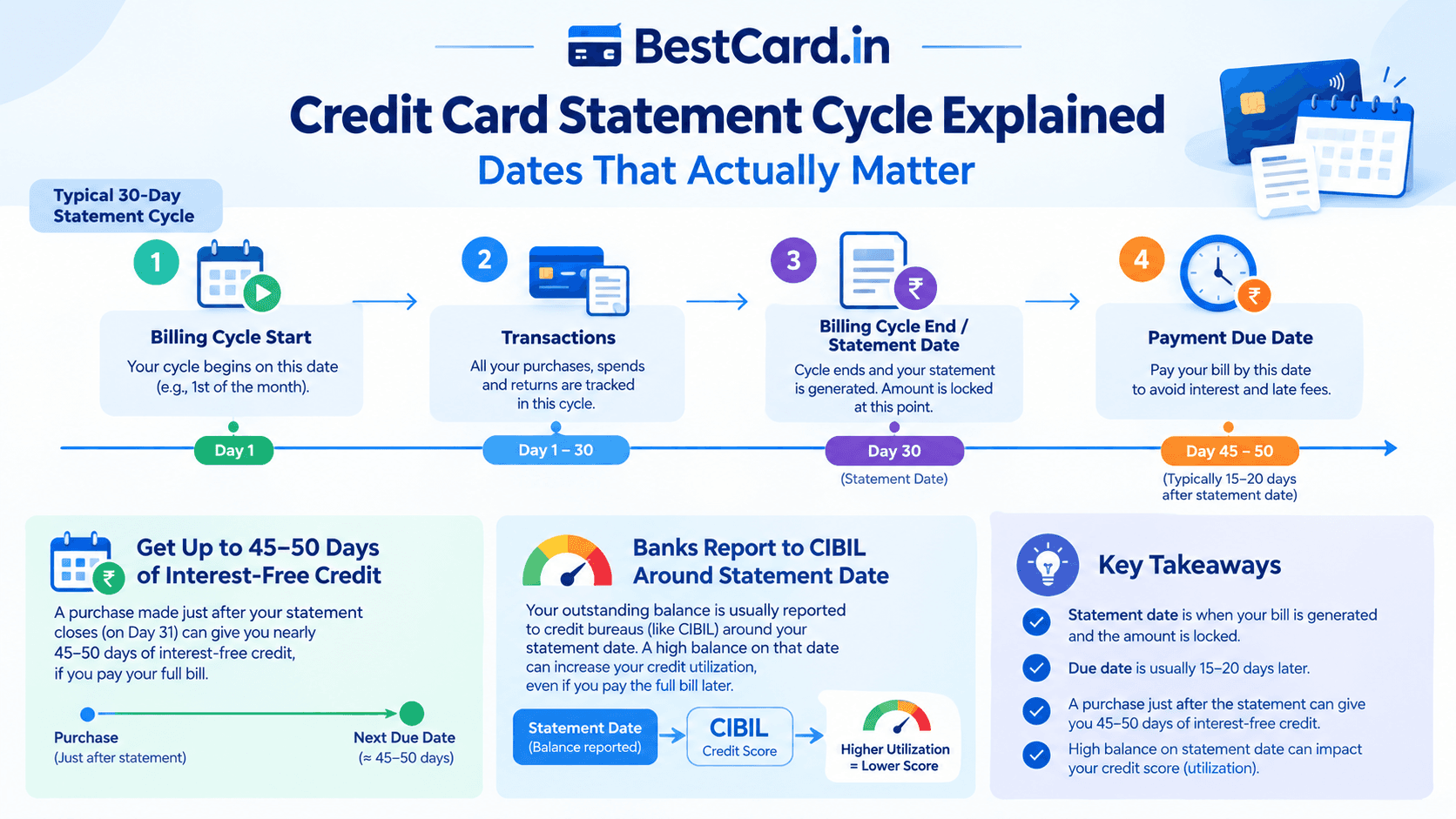
Every credit card has a statement cycle, usually around 30 days long, and understanding exactly how its dates line up can meaningfully change both your interest-free window and the utilization number that gets reported to CIBIL.
The three dates that matter
The billing cycle start and end dates define the window of transactions that land on a given statement. The statement date is when that statement is generated and your bill amount is locked in. The due date, typically 15-20 days after the statement date, is your deadline to pay in full without triggering interest. A transaction made the day after your statement closes doesn't appear on the current bill at all — it rolls to the next cycle, effectively giving you close to 45-50 days of interest-free credit on that specific purchase if timed right.
Why the reporting date matters for CIBIL
Banks typically report your outstanding balance to credit bureaus as of the statement date, not the due date. This means even if you plan to pay your bill in full before the due date, a high balance on the statement date itself gets reported as high utilization — which can temporarily dent your score even though you never actually carried a balance or paid interest.
A practical timing trick
If you're planning a large purchase and want to minimize the utilization hit, making it right after your statement date rather than right before gives you the longest runway to pay it down before the next reporting date rolls around.
Where to go from here
Our guide to reading your credit card statement breaks down every line item on the bill itself, and the grace period explained covers how these dates interact with interest charges.