How to Read Your Credit Card Statement (Without Missing What Costs You)
4 July 2026 · BestCard Editorial Team
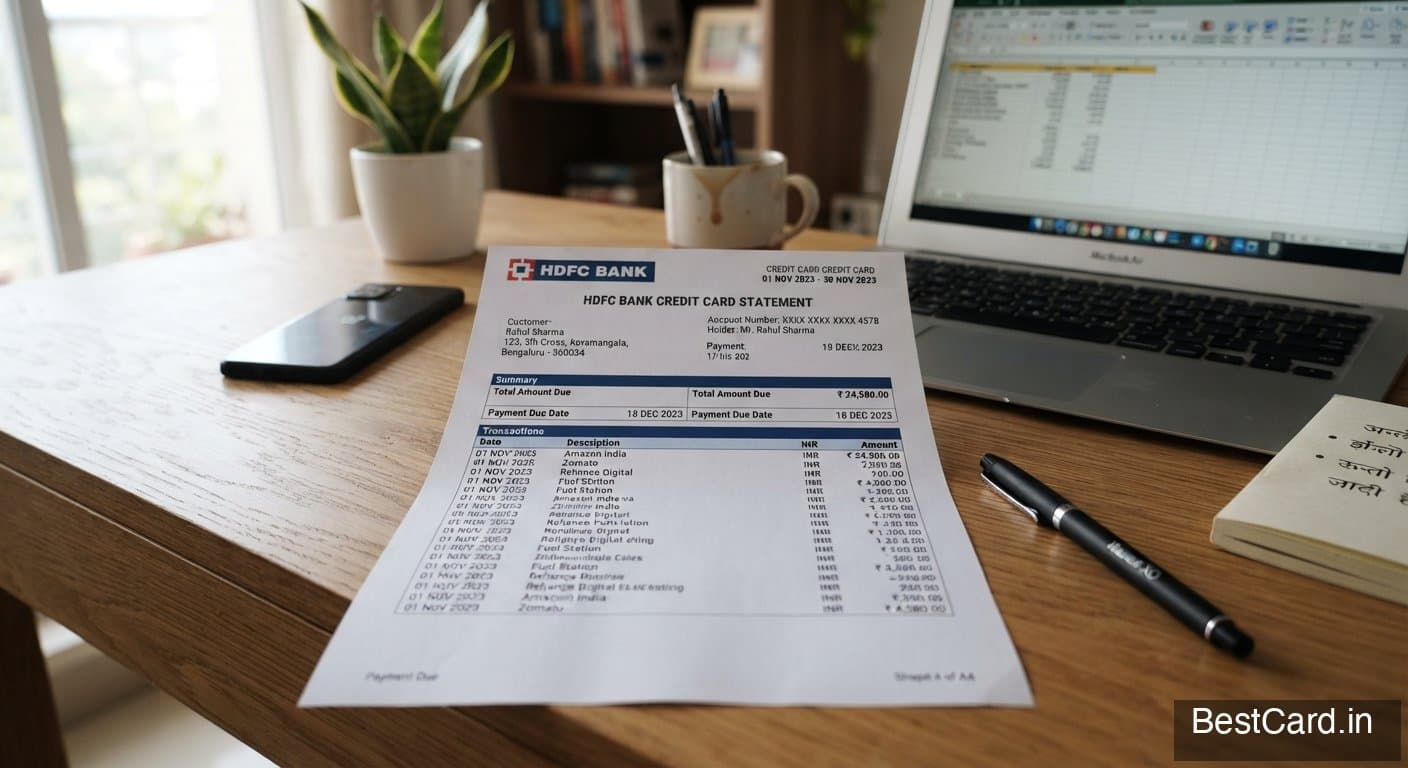
Most people skim straight to the amount due and ignore the rest of the statement. That's usually fine — until it isn't, because two or three lines on that page determine how much interest you pay and whether your CIBIL score takes a hit.
The two dates that matter most
Every statement has a statement date (sometimes called the billing cycle end date) and a due date, usually 18-25 days apart. The statement date is when your billing cycle closes and the balance for that cycle gets locked in — this is also the balance that typically gets reported to CIBIL, which matters more than most people realize; see our credit utilization ratio guide for why. The due date is the deadline to pay without penalty or interest.
Confusing the two is a common and expensive mistake. Paying "on time" relative to when you remember the bill isn't the same as paying by the due date printed on the statement — and a payment even one day late can trigger both a late fee and, on many cards, loss of the interest-free period on your entire next cycle's purchases, not just the overdue amount.
Total amount due vs minimum amount due
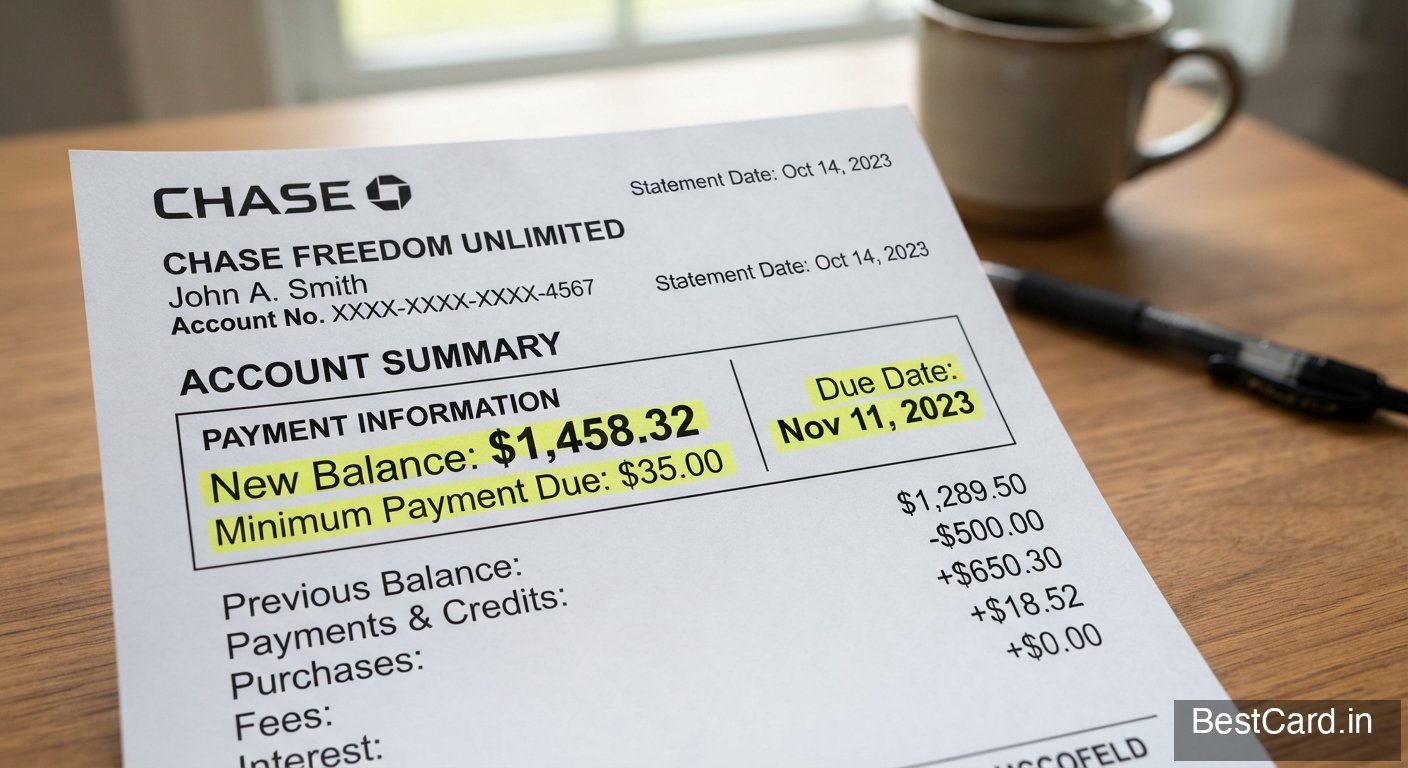
These are the two numbers most likely to cause confusion, and getting them mixed up is genuinely costly. Total amount due is your full outstanding balance — paying this in full by the due date is the only way to avoid interest entirely. Minimum amount due is usually 5% of the outstanding balance (or a small fixed amount, whichever is higher) — paying only this keeps your account from being marked delinquent, but interest starts accruing on the remaining balance immediately, often backdated to the transaction date. Our minimum due trap guide breaks down exactly how expensive this gets over a few cycles.
The other lines worth checking every cycle
Opening balance and closing balance show your balance at the start and end of the cycle — useful for spotting a card that never actually gets paid down. The transaction list itself is worth a genuine scan, not just a glance, since it's the fastest way to catch a fraudulent charge or a subscription you forgot to cancel; see our credit card fraud protection guide if something looks off.
Reward points earned and redeemed, and any finance charges or GST already levied, usually sit near the bottom. If you're carrying a balance, the finance charges line shows you in rupee terms exactly what the minimum-due habit is costing — it's worth looking at even if you don't plan to change anything, just to know the number. Cards from SBI Card, Tata Neu Infinity, and Axis Bank all lay these out in a broadly similar format, though the exact layout and terminology vary slightly by issuer.
A habit worth building
Spend two minutes on your statement every cycle, even if you always pay in full: check the due date against your calendar, scan the transaction list, and glance at the reward points balance so it doesn't quietly expire. It's a small habit that catches most of the expensive mistakes before they happen.
Where to go from here
If you've ever paid late and want to know what actually happens next, read our credit card late payment consequences guide, and if you're choosing your first card and want to know what to look for beyond the headline reward rate, see choosing your first credit card.