
Kotak Cashback+ Credit Card Review: 5% on Food, Groceries and OTT, Within a Firm Ceiling
28 August 2026 · BestCard Editorial Team
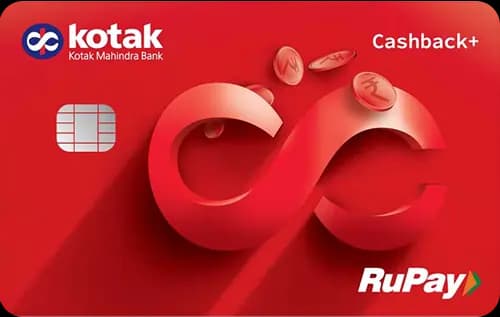
The Kotak Cashback+ Credit Card is Kotak's mainstream cashback card, built around the spending that dominates a typical urban month: online groceries, food delivery, movie tickets and OTT subscriptions. Those categories earn 5%, fuel earns 3%, and everything else earns an unlimited 0.5%. The fee is ₹750, waived at ₹2 lakh of annual spend. The 5% headline is real, but it sits under a combined cap per billing cycle, and the base rate outside the bonus categories is thin. It works well as a second card for a delivery-app household and poorly as the only card in your wallet.
Fees and eligibility at a glance
Both the joining fee and the annual fee are ₹750, and the annual fee is waived on ₹2 lakh of spend in a year. That's about ₹16,700 a month, achievable if groceries, food orders and a few bills go through this card. Eligibility asks for a credit score of 700 or above and an age between 21 and 60, with both salaried and self-employed applicants accepted. The card runs on Visa. One unusual restriction: cash withdrawals are not permitted at all, which won't bother most people but is worth knowing if you ever relied on a card for emergency cash.
Rewards and how they actually work
The 5% bucket covers online groceries, online food deliveries, online movie tickets and OTT subscriptions. The limit is 750 of accelerated cashback per billing cycle, and it's shared across the accelerated categories combined rather than applied to each one separately. At 5%, you reach that ceiling at ₹15,000 of spend in the bonus categories in a cycle. Fuel earns 3%. Everything else earns 0.5% with no cap, and the base rate has no category exclusions.
Here's how that works for a realistic household. Say you spend ₹6,000 a month on online groceries, ₹4,000 on food delivery and ₹1,000 on OTT and movie tickets. That's ₹11,000 at 5%, or ₹550 a month, comfortably under the cap. Add ₹10,000 of other spending at 0.5% and you pick up another ₹50. That's ₹600 a month, or ₹7,200 a year, from a card that costs nothing once you cross the waiver. If you max out the accelerated cap every cycle, the ceiling is ₹9,000 a year.
Movies, fuel and the extras
Beyond the cashback, there's a buy-one-get-one offer on PVR INOX movie tickets and 20% off BookMyShow bookings, which together make this a good card for anyone who watches a film or two a month. The 1% fuel surcharge waiver applies to transactions between ₹500 and ₹4,000, capped at ₹3,500 a year. There's no lounge access, no travel cover and nothing for flights or hotels. Cashback+ is a spending card and doesn't pretend otherwise.
How it compares with SBI Cashback and Axis ACE
The SBI Cashback Card is the most direct rival. It charges ₹999, waived at the same ₹2 lakh, and pays a flat 5% on all online spending, capped at ₹2,000 a month, with 1% on offline purchases. That cap is nearly three times Kotak's, and it covers every online merchant rather than four categories. The base rate is double, at 1% against 0.5%. SBI Cashback excludes fuel, though, and Cashback+ earns 3% there and adds the movie offers. For anyone whose online spending goes well beyond food and groceries, SBI Cashback is the stronger card. Cashback+ makes more sense if your online spending is mostly delivery apps and streaming.
Axis ACE takes a different approach. It costs ₹499, waived at ₹2 lakh, pays 5% on bill payments made through Google Pay, and returns a flat 2% on everything else with no ceiling, while its bonus categories are capped at ₹500 a month. That 2% base is four times Kotak's 0.5%. On ₹20,000 of non-bonus monthly spend, ACE earns ₹400 to Kotak's ₹100. If most of your spending falls outside food, groceries and OTT, ACE will out-earn Cashback+ comfortably.
What's genuinely good about this card
The 5% categories line up well with how many people actually spend: grocery apps, food delivery and a stack of OTT subscriptions are monthly fixtures in most city households. The base cashback is unlimited and has no category exclusions, so you never earn nothing. The 3% on fuel is a useful extra that most cashback cards skip, and the PVR INOX buy-one-get-one offer can be worth more than the cashback for regular moviegoers. The ₹2 lakh waiver is realistic for a card used every day.
Where it falls short
The combined cap of 750 per cycle is the big limitation. It's shared across every accelerated category, so a heavy grocery month can crowd out your food delivery cashback. The 0.5% base rate is low enough that anything outside the bonus categories should go on a different card. There's no lounge access or travel benefit of any kind, and the lack of any cash withdrawal facility removes a fallback some people value.
Who this card actually makes sense for
Cashback+ suits young professionals and families who order groceries and food online several times a week and pay for multiple streaming subscriptions, with that combined spend sitting somewhere around ₹10,000 to ₹15,000 a month. It works best as a category card alongside a flat-rate card like ACE for everything else. If your spending is spread widely across online shopping, SBI Cashback's bigger cap is the better fit.
Where to go from here
For the rest of the bank's lineup, read the Kotak credit cards guide. To understand how ceilings like this one shape your real return, see credit card reward caps explained, and if delivery apps are your biggest spend, compare options in the best credit cards for food delivery.
Related reading
- SBI Cashback Card Review: Flat 5% on Every Online Purchase
A practical look at the SBI Cashback Card's flat 5% online cashback, the monthly cap, fees, and who should actually apply for it.
- Axis Bank Airtel Credit Card Review: Big Cashback on Airtel Bills, Not Much Else
An honest review of the Axis Bank Airtel Credit Card: 25% cashback on Airtel recharges and bills, 10% on Airtel Thanks partners, a low ₹500 fee, and the caps that limit it.
- HDFC Pixel Play Credit Card Review: Cashback You Get to Design Yourself
An honest review of HDFC Pixel Play's pick-your-own 5% cashback categories, 3% e-commerce merchant choice, monthly caps, and who the app-first card really suits.