SBI Card PRIME Review: Is the Lounge and Dining Card Worth It?
4 March 2026 · BestCard Editorial Team
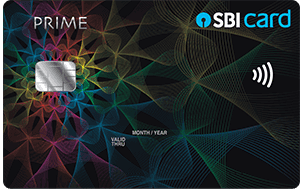
The SBI Card PRIME is built differently from most premium travel cards — instead of chasing airline miles, it leans into accelerated rewards on dining, groceries, and department stores, with lounge access bolted on as a solid but secondary perk. It's a lifestyle card first and a travel card second, which makes it a genuinely different pick from something like the Axis Atlas if your spending skews toward everyday categories rather than flights.
Fees and eligibility at a glance
The joining and annual fees are both ₹2,999, waived only once you cross ₹3,00,000 in annual spend — a genuinely demanding threshold for a card at this fee level, and higher than what many cards in the same price bracket ask for. The forex markup isn't disclosed in SBI's published terms for this card, so if you plan to use it internationally, check the current rate before relying on it for overseas spend. Cash advances cost 2.5% (minimum ₹300) domestically and 3% (minimum ₹300) internationally, with no interest-free grace period and no reward points earned on the withdrawal.
Rewards and how they actually work
PRIME earns 10 points per ₹100 — roughly 5% value — on dining, groceries, and department store spend, and a striking 20 points per ₹100 (about 10%) on utility bill payments, which is an unusually high rate for a category most cards either exclude or cap tightly. Outside these bonus categories, the base rate is lower, so PRIME rewards cardholders who route their recurring spend — groceries, restaurant bills, electricity and other utility payments — through the card rather than treating it as a general-purpose spender. Redemption carries a ₹99 + GST fee per request when converting points to statement credit, vouchers, or physical products, charged once per batch rather than per item, which is reasonable if you consolidate redemptions instead of cashing out small amounts frequently.
Lounge access and travel perks
PRIME bundles a Priority Pass membership (worth $99 on its own) that delivers 4 complimentary international lounge visits a year, capped at 2 per quarter, plus 8 domestic lounge visits annually. That's a respectable allowance for a card not primarily positioned around travel, and it also covers guests at a discounted rate once you're past your own complimentary visits. Beyond lounges, there's ₹50 lakh air accident cover when the ticket is booked on the card and ₹1 lakh in fraud liability protection against unauthorized transactions reported after the fact. A 1% fuel surcharge waiver applies between ₹500 and ₹4,000 at any Visa-accepting pump.
What's genuinely good about this card
The welcome bundle is unusually generous for the fee level — a ₹3,000 e-gift voucher on activation, a ₹1,000 Pizza Hut voucher for every ₹50,000 spent in a quarter, and a ₹7,000 voucher for crossing ₹5,00,000 in a card year, which together can offset a meaningful chunk of the annual fee for spenders who hit those thresholds. The 20x utility rate stands out because utility payments are exactly the kind of predictable, recurring spend most people already have — earning nearly 10% back on electricity bills is a genuinely rare deal in the Indian card market. The lounge allowance, while not unlimited, is generous enough for someone who travels a handful of times a year rather than constantly. And the ₹50 lakh air accident cover plus fraud liability protection add real financial downside protection that's easy to overlook when comparing cards purely on reward rate.
Where it falls short
The ₹3,00,000 waiver threshold is the card's biggest weakness — it's a demanding number for a ₹2,999 fee, and cardholders who fall short pay the fee in full every year regardless of how much value they extracted from bonus categories. The bonus categories themselves are narrow: dining, groceries, department stores, and utilities earn well, but general spend outside those buckets earns at a much lower baseline rate, so PRIME isn't a good fit if your spending is broad and unpredictable. The undisclosed forex markup is also a gap worth flagging — without a clear published rate, international spenders are taking on some uncertainty that cards like the ICICI Emeralde or Axis Atlas don't ask you to accept.
Who this card actually makes sense for
PRIME is the right pick for someone whose monthly spend is genuinely concentrated in dining, groceries, department stores, and utility bills, who can realistically clear ₹3,00,000 in annual spend to waive the fee, and who wants meaningful lounge access without paying for a dedicated travel card. If your spending is broad and doesn't cluster into those categories, the accelerated rates won't do much for you, and a flat-rate card will likely earn you more.
Where to go from here
For SBI's broader lineup, see our SBI credit cards guide. If dining rewards specifically are your priority, best dining credit cards in India compares PRIME against other options, and if groceries matter more, best grocery credit cards in India is worth a look before deciding.