Tap to Pay Explained: How NFC Credit Card Payments Work in India
19 March 2026 · BestCard Editorial Team
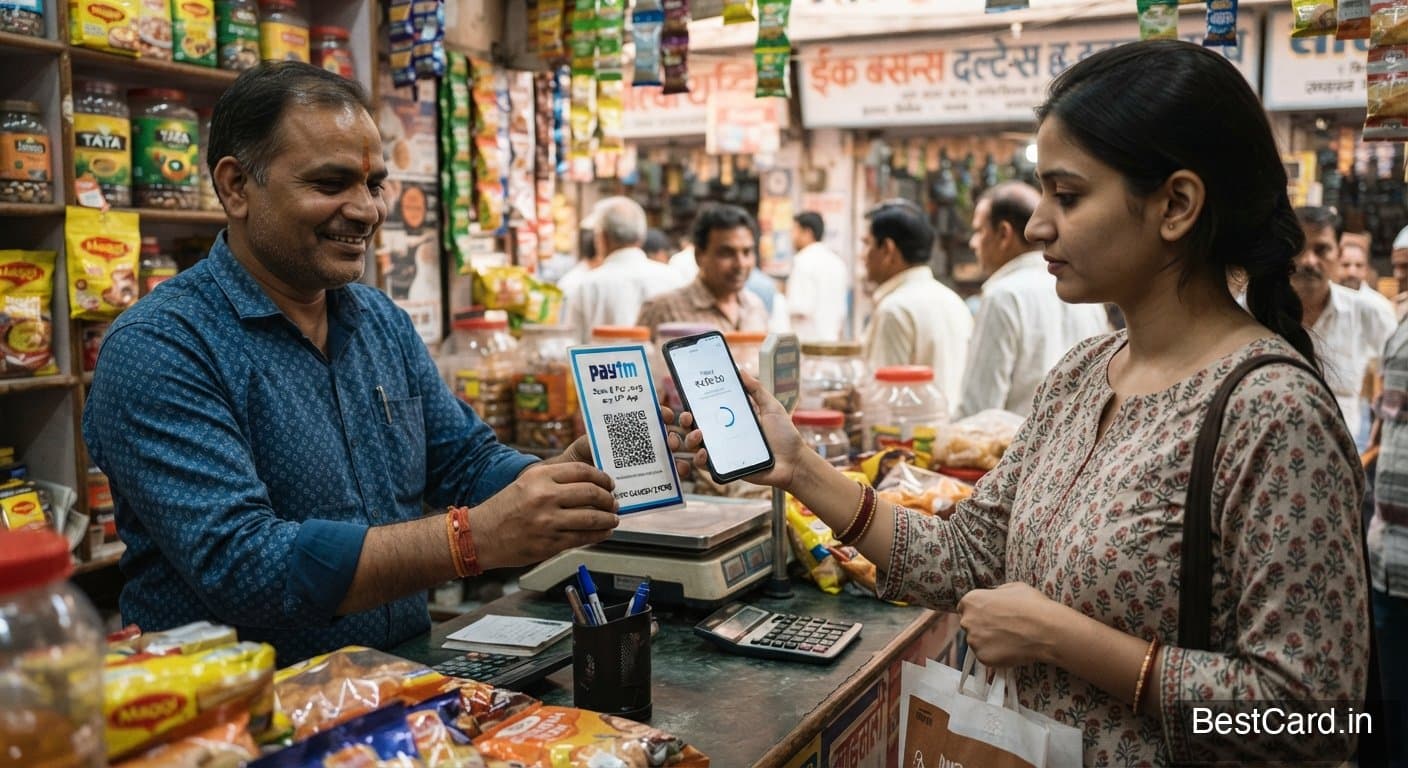
Nearly every credit card issued in India today ships with a small radio antenna embedded in the plastic, visible as a WiFi-like symbol near the chip. That symbol is what lets you tap the card against a terminal instead of inserting it and waiting for a PIN prompt. It feels like a convenience feature, but there's real mechanics and real limits behind it worth understanding — especially since the same feature that makes checkout faster is also the one people worry about most when a card goes missing.
How NFC tap-to-pay actually works
The contactless symbol on your card is an NFC (Near Field Communication) antenna, the same short-range wireless technology used in metro cards and office access badges. When you tap or hold your card within a few centimetres of a compatible terminal, the terminal powers the card's chip wirelessly and exchanges an encrypted transaction token — not your raw card number — to authorise the payment. This is a different mechanism from swiping the magnetic stripe or inserting the chip, both of which involve physical contact and a full EMV chip handshake.
Because the terminal and card exchange a one-time cryptographic token for each tap, a contactless transaction can't simply be "replayed" by someone recording the exchange — each tap generates fresh authentication data even if you tap the same card on the same terminal twice in a row.
The transaction limit that matters
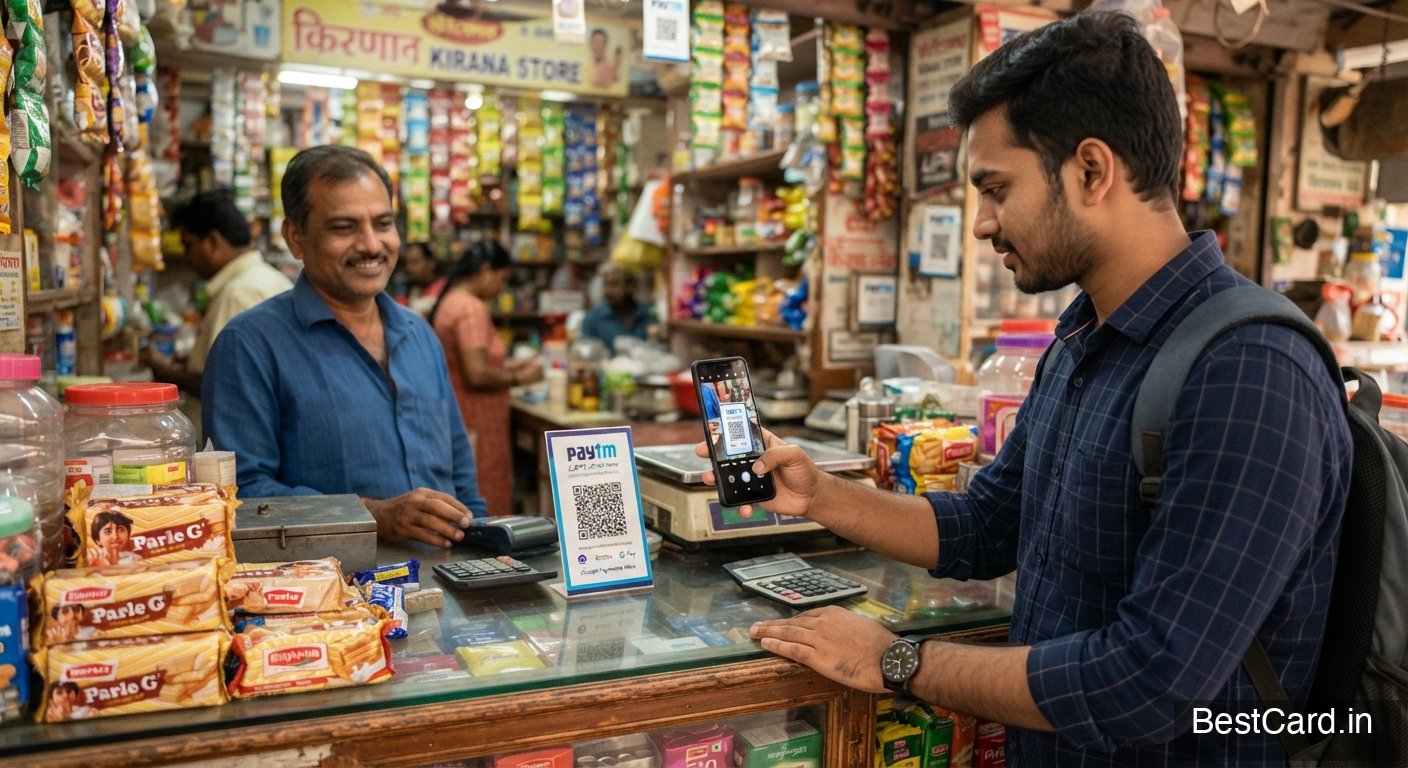
In India, contactless transactions without a PIN are capped at ₹5,000 per transaction — a limit set by RBI specifically to bound the damage if a lost or stolen card is used by someone else without a PIN. Anything above ₹5,000 requires you to enter your card PIN even on a contactless-enabled terminal, which effectively converts it into a chip-and-PIN transaction with the tap only initiating the connection. Some issuers also apply a cumulative daily cap on consecutive no-PIN contactless transactions, after which a PIN is required even for a sub-₹5,000 purchase, precisely to stop a stolen card from being tapped repeatedly in quick succession at small amounts.
This ₹5,000 threshold is also why tap-to-pay works so well for the transactions it's built for — coffee, groceries, metro top-ups, fuel — and why it quietly steps aside for anything larger, where the extra PIN friction is a deliberate safety trade-off rather than an oversight.
Is contactless actually less safe than chip-and-PIN?
Not meaningfully, and in some ways it's safer. Skimming attacks on contactless cards — someone reading your card's data by holding a scanner near your wallet — have been demonstrated as theoretically possible but are strikingly rare in practice in India, partly because each tap uses fresh cryptographic data rather than reusable static data the way old magnetic stripes did. The bigger real-world risk isn't remote skimming; it's a lost or stolen physical card being tapped for sub-₹5,000 purchases before you notice and block it. That's a risk that exists for any lost card regardless of whether it has contactless enabled — the ₹5,000 cap just bounds how much damage happens per tap.
If you're comparing contactless risk against other online and offline fraud vectors more broadly, credit card fraud protection tips covers the fuller picture, and the authentication layer behind every transaction — contactless or not — is explained in the 2FA rules for online card payments.
Should you disable contactless if you're worried?
Most issuers let you switch off contactless payments entirely from their app without affecting chip-and-PIN or online transactions — useful if you rarely use tap-to-pay and would rather remove the risk surface altogether. But for most cardholders, the more practical safety habit is simply reporting a lost card immediately, since the ₹5,000-per-tap ceiling already limits exposure in the window before you do. Leaving contactless enabled and just being disciplined about blocking a lost card fast is, for most people, a better trade-off than losing the convenience entirely.
Tap to pay versus UPI and mobile wallets
It's worth distinguishing NFC card tap-to-pay from tapping your phone to pay via a UPI-linked wallet or Google Pay/Apple Pay tokenised card — both use NFC, but the payment rails and authentication behind them differ. A tokenised card added to your phone's wallet app inherits the same merchant-specific token architecture used in RBI's card tokenisation mandate, which is arguably even safer than tapping the physical card, since the token in your phone's wallet is bound to that specific device. If you're linking cards into UPI-adjacent flows more broadly, linking credit cards to UPI covers how that setup works and where it differs from a straight contactless tap.
Where merchants stand
Most large retail chains, supermarkets, fuel pumps, and quick-service restaurants in India now run contactless-capable terminals, though the feature isn't universal at every small merchant yet. If a terminal doesn't support contactless, your card still works normally via chip insertion — tap-to-pay is additive, never a replacement requirement.
Where to go from here
For the fuller authentication and fraud-prevention picture behind every card transaction, read credit card fraud protection tips and the 2FA rules for online card payments. And if you're setting up cards for UPI-style everyday spending, linking credit cards to UPI is the natural next read.