
Axis vs HSBC Credit Cards: TravelOne's ₹8 Lakh Waiver Against Atlas's No-Waiver Fee
30 October 2026 · BestCard Editorial Team
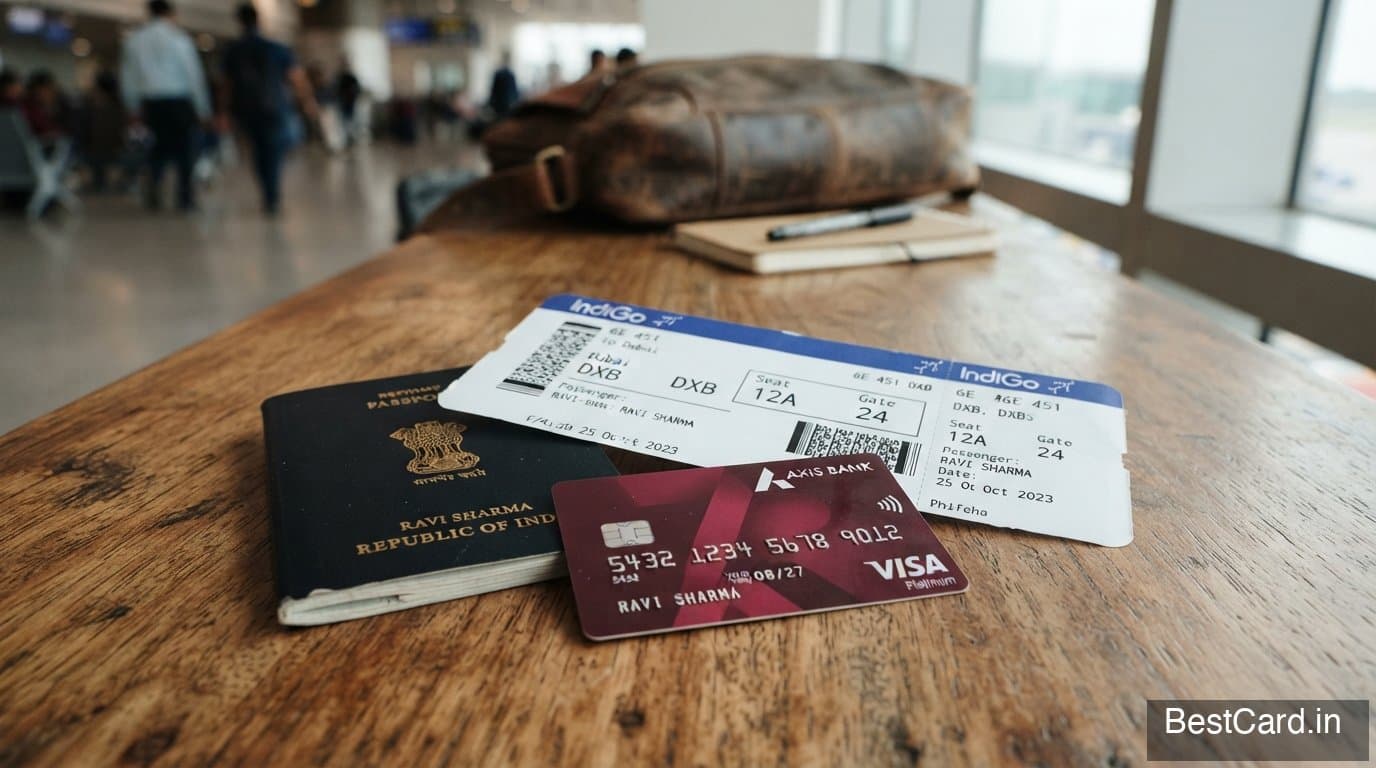
HSBC's TravelOne can have its ₹4,999 fee waived at ₹8 lakh of annual spend. Axis Bank's Atlas costs ₹5,000 with no listed waiver. That small difference sets up the most interesting match in an otherwise lopsided pair, since HSBC's lineup is eight cards against Axis's fifty.
Miles cards: TravelOne against Atlas
The HSBC TravelOne is ₹4,999 with a ₹8 lakh waiver, a 4% rate on travel, 1:1 transfers to 14+ airline partners, six domestic and four international lounge visits a year via LoungeKey, and a 3.5% forex markup. It needs ₹50,000 monthly income.
The Axis Atlas is ₹5,000 with 5% on travel bookings through Travel EDGE, 8 domestic and 4 international visits at Silver tier (rising to 18 and 12 at ₹15 lakh spend) and miles that transfer to airline and hotel partners. The income bar is ₹1 lakh and the forex markup is 3.5%.
Atlas starts with more domestic visits and scales with spend. TravelOne has the waiver and the lower income bar. If you will not spend ₹8 lakh, the fee is a wash and Atlas gives more lounges. If you will, TravelOne can be free. Axis leads on lounge count, HSBC on fee flexibility.
Everyday cashback
The HSBC Live+ is ₹999, waived at ₹2 lakh, with 10% on dining, groceries, utilities and online shopping, each capped at ₹1,200 a month, a 1.99% forex markup and a ₹1 lakh income requirement. The HSBC RuPay Cashback is ₹499 with 10% on dining and groceries capped at ₹400 a month.
Axis's ACE is ₹499 with 5% on utilities, 4% on dining and travel and 1.5% on everything else, and it needs only ₹15,000 monthly income. The Axis Cashback card pays 5% on online spend up to ₹4,000 a month for ₹1,000.
Live+ pays a much higher percentage within its caps and has a lower forex markup. ACE pays less per category but earns more on the rest of your spending. HSBC leads on bonus rates and Axis on the income needed.
The lifetime-free end
HSBC's Visa Platinum and RuPay Platinum are free, with a low 0.3% base reward rate. Axis's free options include the Scapia (zero forex and spend-gated domestic lounge access) and the LIC co-brands. Axis has the stronger free cards.
Super-premium
HSBC's Premier Mastercard is tied to Premier banking, with a 0.99% forex markup and worldwide lounge access, and needs ₹3 lakh monthly income. The Taj co-brand is ₹1.1 lakh a year with zero forex, and the Privé is for private banking clients. Axis's Magnus is ₹12,500, waived at ₹25 lakh, with a 2% markup and unlimited lounges, and it does not depend on a banking relationship. Axis is easier to reach, HSBC's Premier and Taj have lower forex for those who qualify.
Choosing
An occasional traveller who earns ₹50,000 a month and spends around ₹8 lakh a year should look at TravelOne. A heavy traveller who wants lounge visits scaling with spend should take Atlas. Someone who spends mostly on groceries, dining and bills should price Live+ against ACE using their own monthly caps. Anyone who already banks with HSBC Premier will find the Premier card hard to beat on forex.
More reading
Our Axis Bank credit cards guide and HSBC credit cards guide go deeper. Also compare directly with HSBC TravelOne vs Axis Atlas.
Related reading
- IndusInd vs HSBC Credit Cards: One Big Cashback Card Against a Wider Shelf
HSBC has a compact lineup built around Live+ cashback and TravelOne miles; IndusInd covers more price points. See where each bank's cards actually earn.
- HDFC vs HSBC Credit Cards: HSBC Live+ and TravelOne Against HDFC's Full Ladder
HSBC India lists eight cards, and only Live+ and TravelOne are practical for most buyers. HDFC covers every tier. A comparison of cashback, travel and premium cards.
- AU Bank vs HSBC Credit Cards: 12% on a Cap or 10% With a Bigger Budget
AU's CheQ and LIT lead on headline RuPay cashback; HSBC Live+ and TravelOne cost more and need higher income. See which suits your monthly spend.