Best Credit Cards for International Travel from India
21 December 2025 · BestCard Editorial Team
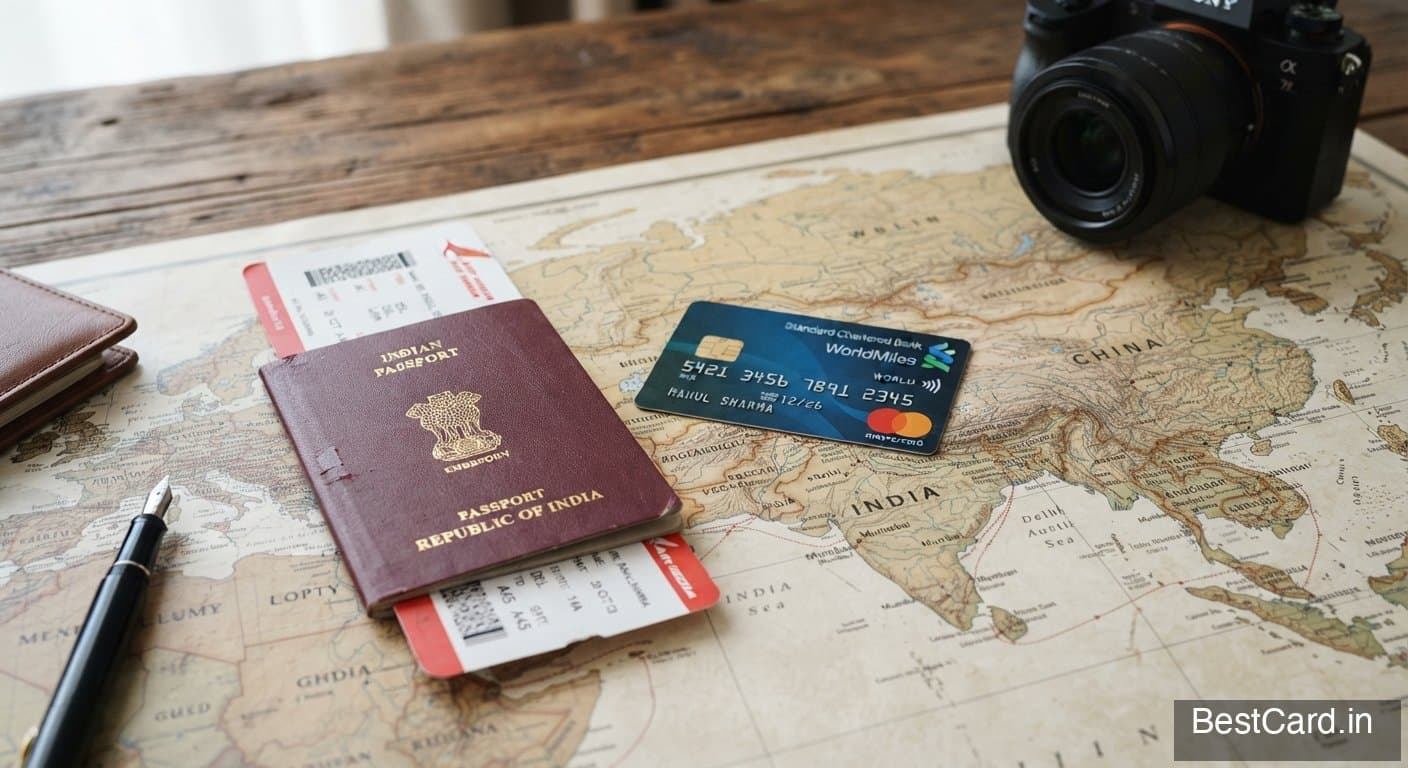
There's no single "best" travel card in India. There's a checklist, and the right card for you depends on how often you fly and where you go. Here's what to actually check before your next trip.
Forex markup comes first
Every rupee you save starts here. A card that charges 3.5% on every foreign swipe will quietly eat into your travel budget more than any lounge visit or insurance perk saves you. If you travel abroad more than once or twice a year, a low or zero markup card should be non-negotiable. For the mechanics of how this fee works and why it varies so much between cards, see the fundamentals in our forex markup guide.
Network acceptance matters more abroad than at home
In India, Visa, Mastercard, and RuPay all work almost everywhere. Abroad, that's not guaranteed. RuPay acceptance outside a handful of countries is still limited, and even some Mastercard-branded cards can hit gaps in specific regions (parts of Europe lean Visa-heavy, for instance). Before a trip, check which network your card runs on and whether it's actually accepted at your destination — not just "internationally enabled" on paper.
Travel insurance is a real perk, not fine print
Several premium cards bundle travel insurance — lost baggage, trip delay, sometimes medical cover — as long as you book the ticket on that card. This is worth more than it sounds: standalone travel insurance for a family costs real money, and a card that includes it effectively pays for its annual fee on a single international trip. Read what's actually covered, not just the headline "insurance included."
Emergency assistance and card replacement
If your card is lost or cloned mid-trip, how fast can you get a replacement or emergency cash abroad? Premium issuers typically offer 24/7 global assistance lines and expedited card replacement in major cities. This is invisible until you need it, and genuinely useful when you do.
Lounge access — check "international," not just "domestic"
Plenty of cards advertise lounge access but only cover domestic terminals, or gate international lounge visits behind a much higher spend threshold. If lounge access is a reason you're picking a card for travel, confirm it explicitly covers international airports and check the visit cap per year.
One card or two?
For frequent flyers, carrying two cards often beats hunting for one perfect card: a premium card for the trip itself (insurance, lounge access, concierge) plus a low-forex card purely for day-to-day spending abroad. The annual fee on the premium card is justified by insurance and lounge use; the zero-forex card handles the bulk of your spending without the markup tax. For occasional travelers, one well-chosen low-forex card is usually enough — the premium perks go unused often enough that the fee isn't worth it.
Where to go from here
For airport lounge specifics, read our guide to best travel credit cards with lounge access. And if you haven't already, understand the forex markup mechanics in credit card foreign transaction markup fees before comparing cards.