CIBIL Score Basics: What Actually Moves the Number
12 April 2026 · BestCard Editorial Team
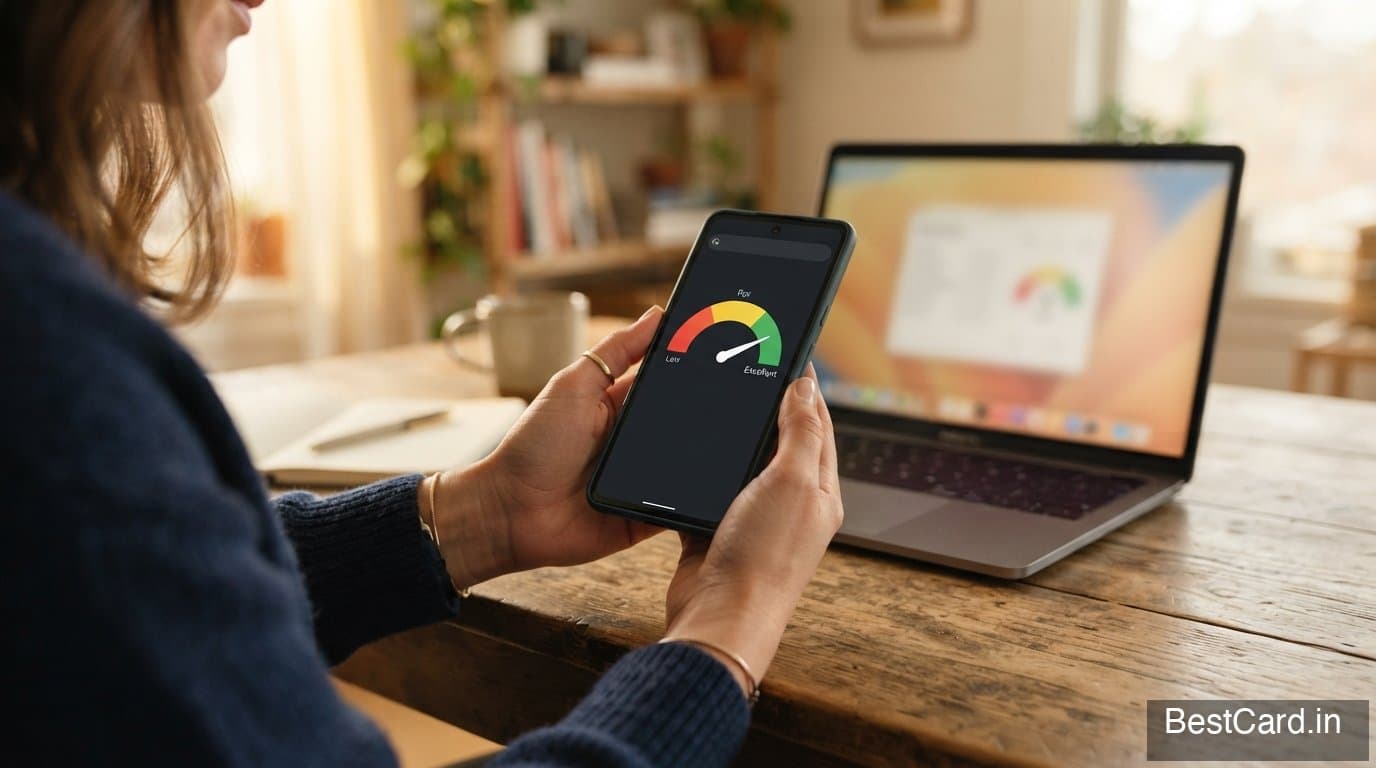
Most people know their CIBIL score matters without knowing what actually moves it. There's a lot of folk wisdom floating around — checking your own score too often hurts it, closing a card always helps, a specific magic number unlocks every card — and most of it is at best a half-truth. Two factors dominate everything else, and understanding them is more useful than chasing every minor scoring rumor.
What the score actually is
A CIBIL score is a three-digit number, 300 to 900, generated from the loan and credit card history in your credit report using a scoring model. It's a summary, not the full picture — the report behind it lists every account, balance, and payment event that fed into that number, which is where you'd actually go to understand or dispute something. Scores above roughly 750 are generally considered good-to-excellent by most lenders, though the exact cutoff a specific card uses can vary.
If you've never held a loan or credit card, you likely don't have a bad score — you have no score at all, since there's nothing in your file to generate one from. That's a different situation with a different fix: build a thin file first (even a small secured card reports to the bureau), rather than trying to "improve" a score that doesn't yet exist.
Payment history is the biggest lever
Paying every bill — not just credit cards, any reported loan — on time, every time, has more influence on your score than almost anything else. A single missed payment can undo months of otherwise clean history, and the damage lingers on your report for years even after it's paid.
Autopay for at least the minimum due is the cheapest insurance against this. It doesn't replace paying in full, but it guarantees you never cross the line from "carrying a balance" to "missed payment," which is a much steeper drop in scoring terms. Set the autopay amount to the full statement balance where you can — the minimum due keeps your account in good standing, but it doesn't stop interest from accruing on the rest, and it isn't a substitute for actually clearing the bill.

Credit utilization is the second biggest lever
How much of your available credit you're actually using, both per card and in aggregate, is the next-largest factor. Keeping utilization under roughly 30% is a reasonable rule of thumb — and it's one of the few factors you can improve within a single billing cycle just by paying down a balance before the statement date, since it's usually the statement balance, not the due-date balance, that gets reported to the bureau.
This is also why a credit limit increase on a card you already manage well can help your score even without changing your spending at all — it lowers the ratio on the same numerator. The reverse is true too: closing a card removes its limit from your total available credit, which can spike utilization on your remaining cards even though your actual spending hasn't changed. If you're closing a card purely to avoid an annual fee, ask about downgrading to a no-fee version first — it keeps the limit and history intact.
The factors that matter less, but still count
Account age, credit mix (a blend of credit cards and loans rather than just one type), and the number of recent hard inquiries all factor into the score, but far less than payment history and utilization. A handful of hard inquiries from card or loan applications spaced a few months apart is normal and won't meaningfully hurt you; several in a short window is what actually raises flags, since it can read as financial distress rather than ordinary shopping around.
Checking your own score — through your bank's app, a free annual report, or most fintech apps — is a soft inquiry and never affects your score, no matter how often you do it. Only a lender's hard inquiry during an actual application counts against you.
Where to go from here
If your score isn't where you want it, check payment history and utilization first before worrying about anything else — they're the two levers that move it fastest. See our deeper guide on credit utilization ratio for the full mechanics, and our guide on disputing a CIBIL report error if something on your report looks wrong, since an error in your file can drag the score down for reasons that have nothing to do with your actual repayment behavior.