CIBIL Score vs CIBIL Report: What's Actually the Difference
16 April 2025 · BestCard Editorial Team
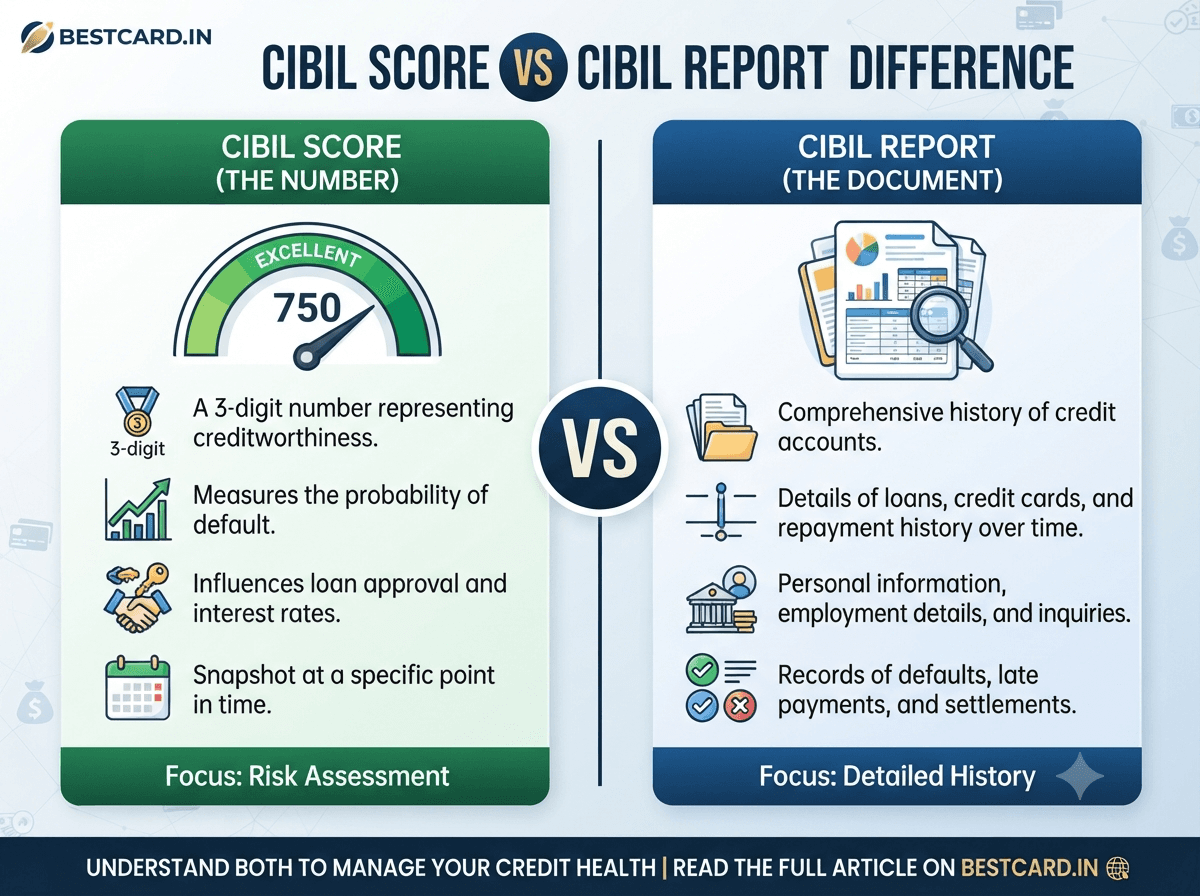
People often use "CIBIL score" and "CIBIL report" interchangeably, but they're different products, and checking only your score misses information that actually determines whether a lender approves you.
The score is a summary, the report is the evidence
Your CIBIL score is a single number between 300 and 900 that compresses your entire credit history into one figure lenders use for a fast go/no-go decision. The full CIBIL report is the underlying detail: every credit card and loan account you've held, payment history month by month, hard inquiries in the last two years, current outstanding balances, and any settled or written-off accounts. Two people with the same score can have very different reports underneath it — one clean but thin, one with a past default that's since been offset by years of good behavior.
Why the report matters more than the score alone
Lenders reviewing a borderline application often look past the score into the report itself — a recent spike in hard inquiries, a maxed-out card, or an old default that's aged out of the score's weighting but is still visible in the report can all sway a decision the score alone wouldn't predict. If you've been rejected despite a decent score, the report is where the actual reason usually lives.
How to check both
CIBIL allows one free full report per calendar year directly through their website; your score alone is often available for free more frequently through banking apps and aggregators. It's worth pulling the full report at least annually, especially before a big loan application, rather than relying on the score shown in your bank's app.
Where to go from here
Start with our CIBIL score basics guide if you're unfamiliar with how the score is calculated, and how to read a credit card statement helps you catch report-relevant details before they become a problem.