Corporate Credit Cards vs Personal Credit Cards: What's the Difference
14 December 2024 · BestCard Editorial Team
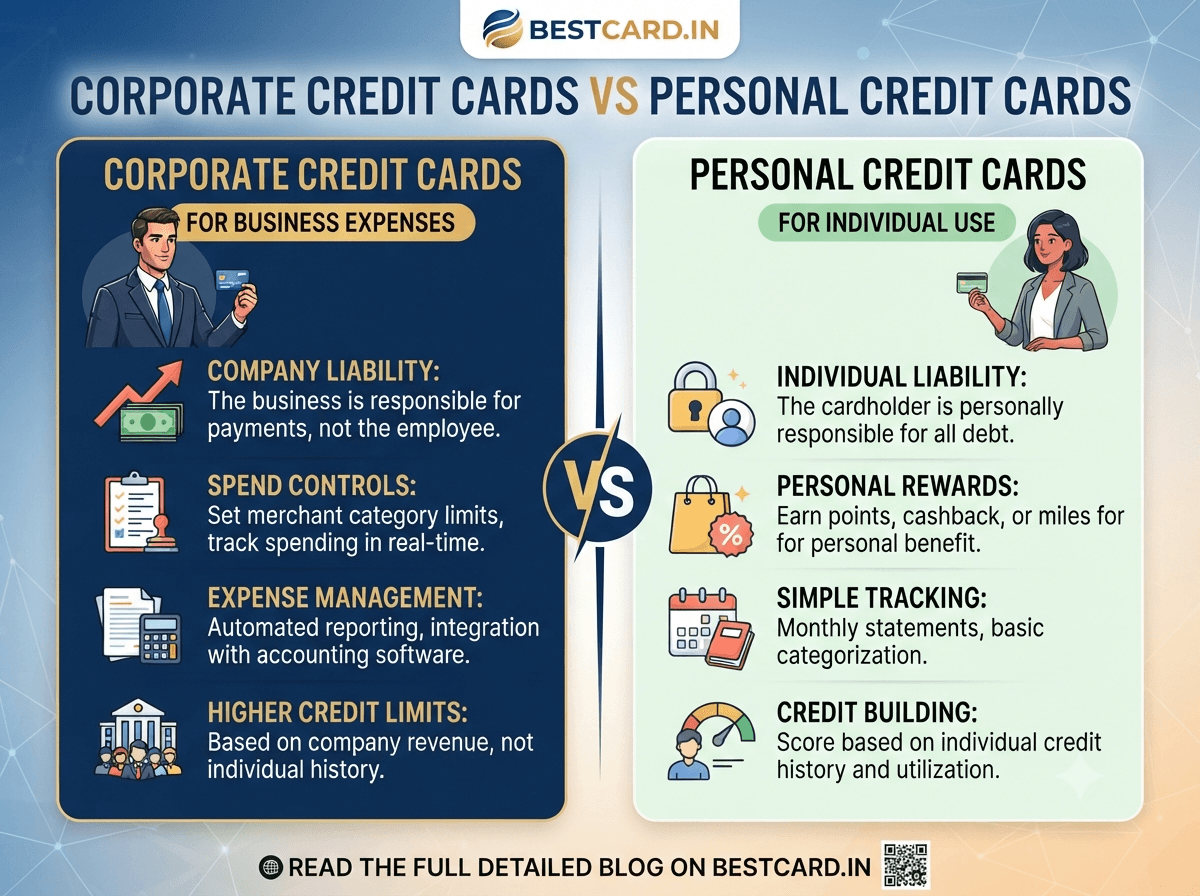
If your employer has handed you a corporate credit card, it's worth understanding that it behaves nothing like the personal card you applied for yourself — the liability model, the rewards, and even who gets called if a payment is missed are all different.
Who's actually liable
Corporate cards in India are usually issued under one of two liability models: company-liable, where the employer pays the bill directly and you just swipe, or individual-liable, where you're billed personally and reimbursed later by expense claim. The second model matters a lot — if your employer is slow with reimbursements, a missed personal payment on an individual-liable corporate card can still hit your own CIBIL score, even though the spend was entirely for work.
Rewards rarely go to you
Most corporate card programs route rewards, cashback, or airline miles to the company's central account, not your personal profile — a detail employees are frequently surprised by after a year of heavy travel spending. If you want to keep any part of the rewards, check your company's card mandate before assuming Vistara miles or lounge visits are yours to keep.
Building your own credit file
Because a corporate card may not even appear on your personal credit report, it does nothing to build your individual credit history. If you're early in your career and relying solely on a corporate card, you have no personal track record to show when you eventually want a mortgage or a personal card of your own — worth opening a modest personal card alongside it for that reason alone.
Where to go from here
If you're deciding whether to also carry a personal card, our comparison of credit cards vs debit cards explains the baseline case for having one, and our business credit cards guide covers the sole-proprietor version of this same liability question.