Credit Card Cashback vs Fixed Deposit Returns: What's the Real Comparison?
2 April 2026 · BestCard Editorial Team
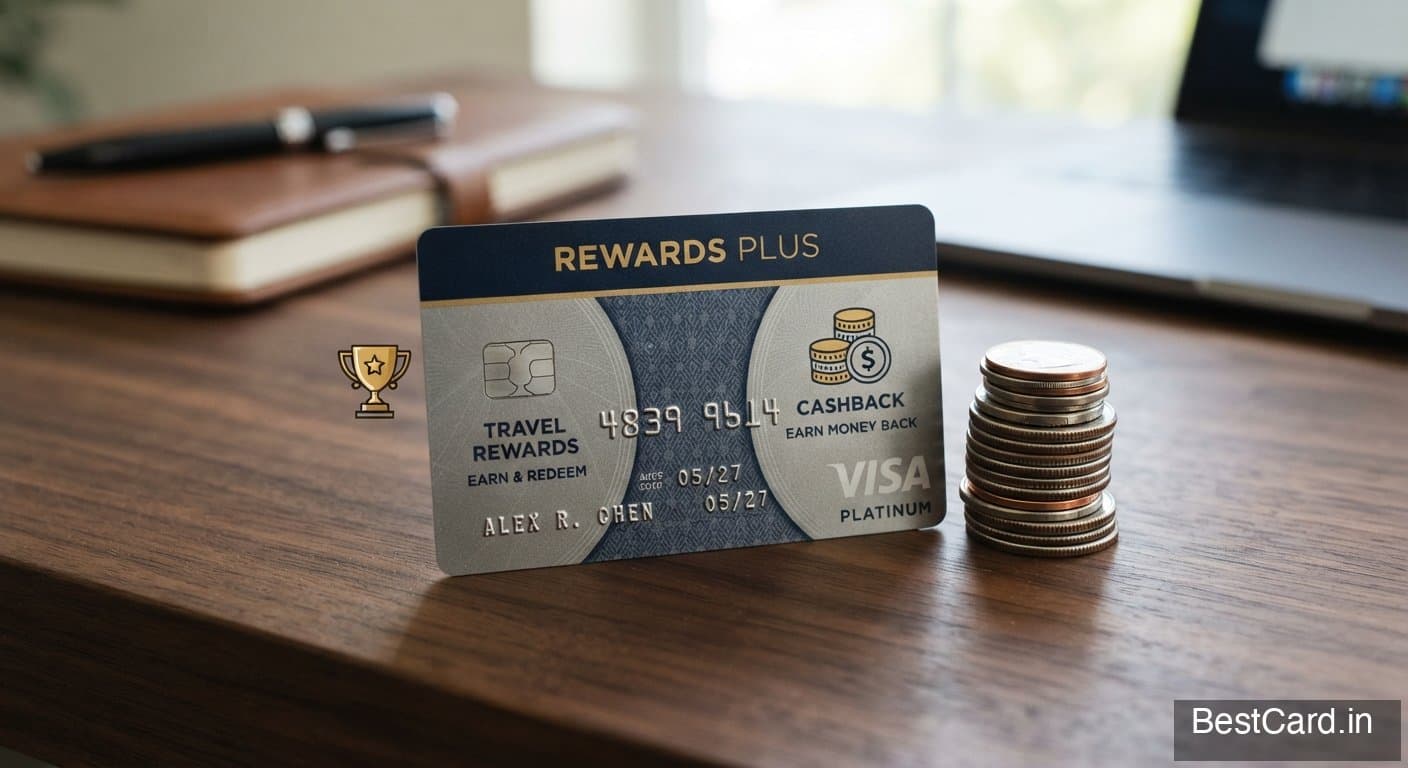
It's a comparison that gets asked a lot, usually phrased as "which gives better returns — cashback cards or an FD?" The honest answer is that they're not the same kind of thing at all, and comparing them as if they were two investment products leads to bad decisions on both sides.
Why an FD's return and cashback aren't the same category
A fixed deposit takes money you already have and grows it over time, at a rate the bank guarantees contractually — currently around 6.5-7.5% per annum at most Indian banks for a one-year tenure, taxed as income at your slab rate. It works regardless of whether you spend anything.
Credit card cashback, by contrast, only exists if you were going to spend the money anyway. A 2% cashback card doesn't grow your wealth — it reduces the effective cost of a purchase you were already making. If you weren't going to buy something, cashback gives you nothing. This is the single biggest misunderstanding people carry into this comparison: cashback is a discount, not a return.
Putting real numbers side by side
Say you have ₹1,00,000. Park it in a 7% FD for a year and, after roughly 30% tax on the interest for a higher tax bracket, you keep about ₹4,900 net — money that simply appears in your account without you doing anything else.
Now say you spend ₹1,00,000 over a year on a 2% cashback credit card on eligible categories. You get back ₹2,000 in cashback. But you also spent the full ₹1,00,000 — money that's gone, converted into goods and services you needed anyway. The ₹2,000 isn't new wealth; it's a 2% discount on spending you'd have done regardless. If you hadn't spent that money, you'd have had the full ₹1,00,000 still in hand, which is strictly better than ₹98,000 spent plus ₹2,000 cashback.
This is where the comparison collapses if treated naively: you cannot "invest" ₹1,00,000 into cashback the way you invest it into an FD. Cashback only returns value against money that leaves your account for actual purchases.
Where cashback cards do add real value
The correct framing is: cashback reduces the cost of spending you were doing anyway, on top of whatever you're separately doing with your savings. If you have ₹1,00,000 in an FD earning ~₹4,900 net annually, and separately you spend ₹3,00,000 a year on your card's best cashback categories at an average 2% back, that's ₹6,000 in genuine savings on money you'd have spent regardless — money that would otherwise have just left your account with nothing back. Use our guide to calculating credit card cashback to work out your own real annual figure, since most cards cap cashback per category or per statement cycle, and the advertised headline rate rarely applies to your full spend.
The one place they genuinely compete: secured cards against an FD
There's a specific product category where the comparison is direct rather than apples-to-oranges — secured credit cards issued against a fixed deposit. Here, your FD keeps earning its full interest rate as collateral while the card gives you spending power and rewards on top, effectively letting you have both. Our guide to secured cards against FDs and the broader secured vs unsecured cards comparison cover when this structure makes sense, typically for people building credit history or without steady income proof.
The practical takeaway
Don't treat cashback as an alternative to saving or investing — it's a spend-efficiency tool, not a wealth-building one. The right mental model is to keep your savings goal (FD, mutual fund, whatever fits your risk profile) completely separate from your card strategy, and simply pick a card whose reward structure matches your actual monthly spending pattern, using our cashback vs reward points comparison to decide which reward type suits you better. The FD grows money you're not spending; the cashback card discounts the money you were always going to spend. Both are useful, but only when you stop expecting one to behave like the other.
Where to go from here
If you're trying to decide which cashback card actually pays the most on your real spending pattern, our best cashback credit cards in India 2026 roundup breaks down category-wise rates, and if you're weighing cashback against travel or point-based rewards more broadly, the rewards vs cashback post covers that trade-off in more depth.