How to Check Your CIBIL Score Free in India: Every Legitimate Way
30 July 2026 · BestCard Editorial Team
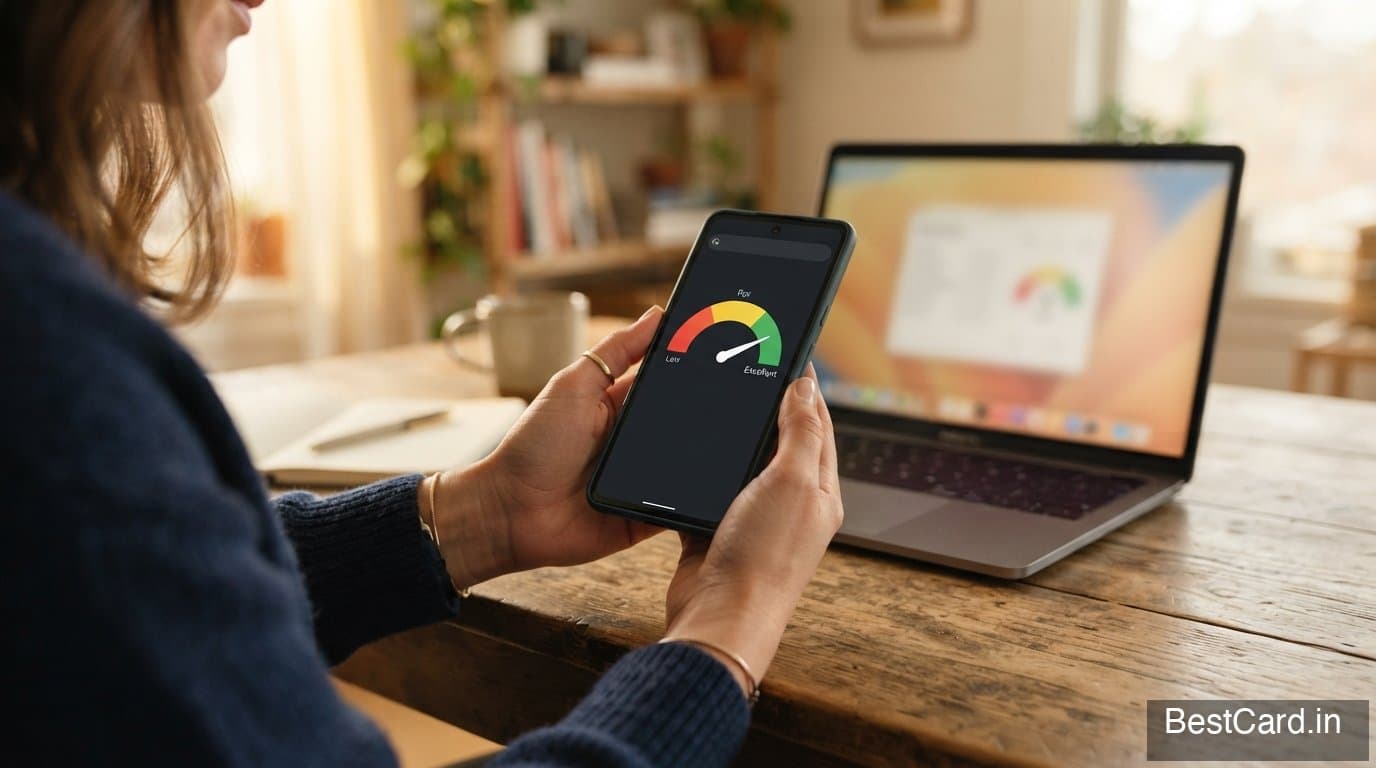
There's no reason to pay for a CIBIL score check in India anymore, and there hasn't been for a while — yet plenty of cardholders still either avoid checking altogether or end up on a paid third-party site that charges for something their own bank already gives away free. Here's every legitimate free route, how they differ, and what actually changes the number once you're looking at it.
Why "CIBIL score" and "credit score" aren't quite the same thing
CIBIL (TransUnion CIBIL) is one of four credit bureaus operating in India — the others are Experian, Equifax, and CRIF High Mark — and each maintains its own score based on data reported to it by lenders. CIBIL happens to be the most widely referenced in casual conversation and the one most lenders check by default, but your Experian or Equifax score for the same credit history can differ slightly depending on which lenders report to which bureau and exactly when. If you're unclear on the difference between the score itself and the full report behind it, CIBIL score vs CIBIL report breaks down exactly what each one shows.
Free route 1: your card issuer's app
The fastest and most common free option today is straight inside your existing credit card or banking app — most major issuers now show your CIBIL score as a standing dashboard tile, refreshed monthly, with zero separate signup required. SBI Card's app, for instance, lets you check your CIBIL score free directly from the dashboard for existing cardholders, refreshed on a monthly cycle without any extra steps. HDFC Bank, ICICI Bank, and Axis Bank apps offer equivalent free score displays for their existing customers, usually under a "credit score" or "CIBIL score" tab in the app's main menu.

This route only works if you already have an active relationship with that issuer — it isn't a way to check your score before you have any credit product; for that, the next option applies.
Free route 2: CIBIL's own website
TransUnion CIBIL runs its own free annual score check at cibil.com, where any individual can register with PAN and basic KYC details and pull one free score-and-report combination per calendar year, no card or existing account required. This is the most authoritative source since it's the bureau itself rather than a reseller, and it's the right starting point if you don't yet hold any credit product and want a baseline before applying for your first card — see choosing your first credit card for what your starting score realistically qualifies you for.
Beyond the one free annual pull directly from CIBIL, repeat checks on their own site typically require a paid subscription — which is exactly why most people default to route 1 or route 3 for anything more frequent than once a year.
Free route 3: fintech and aggregator apps
Independent apps — PaisaBazaar, BankBazaar, CRED, and several others — offer free, unlimited (or near-unlimited) CIBIL score checks on an ongoing basis, monetising instead through loan and card referral offers rather than charging for the score check itself. These are genuinely free and pull real bureau data, not an estimate, but be aware they'll actively market credit products to you based on your score band — treat the marketing as separate from the score data itself, which is accurate regardless.
Free route 4: other bureaus directly
Experian India and Equifax India both run their own free annual score-check portals similar to CIBIL's, worth using if you want to cross-check your CIBIL number against a different bureau's view of the same credit history — useful context since lenders don't all pull from the same bureau, and a meaningful gap between your CIBIL and Experian scores can be a signal that one bureau has outdated or incomplete data on you.
How often should you actually check?
Checking your own score, regardless of method, is a "soft inquiry" and never affects the score itself — this is different from a lender pulling your report as part of a loan or card application, which is a "hard inquiry" that can cause a small, temporary dip. Given that, there's no real downside to checking monthly via a free app dashboard; most people find quarterly checks sufficient unless they're actively planning an application, in which case checking the month before applying is worth doing to catch any errors while there's still time to dispute them.
What actually moves the number
The score responds to the same handful of factors every time: payment history (the single biggest factor — see credit card late payment consequences for how one missed payment shows up), your credit utilization ratio across all cards, the age and mix of your credit accounts, and the frequency of new credit applications in a short window. None of the free-checking routes above change any of these — checking the score is purely observational; only your actual repayment and utilization behaviour moves it.
What to do if your free check shows an error
If a free check surfaces an account you don't recognise, a payment marked late that you paid on time, or a balance that doesn't match your records, raise a dispute directly with the bureau (CIBIL has an online dispute resolution process) rather than with the lender first — the bureau is obligated to investigate and correct verified errors, typically within 30 days, and this is worth doing before any major application since an unresolved error can meaningfully drag your score down for no real reason.
Where to go from here
For the fundamentals of how the score itself is calculated, read CIBIL score basics, and for the distinction between the score and the full report, CIBIL score vs CIBIL report. If you're checking your score ahead of a card application, how to improve your credit card approval chances covers what to fix before you apply.