How to Actually File a Credit Card Purchase Protection Claim
11 February 2026 · BestCard Editorial Team
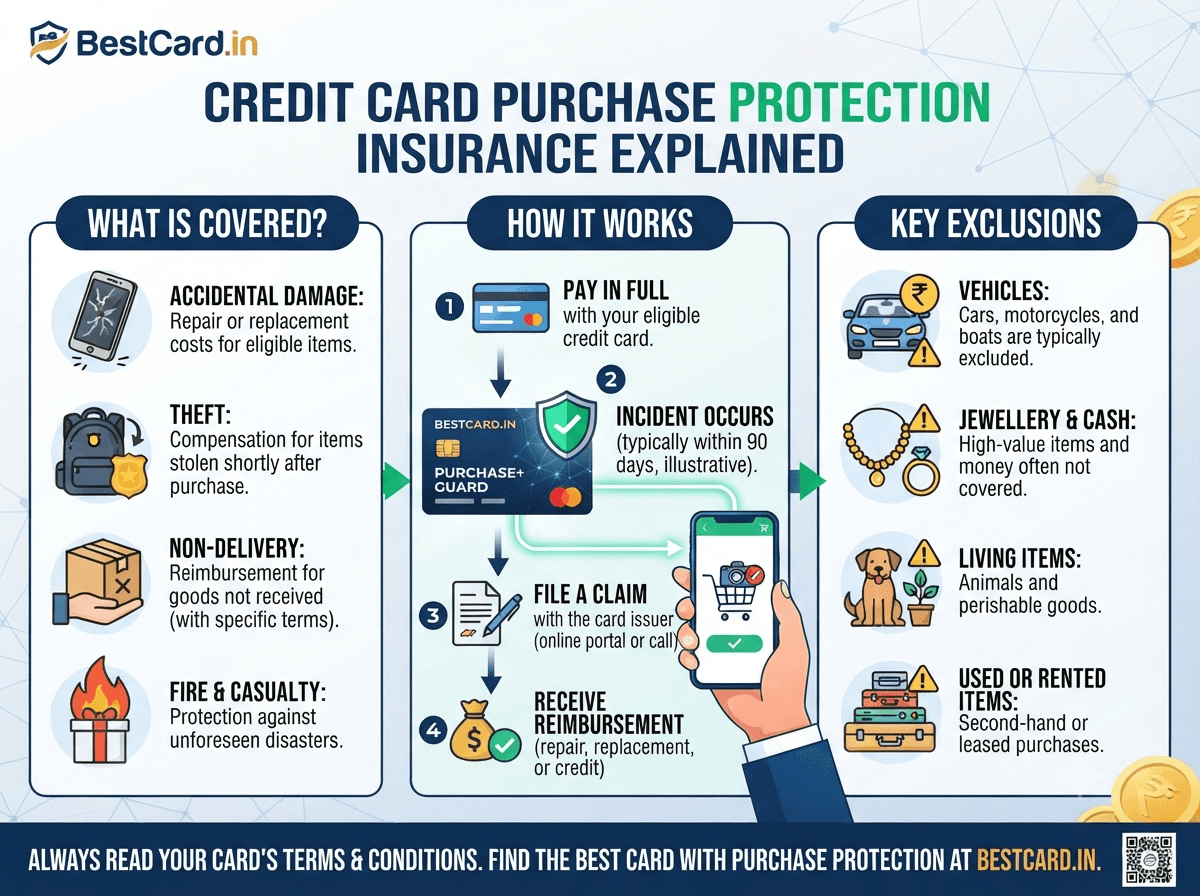
Knowing that your card has purchase protection is only half the job. The other half — actually filing a claim and getting paid — is where most cardholders give up, usually because nobody tells them the process is time-bound, document-heavy, and unforgiving of shortcuts. If you haven't already, read our explainer on what purchase protection covers first, since eligibility rules there determine whether it's even worth attempting a claim.
Step 1: Confirm you're inside the claim window
Purchase protection cover almost always runs on a fixed clock from the date of purchase, not the date of damage or theft discovery — commonly 60 to 180 days depending on the card. The first thing to check isn't whether the item is covered, but whether you're still inside that window. Miss it by even a few days and the insurer will reject the claim outright, regardless of how strong your documentation is. Pull up your card's insurance policy document (usually available as a PDF on the issuer's website or emailed at card issuance) and note the exact number of days before you do anything else.
Step 2: Report the incident immediately, not later
Most policies require you to report theft or damage within 24-48 hours of it happening — separate from the 60-180 day filing window for the claim itself. For theft, this usually means filing a police FIR first; insurers will not process a theft claim without one. For accidental damage, take dated photographs of the damaged item the same day, before you attempt any repair. Delay here is one of the most common reasons for rejection, because it lets the insurer argue the loss wasn't reported in good faith.
Step 3: Gather the documentation set
Insurers processing card-linked purchase protection claims typically ask for a fixed bundle:
- The original purchase invoice or tax invoice, showing the item, date, and amount
- The credit card statement showing that exact transaction
- For theft: a copy of the police FIR/complaint
- For damage: dated photos of the damaged item, and sometimes a repair estimate or "beyond repair" certificate from an authorized service center
- A duly filled claim form (available from the card issuer or the underlying insurer, often a name like Tata AIG, ICICI Lombard, or Bajaj Allianz depending on the card)
- Your KYC documents and cancelled cheque or bank details for the payout
Keep both PDF and printed copies. Some insurers still process paper submissions through courier even when the initial intimation is digital.
Step 4: Submit through the right channel
You don't file with the bank — you file with the insurance company that underwrites the benefit, though the bank's customer care or card app usually has a "file a claim" link that routes you there. Call your card's dedicated helpline number (printed on the back of the card or in the welcome kit) and ask specifically for the purchase protection claim intimation number — this is your reference for every follow-up. Without an intimation number, the insurer has no record you actually contacted them, which matters if the claim later gets disputed.
Step 5: Track and follow up
Once documents are submitted, insurers typically take anywhere from 15 to 45 working days to process a purchase protection claim, sometimes longer if they request additional proof. Set a calendar reminder for two weeks after submission and call for a status update — don't wait for them to reach out. If the insurer asks for supplementary documents, respond within the window they give you; a common quiet rejection reason is simply that the claimant never replied to a follow-up email that landed in spam.
Why claims actually get rejected
In practice, most rejections come down to a handful of repeat causes:
- Filing outside the claim window. The single biggest reason, and entirely avoidable if you know the deadline.
- No FIR for a theft claim. Insurers treat this as non-negotiable proof.
- Item purchased with a different card or in cash, with only the statement of a different card as evidence.
- Pre-existing damage or wear-and-tear claimed as sudden damage. Insurers can and do send items for inspection.
- Category exclusions. Jewellery, cash, vehicles, and sometimes mobile phones are commonly excluded — check your specific policy wording rather than assuming standard coverage.
- Incomplete claim form or mismatched invoice details (wrong date, wrong amount, or the invoice made out to someone else's name).
Where to go from here
If the claim gets rejected and you believe it's unfair, ask for the rejection in writing with the specific clause cited — this is your starting point for an appeal or an insurance ombudsman complaint. It's also worth reading our guide on credit card fraud protection tips if your claim originated from theft, since fraud liability and purchase protection are handled by different teams and shouldn't be confused. And if this experience makes you reconsider a card's total value against its annual fee, that's a reasonable next question to ask before your renewal date.