Credit Card vs Buy Now Pay Later: Which Is Safer
19 April 2026 · BestCard Editorial Team
Buy Now Pay Later has grown fast in India specifically by positioning itself as simpler and less risky than a credit card. Whether that's actually true depends a lot on how disciplined you are with either.
How the mechanics actually differ
A credit card gives you a revolving line of credit with a defined billing cycle, a grace period, and — if you carry a balance past the due date — interest charged at rates that are usually disclosed clearly upfront. BNPL products typically split a purchase into a fixed number of installments, often interest-free if paid on schedule, but with late fees and sometimes steep penalty structures if you miss a payment. The interest-free framing of BNPL can make it feel safer, but a missed BNPL installment often costs you more in fees, proportionally, than a similarly-sized credit card late payment would.
Where BNPL genuinely wins
BNPL products are usually easier to get approved for than a credit card, since many run lighter credit checks, which makes them accessible to people who wouldn't yet qualify for a card. For a single, well-planned purchase where you're confident about repayment timing, an interest-free BNPL split can be a genuinely cheaper way to pay than a credit card's revolving interest rate if you were ever going to carry a balance.
Where credit cards genuinely win
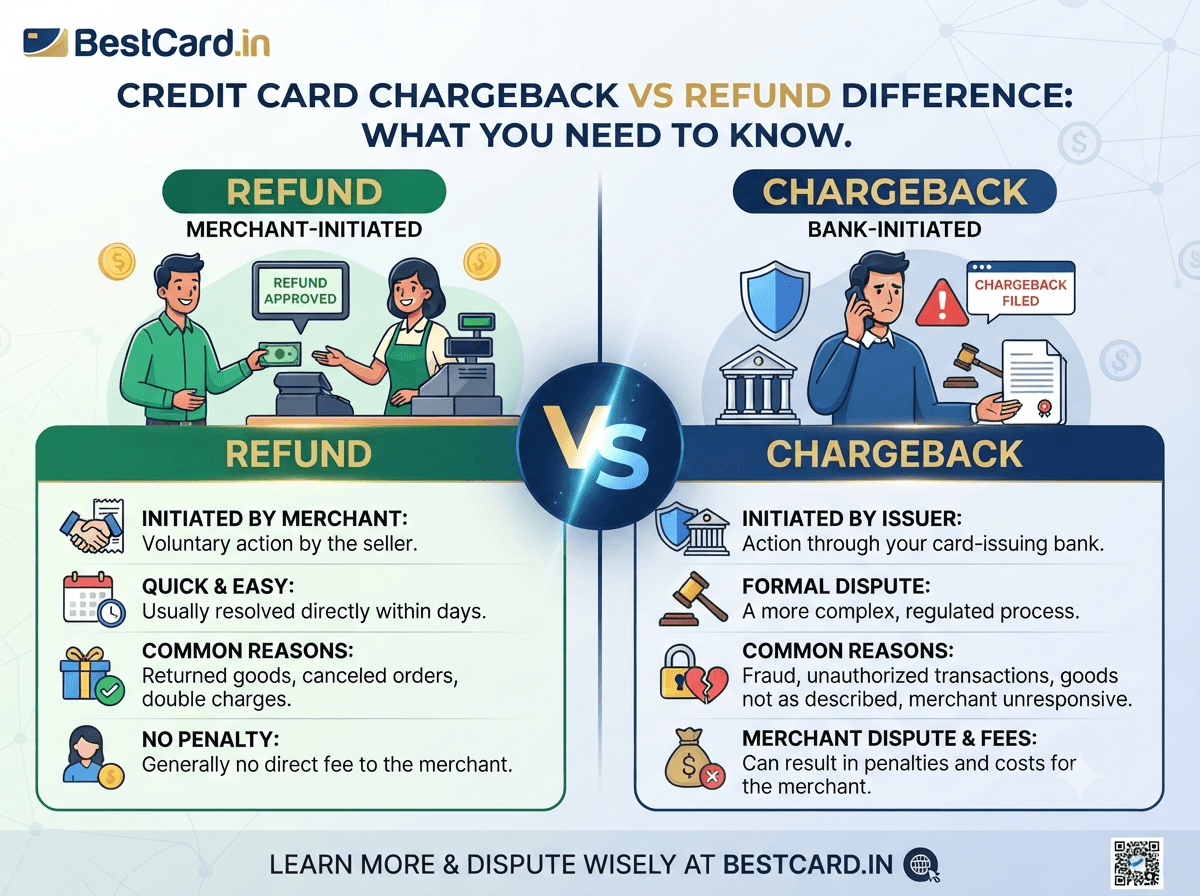
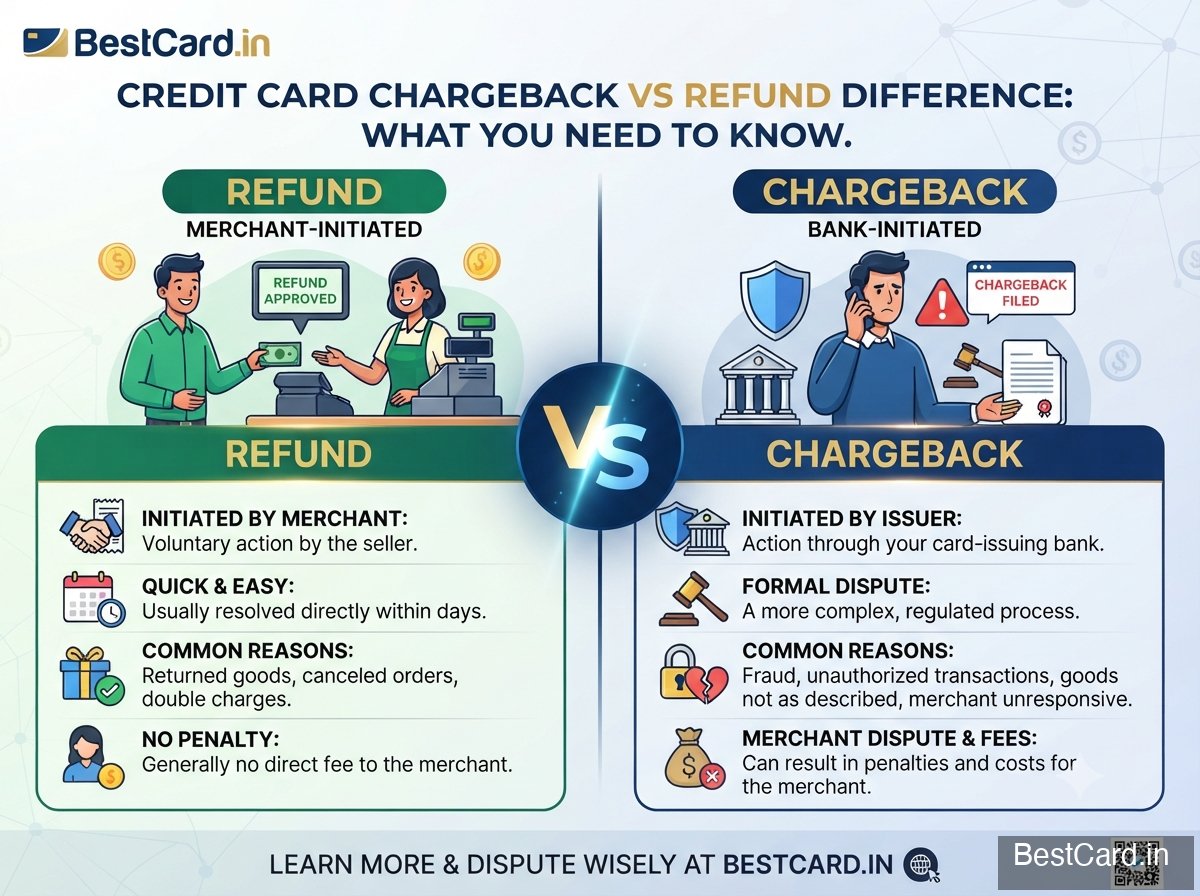
Credit cards typically report your payment history to credit bureaus, meaning responsible use builds your CIBIL score over time — many BNPL products don't report positive payment history the same way, so using BNPL well doesn't necessarily help your credit file the way using a card well does. Credit cards also come with a broader set of consumer protections, including dispute processes if a purchase goes wrong — see our explainer on chargebacks versus refunds for how that actually works — that most BNPL products don't offer in the same structured way.
The debt-stacking risk that's specific to BNPL
Because BNPL is split across so many different apps and checkout providers, it's easy to end up with several small BNPL commitments running simultaneously across different platforms without a single place to see your total outstanding obligation — unlike a credit card statement, which consolidates everything in one view. This fragmentation is arguably the single biggest risk with BNPL for someone using multiple platforms regularly, since it's harder to track your true total exposure at any given moment.
Which is the better default
For anyone who already qualifies for a credit card and can pay in full each cycle, a card is generally the better long-term choice — it builds credit history, offers stronger dispute protections, and consolidates your spending into one trackable statement. BNPL remains a reasonable tool for a specific, well-planned purchase, particularly for someone not yet eligible for a card, but it shouldn't be treated as a lower-risk substitute for disciplined card use.
The bottom line
Neither product is inherently safer — both are safe if used with discipline and risky if not. The meaningful difference is that a credit card, used well, actively builds your credit profile, while most BNPL products leave that opportunity on the table.