Credit Card or Personal Loan: Which One Actually Makes Sense
11 June 2026 · BestCard Editorial Team

Need money for a large expense and not sure whether to swipe your card or apply for a personal loan? Both borrow against your future income, but they price risk very differently, and picking the wrong one can cost you thousands in avoidable interest.
Why credit card debt is expensive by default
Revolving credit card debt — carrying a balance past the due date without converting it — typically runs 36-42% annualized in India, among the most expensive borrowing available to a salaried individual. That's the trap: a card is a fantastic short-term liquidity tool and a terrible way to fund something you can't repay within a cycle or two. If you're already unsure how interest accrues on a card balance, read our minimum due trap guide before doing anything else here — it explains why "just paying something" is often the costliest choice of all.
When the card option actually wins
Two card features change the math entirely: EMI conversion and balance transfer, covered in depth in our EMI conversion guide. Converting a large purchase or an existing balance to EMI usually brings the effective rate down to somewhere between 13-18% — still not cheap, but a fraction of the revolving rate, and it's instant, with no fresh paperwork or credit check beyond what you already cleared to get the card.
A card also wins when the expense is genuinely short-term. If you know a bonus or maturity payout is landing in six weeks, paying by card and clearing the statement in full costs you nothing extra — a personal loan, by contrast, comes with processing fees and often a prepayment penalty if you close it early, which erodes the benefit of borrowing for a purpose that was never going to run long. Cards from issuers like SBI Card and Axis Bank commonly offer EMI conversion at the click of a button in their apps, worth checking before you go anywhere near a lender.
When a personal loan is the better call
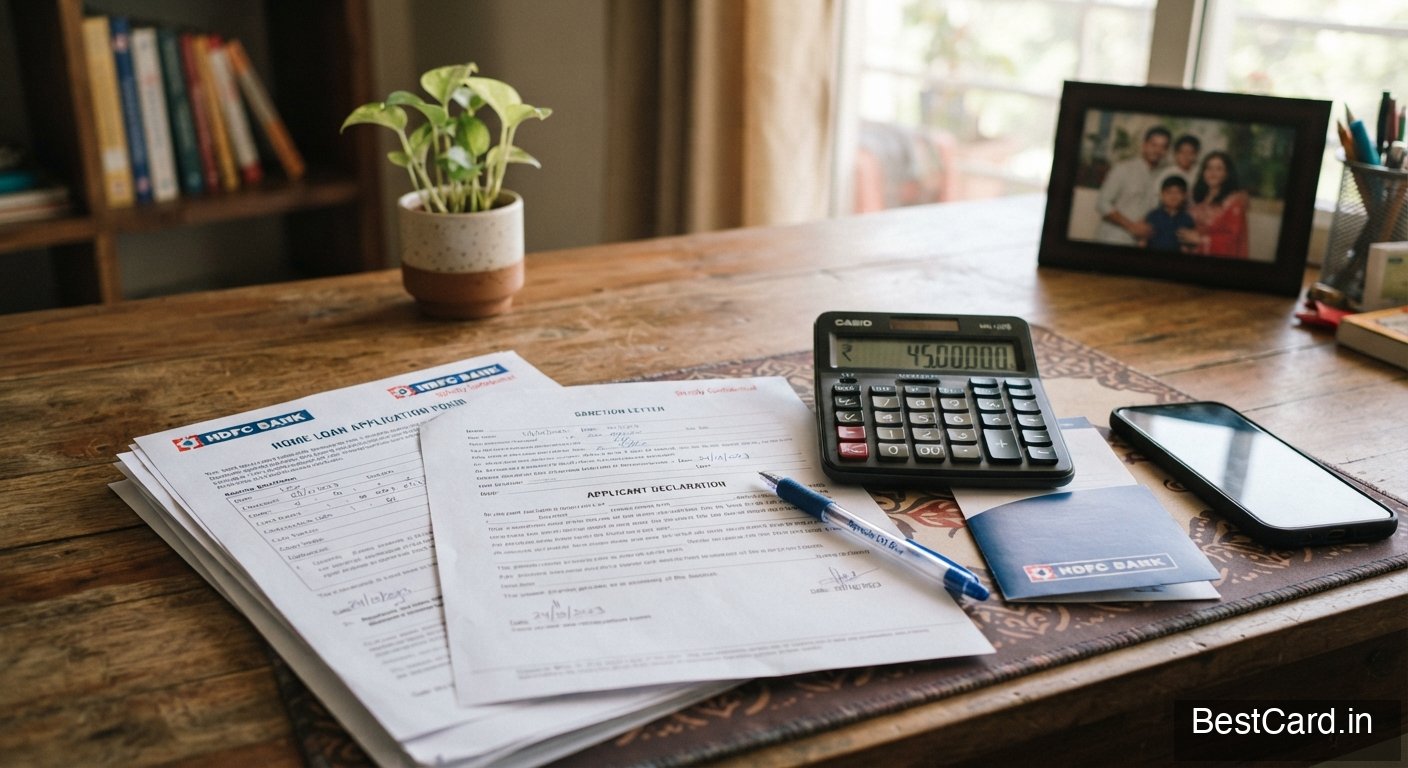
For genuinely large amounts — a wedding, a home renovation, medical expenses running into several lakhs — a personal loan almost always beats even EMI-converted card debt. Personal loan rates from banks and NBFCs typically sit in the 10-16% range for a good credit profile, the tenure can stretch to 5 years, and the amount isn't capped by your existing card limit the way EMI conversion is. A card's credit limit is built for spending, not for financing a six-figure expense, so trying to force a large need through card credit often means maxing out utilization, which drags your CIBIL score down at the exact moment you need it to look strong for the loan application. Our credit utilization ratio guide covers exactly why that matters.
A personal loan is also the more honest choice when you don't have a clear repayment date. Loans come with a fixed EMI and tenure you commit to upfront, which forces discipline that a revolving card balance doesn't. If you've ever paid only the minimum due on a card and watched the balance barely move, you already know how easy it is for card debt to drift without a real payoff plan.
A quick way to decide
Ask two questions: can you clear this within 2-3 statement cycles, and is the amount well within your card's limit without pushing utilization above 30%? If yes to both, use the card — ideally paid in full, or EMI-converted if not. If either answer is no, a personal loan is the cheaper, more disciplined option, especially for amounts above ₹1-2 lakh.
Where to go from here
Read our credit card balance transfer guide if you're already carrying a balance and want to move it to a lower rate, and see how to increase your credit card limit if EMI conversion keeps falling short of what you actually need.