
DBS vs Standard Chartered Credit Cards: A ₹15,000 Gap Between Flagships
23 October 2026 · BestCard Editorial Team
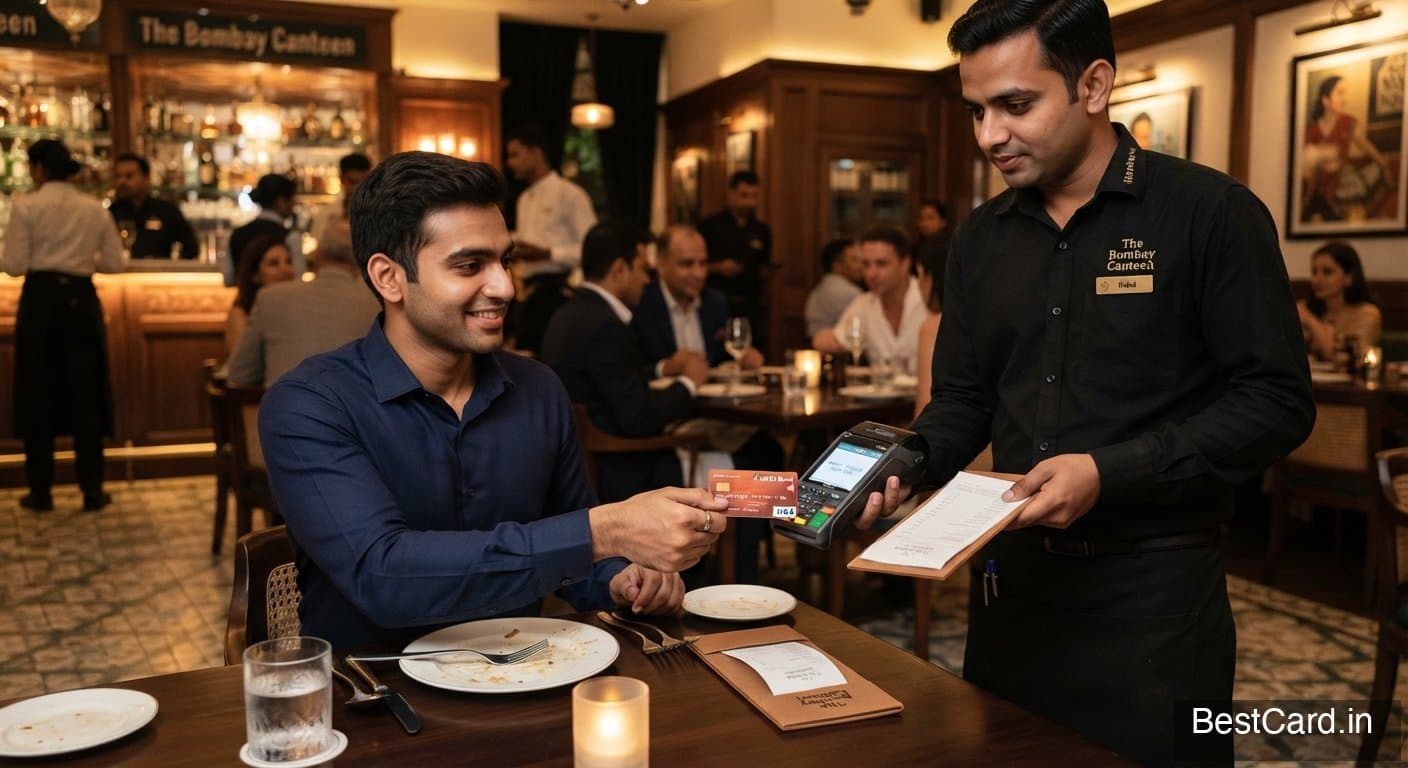
The headline here is a price gap. Standard Chartered's Ultimate costs ₹5,000 a year, while the DBS Vantage costs ₹20,000. Whether the extra ₹15,000 buys anything depends on how much of your spending happens abroad and how often you use a lounge.
Flagship against flagship
The Standard Chartered Ultimate earns a flat 3.33% base with 2% on utilities and charges a 2% forex markup. Lounge access is 4 domestic visits per quarter and one Priority Pass international visit a month, provided you spent ₹20,000 in the previous month. There is no published fee waiver and the income floor is ₹1,50,000 a month.
The DBS Vantage costs ₹20,000 to join and each year, waived at ₹10,00,000. It earns a 2% base, charges zero forex and offers unlimited domestic and international lounges through LoungeKey. On rewards the Ultimate is ahead, since 3.33% beats 2% on domestic spending. On lounges and forex the Vantage is ahead. The Ultimate's rate advantage is worth about ₹13,300 a year on ₹10,00,000 of spend, which roughly cancels the fee gap on its own. If you hold the card for lounges abroad and foreign transactions, the Vantage may justify its price; if you spend mostly at home, the Ultimate gives more for less.
Standard Chartered goes further up
SC's Beyond costs ₹15,000 to join and ₹25,000 a year, with a 3.33% base, 2% utilities, a 2% forex markup and unlimited domestic and international lounge access with 8 guest visits a year. See our Beyond review. The Priority Visa Infinite has no fee for Priority Banking clients, a ₹3,00,000 income floor and 4 domestic visits a quarter plus 2 international Priority Pass visits a month for those who meet the bank's investment criteria. DBS has no counterpart to either.
Everyday cashback
DBS leads in the middle of the market. Spark20 costs ₹1,499 (waived at ₹2,50,000) with 4% on dining, groceries and utilities (each capped at ₹1,400 a month), 2% online and 1% other. SuperX Plus costs ₹2,999 with 3.5% on dining, groceries and online shopping.
Standard Chartered's counterparts are narrower. Manhattan costs ₹999 (waived at ₹1,20,000) and pays 5% on groceries only, with 0.5% elsewhere. DigiSmart costs ₹588 a year, pays 10% on online shopping (capped at ₹1,000 a month), 10% on dining (₹150 cap) and 15% on travel (₹600 cap). Smart costs ₹499 with 2% online, capped at ₹1,000 monthly. The SC caps are small, and forex is 3.5% on all of them. For someone who spends across dining, groceries and bills, DBS Spark20 gives broader coverage; DigiSmart is better only if online shopping is your focus.
Lounges in the mid-range
SC Rewards has a ₹1,000 annual fee, waived at ₹1,50,000, with 1 domestic lounge visit per quarter and a 0.67% base rate. DBS Spark20 offers 2 domestic visits per quarter, SuperX offers 1, and Spark5 and Spark10 offer 1 each. The EaseMyTrip co-brand from Standard Chartered has 2 domestic visits a year and has dropped international access. DBS has the stronger mid-tier lounge offering.
Who should buy what
Domestic-heavy high spender: Standard Chartered Ultimate. Frequent flyer with foreign spend: DBS Vantage. Dining and grocery household: DBS Spark20. Online shopper focused on a few platforms: Standard Chartered DigiSmart. Ultra-premium buyer: Standard Chartered Beyond.
Related reading
The complete lineups are in the DBS guide and Standard Chartered guide. For a head-to-head against another foreign bank, see HSBC vs Standard Chartered.
Related reading
- AU Bank vs Standard Chartered: Dining and Grocery Caps Compared Line by Line
AU's Altura and LIT cover dining and groceries cheaply; Standard Chartered's Manhattan and Smart trade higher fees for specific rates. Compare the caps.
- RBL vs Standard Chartered: Paid Perks and Zero Forex Against One Flat-Rate Card
RBL builds around zero forex and fuel co-brands; Standard Chartered leads with the Ultimate flat rate and low-fee cashback. Compare fees and lounge access.
- DBS vs HDFC Credit Cards: Six Cards Against Forty, and the One Case Where DBS Wins
HDFC has dozens of cards at every price, DBS has six. The one place DBS pulls ahead is the ₹20,000 Vantage with zero forex and unlimited lounges worldwide.