
Reliance SBI Card PRIME Review: Worth It Only If You Live in the Reliance Ecosystem
12 July 2026 · BestCard Editorial Team
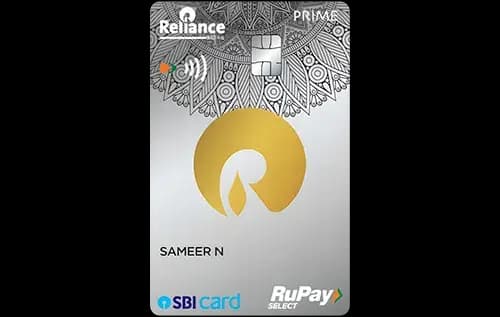
The Reliance SBI Card PRIME is the premium variant of SBI's co-brand with Reliance Retail, built for households that already buy groceries on JioMart, clothes on AJIO and shop across Reliance's other brands. It earns 5% back on those platforms and opens with a voucher bundle worth close to ₹15,000. Outside the Reliance ecosystem, though, it earns very little, and its ₹2,999 fee means you need to be a committed Reliance shopper for the numbers to work.
Fees and eligibility at a glance
PRIME charges a ₹2,999 joining fee and a ₹2,999 annual fee, with the renewal fee waived on ₹3 lakh of annual spend. That's ₹25,000 a month, a high bar for a card that earns well in only one ecosystem. You need a credit score of 720 or above, a minimum monthly income of ₹35,000, and an age between 21 and 65, with salaried and self-employed applicants both eligible. The forex markup is 3.5%, and cash advances cost 2.5% or ₹300 at domestic ATMs (3% or ₹300 internationally) with no interest-free period.
Rewards and how they actually work
The structure has three levels. Purchases on Reliance platforms, with AJIO and JioMart the main ones, earn 5% back. Dining earns 1.25%. Everything else earns 0.5%. Rewards come as points worth 25 paise each, so 5% works out to 20 points for every ₹100 spent.
A family spending ₹8,000 a month on JioMart groceries and AJIO orders earns ₹400 a month, or ₹4,800 a year, comfortably more than the annual fee. At ₹3,000 a month, the return drops to ₹1,800 a year, which doesn't cover it. The break-even on rewards alone is about ₹60,000 a year on Reliance platforms, or ₹5,000 a month. Below that, PRIME only works if the vouchers make up the difference or you reach the ₹3 lakh waiver.
Redemptions cost ₹99 plus taxes per request, charged once per batch, so let points build up before you redeem.
The voucher bundle and milestones
The joining benefits are the card's biggest selling point. You get a ₹3,000 Reliance Retail voucher, which by itself matches the joining fee, plus additional discount vouchers worth ₹11,999, for close to ₹15,000 in combined value. Be realistic about that headline: the ₹3,000 voucher is as good as money if you shop at Reliance, but discount vouchers only have value if you were going to make those purchases anyway.
On the milestone side, PRIME awards up to ₹5,000 in Reliance Retail vouchers a year, unlocked in tiers as you cross spend milestones. For a heavy Reliance shopper, that's a useful extra on top of the 5%.
The card's details don't list lounge access, travel insurance or a fuel surcharge waiver. PRIME is a shopping card, and only a shopping card.
How it compares with the Reliance SBI Card and SBI Cashback
The base Reliance SBI Card costs a fraction of PRIME's fee, has a lower eligibility bar (a 680 credit score and ₹15,000 monthly income), runs on RuPay so it can be linked to UPI, and includes a 1% fuel surcharge waiver. It earns 2.5% on Reliance platforms, half of PRIME's rate, with the same 0.5% base. At ₹8,000 a month on Reliance platforms, PRIME earns ₹4,800 a year against the base card's ₹2,400. That ₹2,400 gap is less than PRIME's ₹2,999 fee, so on rewards alone the upgrade only pays once your Reliance spending gets closer to ₹10,000 a month, or if you reach the waiver or genuinely use the vouchers.
The SBI Cashback Card is the other comparison. It pays 5% cashback on all online spends, not just a set of partners, capped at ₹2,000 a month, plus 1% offline, for a ₹999 fee waived on ₹2 lakh. Since AJIO and JioMart orders are online purchases, the Cashback Card should earn the same 5% on them while also covering every other shopping site, with cashback credited automatically and no redemption fee. PRIME's case against it rests almost entirely on the Reliance voucher bundle and milestones.
What's genuinely good about this card
A 5% return on groceries and fashion from platforms many Indian households already use is a good rate. The ₹3,000 joining voucher offsets the first year's fee for any regular Reliance shopper, and the milestone vouchers reward consistent use. The 1.25% dining rate is a small bonus the base card doesn't offer.
Where it falls short
The value is confined to Reliance-owned brands. The 0.5% base rate is very weak for a ₹2,999 card, so any spending outside the ecosystem is close to wasted. The ₹3 lakh waiver is hard to reach without putting a lot of low-earning spend on the card. The ₹15,000 voucher headline overstates what most people will actually use. There are no travel or lounge perks to justify the fee in other ways. And for online orders, the SBI Cashback Card covers the same ground more broadly for a third of the price.
Who this card actually makes sense for
PRIME suits a household that spends ₹8,000 or more a month across JioMart, AJIO and other Reliance brands and will use the joining and milestone vouchers. For that family, it pays for itself and then some. Lighter Reliance shoppers are better served by the base Reliance SBI Card, and anyone whose online shopping is spread across many sites should look at the SBI Cashback Card first.
Where to go from here
If JioMart is a big part of your grocery budget, our guide to the best credit cards for JioMart shopping compares the alternatives. For SBI's other shopping-focused cards, see the best SBI credit cards for shopping, and for the full lineup, the SBI credit cards guide.
Related reading
- Flipkart SBI Credit Card Review: Strong Ecosystem Cashback, With Caps to Watch
A practical review of the Flipkart SBI Credit Card's cashback on Flipkart, Myntra and partner apps, its quarterly caps, fees, and how it compares with the Flipkart Axis Bank Card.
- SBI SimplyCLICK Card Review: A Starter Card for Online Shoppers
How the SBI SimplyCLICK Card's 10X rewards on Amazon and partner merchants work, its fees, and whether it's the right first card.
- Samsung Axis Bank Signature Credit Card Review: Great for Samsung Upgrades, Thin Elsewhere
An honest review of the Samsung Axis Bank Signature Credit Card: 10% back on Samsung purchases within a ₹2,500 monthly cap, partner points, lounge visits, and when Flipkart Axis does better.