
Union Bank of India vs SBI Card: Eight Lounge Visits for ₹499 or ₹4,999
26 October 2026 · BestCard Editorial Team
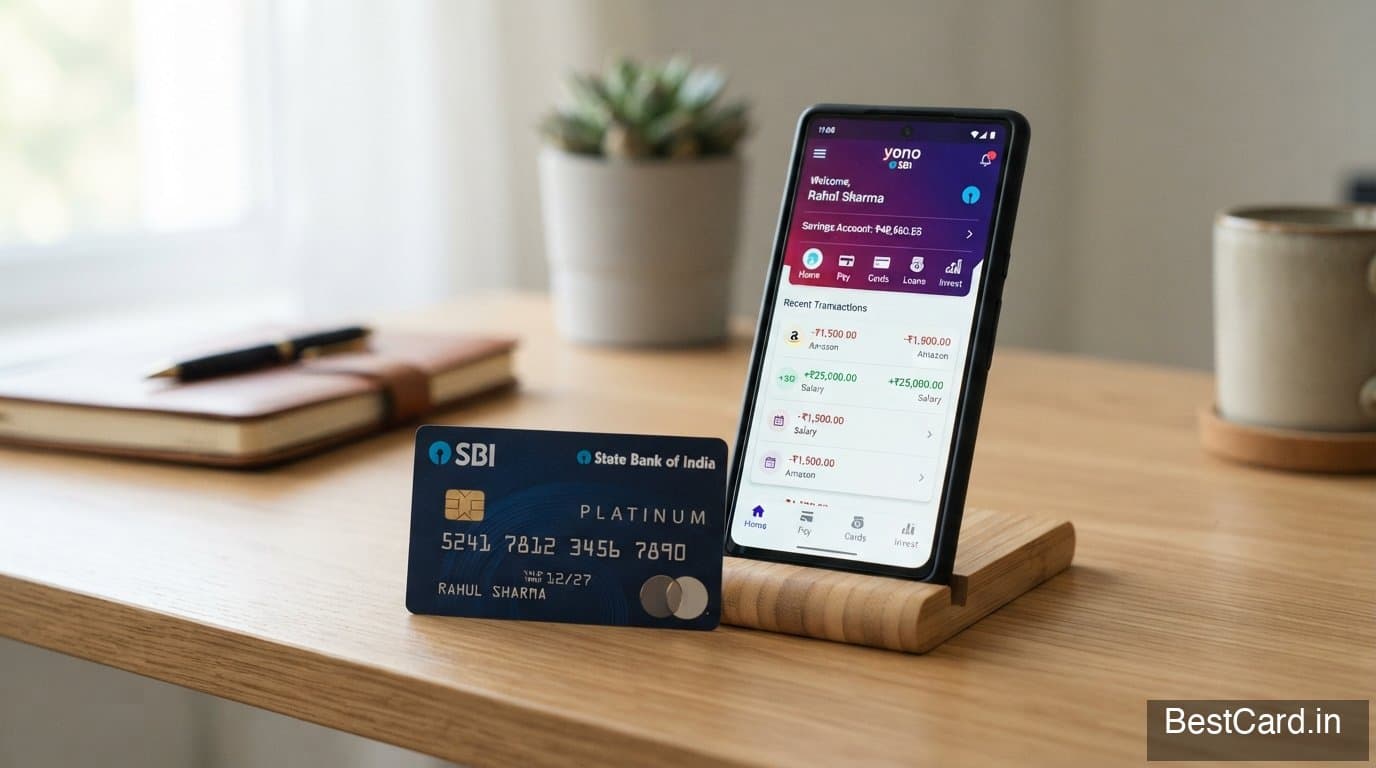
The sharpest contrast between these two is the price of lounge access. Union Bank of India's JCB Health card costs ₹499 a year and includes 8 domestic and 2 international lounge visits. SBI Card charges ₹4,999 for the Elite, which includes 8 domestic and 6 international visits. The rest of the comparison is about whether the extra cost buys anything.
Low-fee lounge cards
Union's JCB Wellness (₹999, waived at ₹1,00,000) and JCB Health (₹499, waived at ₹50,000) both give 8 domestic and 2 international lounge visits a year. Wellness pays 1% on dining and groceries, and both carry a ₹40,000 income floor. Union's RuPay Select has no joining fee, a ₹550 annual fee waived at ₹50,000, a 1% base rate and 2 domestic visits a quarter plus 2 international a year. The Unicorn costs ₹2,400, waived at ₹3,00,000, with 8 domestic and 2 international Priority Pass visits and a 1% base.
SBI's lounge access starts higher. The Pulse (₹1,499) gives 4 domestic visits a year, and Card PRIME (₹2,999) gives 8 domestic and 4 international. Anyone wanting lounges without paying SBI's premium prices should look at Union first.

Metal and super-premium
Union's Nexteria is a RuPay metal card at ₹12,499 a year, waived at ₹8,00,000. It offers unlimited lounge visits for the primary holder plus family visits each quarter, and has a ₹1,00,000 income floor and a 2.5% forex markup. SBI's Aurum costs ₹9,999, waived at ₹12,00,000, with a 1.99% forex markup, unlimited international lounges and 4 domestic visits a quarter, and a ₹3,30,000 income floor. Our SBI Aurum review has the details.
Nexteria asks for a much lower income and has an easier waiver, but Aurum charges less and has lower forex. For an affluent buyer the two are close; for someone near ₹1,00,000 monthly income, only the Nexteria is realistic.
Fuel
Union's Uni Carbon with HPCL costs ₹499 joining and ₹550 annual (waived at ₹1,00,000), with a 6.5% fuel rate capped at ₹500 a month, plus a 0.5% base. SBI's BPCL SBI Card costs ₹499 with 3.25% on fuel capped at ₹325 a month; the more elaborate OCTANE costs ₹1,499. Our BPCL SBI Card review covers the caps. On the headline rate, Union wins, but the right choice depends on whether you live near an HPCL or BPCL pump.
Entry cards and waivers
Union's Visa Platinum and Gold carry annual fees of ₹450 and ₹350, waived at ₹50,000 and ₹30,000 of spending. The Visa Signature has a ₹1,999 annual fee, waived at ₹2,70,000. U-Secure targets customers without an ITR. SBI's entry cards (SimplyCLICK ₹499, Cashback ₹999) offer much higher online rewards, 2.5% and 5%. If online shopping drives your spend, SBI; if you want to hold a card at the lowest waivable cost, Union.
Where each wins
Union wins on cost per lounge visit, HPCL fuel and a cheaper entry to metal. SBI wins on online-shopping rewards, brand partnerships (IRCTC, airline cards, Titan, Reliance) and low forex at the Elite and Aurum tier.
Next steps
Browse the SBI guide for every SBI card, and see our lifetime-free credit cards with lounge access list for zero-fee options across banks. For another Union comparison, read Union Bank vs Bank of Baroda.
Related reading
- SBI vs Yes Bank Credit Cards: Everyday RuPay Range Against a Top-Heavy Lineup
Yes Bank has strong premium cards in Reserv and Marquee but thin entry options; SBI Card is the reverse. See where the split lands for UPI, travel and fees.
- Union Bank of India vs Bank of Baroda Credit Cards: Two 6.5% HPCL Fuel Cards With Very Different Caps
Union Bank and BOBCARD each sell an HPCL card at ₹499 with a 6.5% fuel rate. Compare their caps, JCB lounge cards, metal options and free fintech picks.
- SBI vs Kotak Credit Cards: A Wide Shelf Against a Few Sharp Cards
SBI Card sells something for almost every spending pattern; Kotak's lineup is smaller, but Zen Signature, Cashback+ and Air+ still earn a place. Where each bank leads.