
Best Credit Cards for Air India Maharaja Club Miles in 2026
14 October 2026 · BestCard Editorial Team
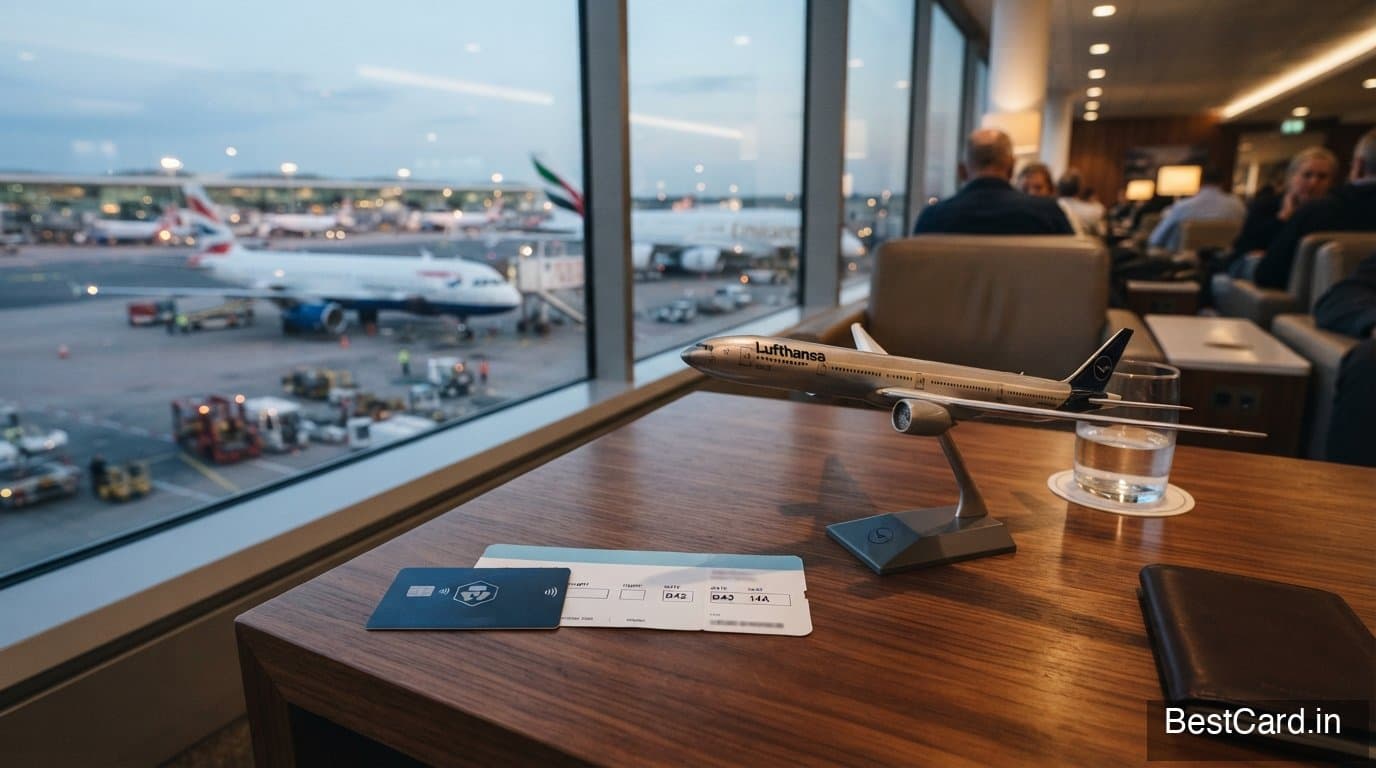
If you fly Air India often, the most direct way to build Maharaja Club miles with a credit card is one of SBI Card's two Air India co-brands. They earn 10 points per ₹100 on Air India bookings and convert those points into miles. A transfer card like HSBC TravelOne is the more flexible alternative if you also fly other airlines.
How credit cards earn Air India miles
There are two routes. A co-brand card earns points that are designed to become Air India miles, usually with a higher rate on Air India tickets. A transferable points card earns bank points that you can move to several airline programmes, Air India being one option among many.
Since Vistara merged into Air India in late 2024, Air India's programme has become the main loyalty scheme for full-service domestic flyers. It was earlier called Flying Returns and now runs as Maharaja Club. Some card terms, including our own records for SBI's co-brands, still use the Flying Returns name, so don't let that confuse you.
Co-brands are simpler and earn more on Air India itself. Transfer cards protect you if your airline preference changes. If you're new to how transfers work, our guide to transferring reward points to airline miles covers the mechanics.
The shortlist
Air India SBI Signature
The Air India SBI Signature is the strongest earner for a committed Air India flyer. It earns 10 reward points per ₹100 on Air India ticket purchases and 4 points per ₹100 on everything else, and the points convert 1:1 into miles. That makes it one of the few Indian cards where everyday spend still builds airline miles at a decent pace.
The joining and annual fee is ₹4,999 with no spend-based waiver. In return you get 20,000 bonus points on joining and 5,000 points on every card anniversary. Lounge access covers 8 domestic visits a year (maximum 2 per quarter) and a complimentary Priority Pass membership, with a $27 charge per visit once the complimentary allowance is used. The minimum income is ₹1,50,000 a month, and the forex markup is 3.5%. Our full Air India SBI Signature review goes deeper.
Air India SBI Platinum
The Air India SBI Platinum is the entry version. It keeps the 10 points per ₹100 on Air India bookings, but its base rate on other spend is lower (BestCard lists it at 2 against the Signature's 4). The fee is ₹1,499, waived on ₹3 lakh of annual spend, and the income bar is a far more reachable ₹25,000 a month.
It includes complimentary domestic lounge visits and a fuel surcharge waiver, though SBI doesn't publish a fixed visit count in our data, so confirm it with the bank. There's no international lounge access. This is the right card if you book Air India a few times a year but don't spend enough elsewhere to justify the Signature's fixed fee.
HSBC TravelOne
HSBC TravelOne isn't an Air India card, but it lists Air India among 14+ airline partners that its points convert to at 1:1, alongside Singapore Airlines and British Airways. BestCard rates it at 2% on general spend and 4% on travel. It also gives 6 domestic and 4 international lounge visits a year through LoungeKey.
The trade-off is cost. The fee is ₹4,999 and the waiver needs ₹8 lakh of annual spend. The welcome offer adds ₹1,000 cashback, a ₹3,000 PostCard voucher and a 3-month EazyDiner Prime membership on ₹25,000 spend within 30 days. Pick it if you want Air India as one option rather than your only one. See our HSBC TravelOne review.
Axis Atlas
Axis Atlas earns 5% in EDGE Miles on travel booked through the Travel EDGE portal and 2% elsewhere, and its miles transfer to 20+ airline and hotel partners. It was positioned as the successor to Axis's discontinued Vistara cards. Our data doesn't confirm Air India on its current partner list, so check Axis's Travel EDGE page before you count on it. The fee is ₹5,000 with no waiver, and lounge access starts at 8 domestic and 4 international visits a year.
What about Club Vistara SBI cards?
SBI's Club Vistara cards still appear in our records, but they were built around a brand that no longer flies independently. If you hold one, ask SBI how its benefits now map to Air India before paying the next renewal fee. For new applicants, the Air India co-brands are the cleaner choice.

Summary table
| Card | Annual fee | Fee waiver | Air India earn | Other spend | Lounges | Min. income |
|---|---|---|---|---|---|---|
| Air India SBI Signature | ₹4,999 | None | 10 pts/₹100 | 4 pts/₹100 | 8 domestic + Priority Pass | ₹1,50,000/month |
| Air India SBI Platinum | ₹1,499 | ₹3 lakh | 10 pts/₹100 | Lower base rate | Domestic (count not listed) | ₹25,000/month |
| HSBC TravelOne | ₹4,999 | ₹8 lakh | 4% (transfer 1:1) | 2% | 6 domestic + 4 intl | ₹50,000/month |
| Axis Atlas | ₹5,000 | None | 5% via Travel EDGE | 2% | 8 domestic + 4 intl | ₹1,00,000/month |
These figures reflect BestCard's latest card data. Issuers change terms often, so verify on the issuer's site before applying.
Worked example: Signature or Platinum?
Take someone who spends ₹60,000 a year on Air India tickets and ₹3,00,000 on everything else.
Air India SBI Signature: ₹60,000 × 10/100 = 6,000 points on tickets, plus ₹3,00,000 × 4/100 = 12,000 points elsewhere, plus 5,000 renewal points. That's 23,000 points, or 23,000 miles at 1:1, for a ₹4,999 fee.
Air India SBI Platinum: 6,000 points on tickets, plus ₹3,00,000 × 2/100 = 6,000 points elsewhere, for 12,000 points. Total spend of ₹3.6 lakh crosses the ₹3 lakh waiver, so the fee is effectively zero. Check the Platinum's points-to-miles ratio with SBI, since our data only says the points are redeemable as Air India miles.
The Signature delivers about 11,000 extra points for ₹4,999, or roughly 45 paise per extra point, plus Priority Pass and a fixed lounge allowance. If you value an Air India mile above that, the Signature wins. In the first year, the 20,000 joining points tilt things further its way.
How to choose
- You fly Air India most months and earn well: the Signature. Its 4 points per ₹100 base rate means non-travel spend keeps feeding your miles balance.
- You fly Air India a few times a year: the Platinum, kept free by crossing ₹3 lakh in spend.
- You split between Air India and international carriers: HSBC TravelOne, so you're not locked to one programme.
- You want maximum transfer flexibility and can live with partner changes: Axis Atlas, after checking its current partner list.
Mistakes to avoid
Don't pay the Signature's fixed fee if your annual spend is light; the Platinum's waiver makes it cheaper to hold. Don't rely on the forex markup either, since all four cards charge 3.5%, which is poor for overseas spending. And remember that redemption value per mile varies a lot by route and date, so check award availability before you go all in on one airline. Our co-branded airline credit card guide compares other airline co-brands if Air India isn't your main carrier.
Still unsure which card fits how you spend and fly? Run your numbers through the BestCard card matcher.
Frequently asked questions
Which credit card is best for Air India Maharaja Club miles?
For people who fly Air India regularly, the Air India SBI Signature earns the most miles per rupee, with 10 points per ₹100 on Air India bookings and a 1:1 conversion. The Air India SBI Platinum is the cheaper option if your spend is lower.
Is Flying Returns the same as Maharaja Club?
Yes. Maharaja Club is the current name of Air India's loyalty programme, which was earlier called Flying Returns. Some card documents and our own card records still use the older name.
Can I transfer credit card points to Air India?
Some cards allow it. HSBC TravelOne lists Air India among its 1:1 airline transfer partners. Transfer partner lists change often, so check the bank's current list before you build up points for this.
Do Air India co-brand cards waive the annual fee?
The Air India SBI Platinum waives its ₹1,499 fee on ₹3 lakh of annual spend. The Air India SBI Signature has no spend-based waiver, but it credits 5,000 bonus points every renewal.
Related reading
- SBI Card Miles Review: An Entry Travel Card With a Big Catch
SBI Card Miles review: ₹1,499 fee, Travel Credits that move 1:1 to 20+ airline and hotel partners, milestone bonuses, no lounges. Who it suits, with maths.
- IndiGo SBI ELITE vs IndiGo Axis Premium 2026: Which to Pick?
IndiGo SBI Card ELITE vs IndiGo Axis Premium for 2026: same 7 BluChips per ₹100, but different lounge rules, forex markup and insurance. Maths and verdict.
- Best Credit Cards for a Thailand Trip in 2026 (Low Forex Picks)
Best credit cards for a Thailand trip in 2026: zero and low forex markup cards like Scapia, AU ixigo and RBL World Safari, with lounge access and rupee maths.