
Canara Bank vs SBI Card: Flat 0.5% on Free Cards Against Category Rewards for a Fee
10 October 2026 · BestCard Editorial Team
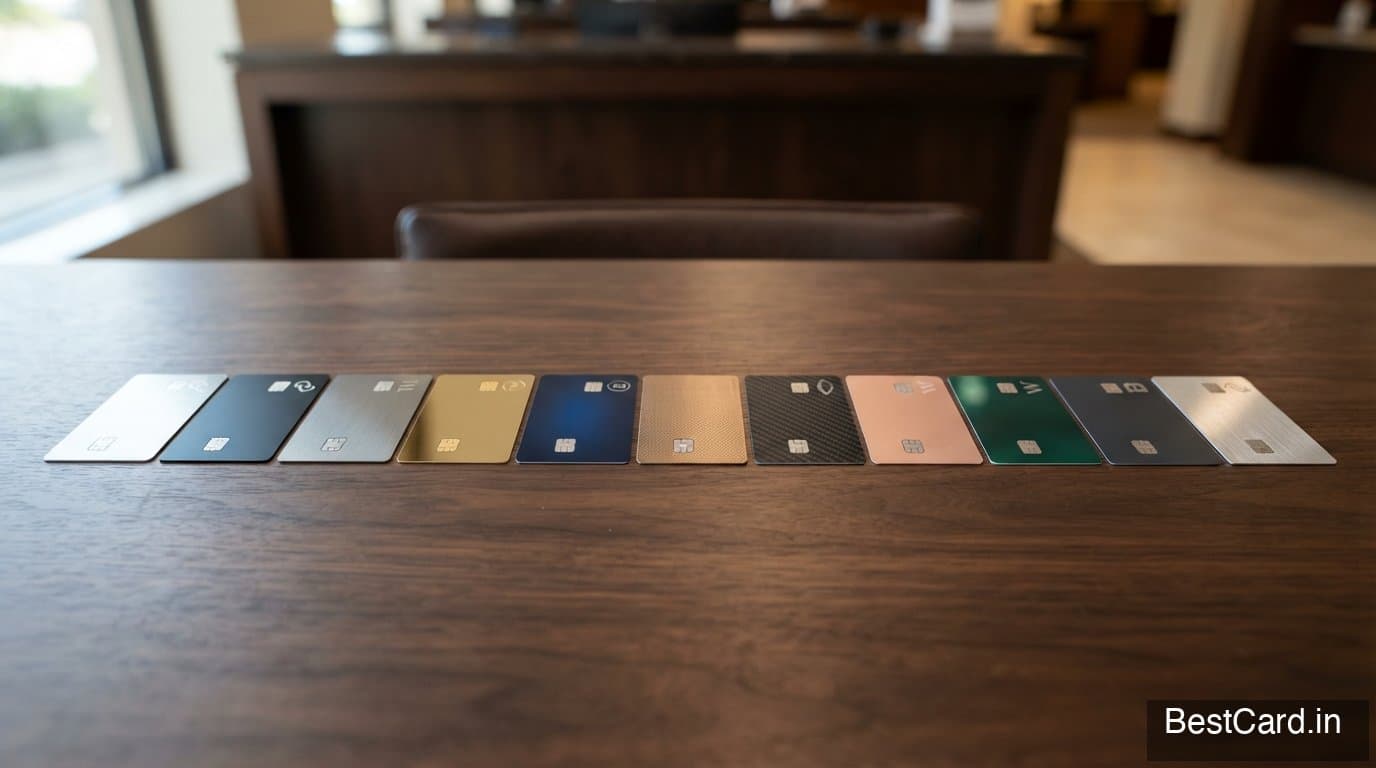
Canara Bank and SBI Card represent two opposite philosophies. Canara's own-brand cards show no joining or annual fee on our list and pay the same flat 0.5% reward everywhere. SBI charges between ₹499 and ₹9,999 and pays more in chosen categories. Which is better depends on how much of your spending lands in those categories.
What zero fee actually gets you
Canara's lineup includes the Visa Classic, RuPay Classic, Mastercard Standard, Gold variants, Platinum and Select cards, and every one lists zero joining and annual fee. Reward is 2 points per ₹100, or 0.5%, on all spending. Income floors start at ₹15,000 for the RuPay Classic and ₹16,667 for the Visa Classic and Mastercard Standard. The forex markup is 3% across the range.
Few SBI cards match that on price. The SimplyCLICK costs ₹499 and pays 2.5% online. The Cashback card costs ₹999, waived at ₹2,00,000, and pays 5% online up to ₹2,000 a month. SimplySAVE (₹499) is aimed at dining and groceries. Those rates are well above 0.5%, but you need enough spend in the right category to cover the fee.

Lounges without a fee
This is Canara's best feature. The RuPay Select has no fee, gives 2 domestic visits per quarter and 2 international visits per year, and has an ₹83,334 monthly income floor. The Mastercard World gives 3 self and 2 guest domestic visits a quarter plus 2 self and 2 guest international visits a year. The Visa Signature gives 3 domestic and 1 international visit per quarter at an ₹83,333 income floor. Even the RuPay Platinum offers 2 domestic visits a quarter, capped at 4 a year.
SBI's lounge cards cost money. The Elite costs ₹4,999 for 8 domestic and 6 international visits. Card PRIME costs ₹2,999 for 8 domestic and 4 international visits, and the Pulse costs ₹1,499 for 4 domestic visits. The SBI Elite review explains the extras. If your goal is lounge visits at zero cost and you meet the ₹83,333 income level, Canara is the better value. SBI wins only if you need more visits than Canara provides or want Priority Pass depth.
Forex and international use
Canara's flat 3% forex markup is lower than most SBI cards at 3.5%. SBI's Elite (1.99%), Miles Elite (1.99%) and Aurum (1.99%) are lower still, but they sit at ₹4,999 or above. So Canara is the cheaper option for light overseas spend, and SBI's premium tier is the better option for heavy overseas spend.
Brand tie-ins and fuel
Canara lists no co-branded cards and no category bonuses; its fuel waiver is 1%, capped at ₹100, and often needs ₹2,500 of other monthly spending. SBI has IRCTC (10% on travel, ₹500), BPCL for fuel, Flipkart, Titan, Reliance and more. Anyone who spends regularly with one of those brands will get more from SBI.
Who should pick which
First-time cardholder with a salary account: Canara RuPay Classic or Platinum, with no fee to worry about. Income of ₹83,333 or above and a taste for lounges: Canara RuPay Select. Online shopper: SBI SimplyCLICK or Cashback. Rail or fuel regular: SBI IRCTC or BPCL. Frequent flyer: SBI Elite or Aurum.
More reading
Read the Canara Bank guide and SBI guide for card-level detail. Another public-sector comparison is Union Bank of India vs SBI Card.
Related reading
- PNB vs Canara Bank Credit Cards: A Wider Range Against Strictly Zero-Fee Simplicity
Canara keeps every own-brand card free with a flat 0.5% reward. PNB adds paid RuPay tiers, metal LUXURA cards and cashback co-brands. Here is who wins each tier.
- SBI vs Yes Bank Credit Cards: Everyday RuPay Range Against a Top-Heavy Lineup
Yes Bank has strong premium cards in Reserv and Marquee but thin entry options; SBI Card is the reverse. See where the split lands for UPI, travel and fees.
- SBI vs Kotak Credit Cards: A Wide Shelf Against a Few Sharp Cards
SBI Card sells something for almost every spending pattern; Kotak's lineup is smaller, but Zen Signature, Cashback+ and Air+ still earn a place. Where each bank leads.