Best Credit Card to Get With Your First Salary Account
27 April 2026 · BestCard Editorial Team
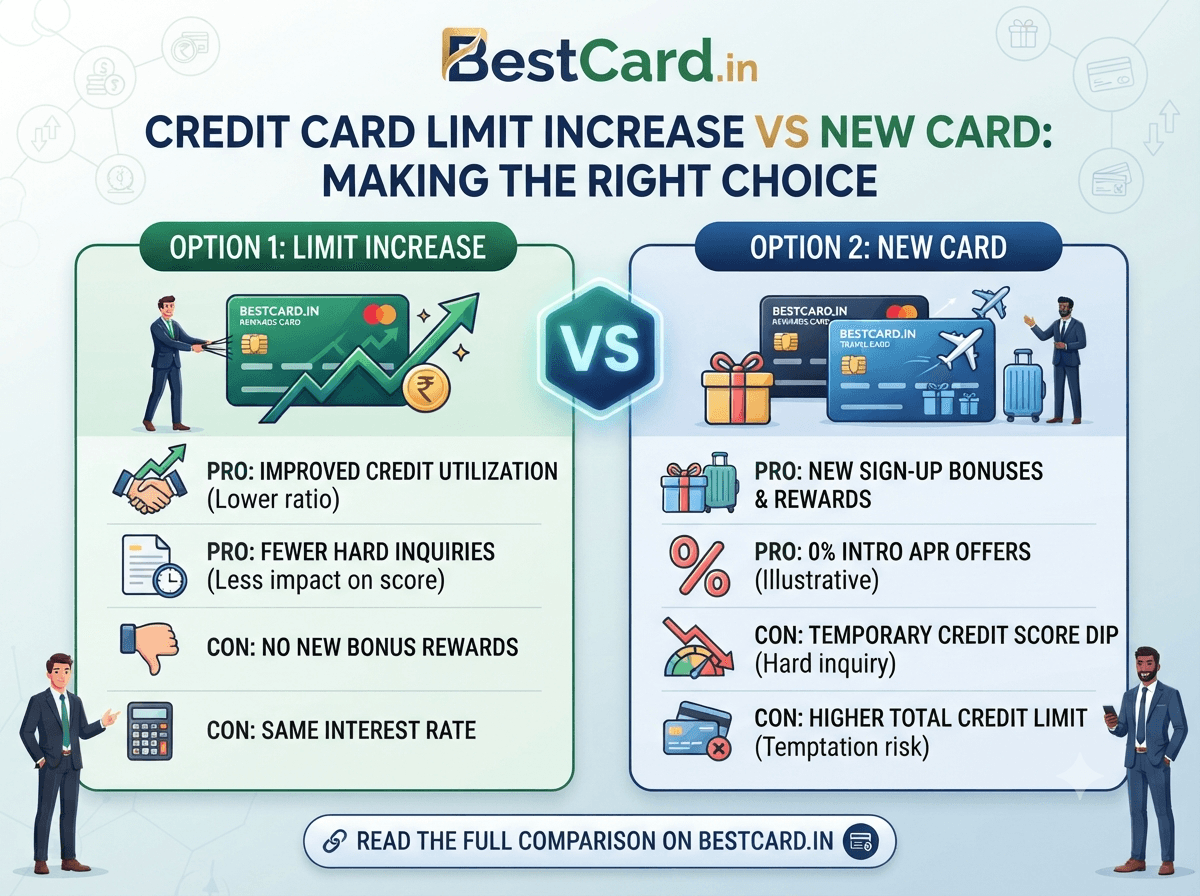
The day your first salary lands, your bank usually follows up with a credit card offer within weeks. It feels convenient — no separate application, no income proof to arrange, sometimes even a pre-approved limit waiting in the app. But convenient isn't the same as optimal, and the card your salary bank pushes you toward is rarely the best one available to you.
Why banks move fast on this
Salary account relationships are valuable to banks because they see your income directly, which makes underwriting nearly automatic. That's why HDFC, ICICI, Axis, and SBI all run aggressive pre-approved offers the moment a corporate salary account is opened. The card offered is usually a decent entry-level product, but it's chosen for what's profitable and easy to issue, not necessarily what suits your spending.
What to actually evaluate
Before accepting the first offer, check three things: the annual fee and whether it's waived on spending, the reward rate on categories you actually spend in (groceries, food delivery, UPI), and whether the card has milestone benefits you'd realistically hit. A card that rewards you well on international spends is wasted if you never travel; one that only pays back on dining is dead weight if you never eat out.
For genuinely new-to-credit earners, our complete guide to choosing your first credit card walks through the criteria in more depth than a bank's marketing page ever will.
Salary-account cards worth comparing against
Some of the strongest entry cards happen to also be salary-account favorites. SBI Card offers several accessible options with straightforward reward structures for salaried applicants, and Axis Bank cards like the ACE series are frequently bundled with salary accounts and reward everyday UPI and utility spending well. If your employer's payroll bank offers a card outside these two ecosystems, it's still worth comparing the actual reward math rather than accepting on convenience alone — see our breakdown on rewards vs cashback cards to decide which structure suits a first-time cardholder better.
The CIBIL angle nobody mentions
Your first credit card is also your first entry into a credit file. Applying for and using it responsibly — paying in full, keeping utilization low — starts building your CIBIL score from month one. Since this is often the only credit product you'll hold for a while, the card's long-term fit matters more than a joining bonus. A card you'll actually use for two or three years beats one that looks exciting for the first quarter and gets forgotten after.
Don't rush the decision
There's no real urgency here — pre-approved offers typically don't expire in days, and even if one does, another will follow. Take the week to compare the salary-bank offer against at least one alternative issuer's entry card before applying, especially since your first hard inquiry is worth protecting. Once you've picked, our guide on minimum age and eligibility rules is a useful sanity check if you're applying right out of college alongside your first job.