What Happens If You Skip a Credit Card Payment Entirely
30 July 2026 · BestCard Editorial Team
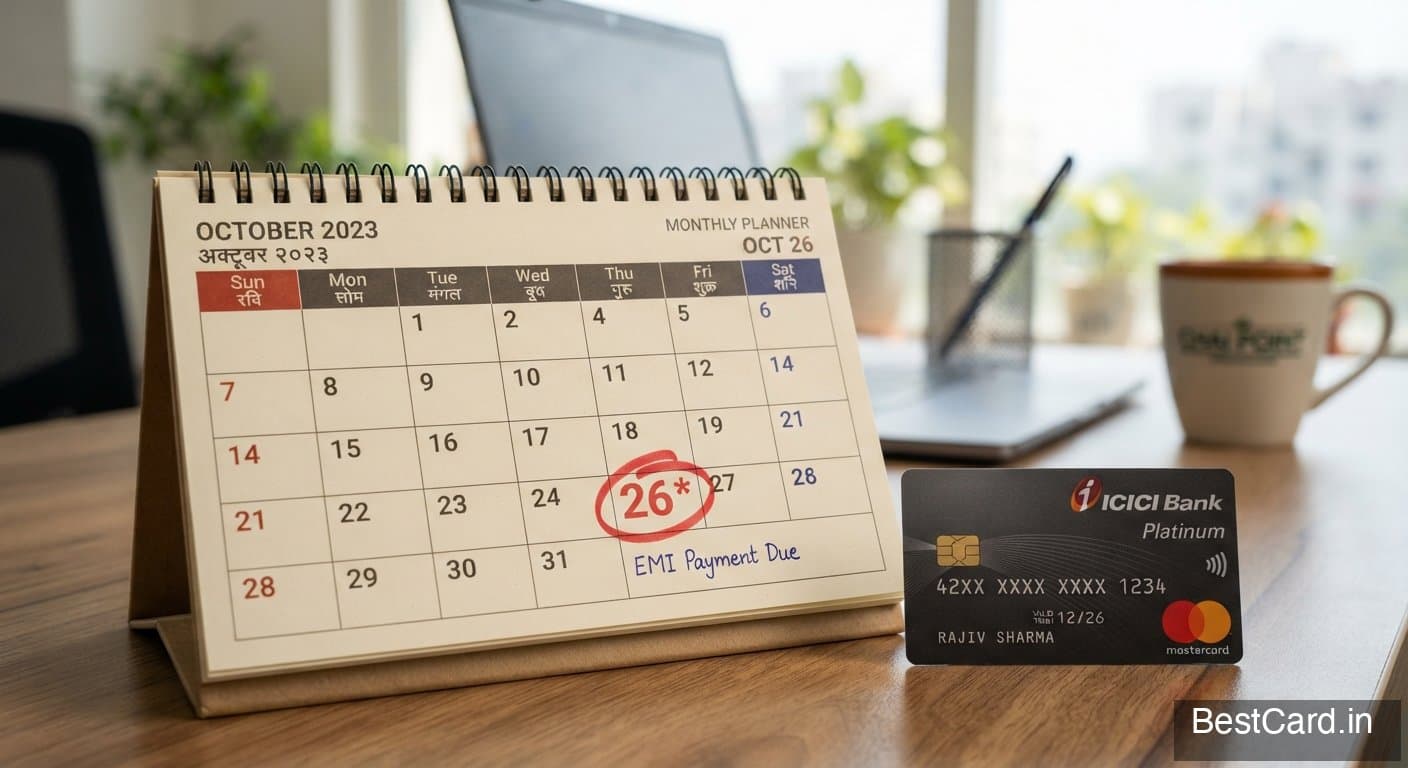
There's an important distinction between paying only the minimum due — which keeps your account technically current — and skipping a payment entirely, where nothing gets paid before the due date. Our minimum due trap guide covers the first scenario in detail. This one is about the second: what actually happens when you pay nothing at all for a billing cycle.
The immediate financial hit
The moment you miss the due date without paying at least the minimum due, two charges typically apply: a late payment fee, usually a flat amount that scales with your outstanding balance, and interest on your entire outstanding balance calculated from the transaction date — not just from the due date — because you've now lost the interest-free grace period entirely for that cycle. Our credit card interest-free period guide explains how that grace period works and exactly what triggers its loss. On top of this, most issuers apply a penal charge specifically for non-payment, separate from the regular late fee, and this can recur every cycle the balance remains unpaid.
CIBIL impact — how fast and how bad
This is where skipping a payment entirely diverges sharply from paying only the minimum. Paying the minimum, even though it's a poor long-term strategy, keeps your account status "current" with the bureau. Skipping a payment entirely starts a countdown: most issuers report a missed payment to CIBIL once it crosses 30 days past due, and the reported status becomes progressively worse at 60, 90, and 180 days overdue. A single missed payment reported at 30+ days can drop your CIBIL score meaningfully, and the impact compounds the longer the account stays unpaid — our CIBIL score basics guide explains how payment history weighs as the single largest factor in your score, generally more than utilization or credit mix.
Unlike a late fee, which is a one-time cost you can simply pay off, a missed-payment mark on your credit report stays visible for years, even after you clear the balance. This is the part people underestimate — clearing the overdue amount stops new damage but doesn't erase the historical mark.
How the escalation typically unfolds
Card issuers generally follow an escalating outreach pattern rather than jumping straight to aggressive recovery action:
- Reminder notices via SMS, email, and app notifications in the days immediately after the due date
- Phone calls from the bank's own collections team once the account crosses a few weeks overdue
- Formal notices and involvement of third-party collection agencies once the account is significantly overdue, commonly in the 60-90 day range, though exact timelines vary by issuer
- Account restrictions, including reduced or blocked credit limit, and eventual card suspension if the balance remains unpaid
- Legal recovery action as a last resort for large, long-unpaid balances, though this is uncommon relative to the volume of missed payments and generally reserved for cases where the bank has exhausted other recovery routes

What doesn't happen (common misconceptions)
Missing one payment doesn't typically result in immediate legal action or arrest — that's a common fear that isn't grounded in how the recovery process actually works in India for consumer credit card debt, which is treated as a civil matter, not a criminal one, in essentially all normal circumstances. It also doesn't automatically blacklist you from ever getting credit again; a missed payment recovers in weight over time as you rebuild a positive payment history afterward, though it takes years, not months, to fully offset.
If you've already missed a payment
Pay whatever you can immediately, even if it's not the full overdue amount — reducing the outstanding balance limits further interest accrual and shows good faith if you do end up negotiating with collections. Contact the issuer directly rather than waiting for them to escalate; many banks have hardship or restructuring options for temporarily unable-to-pay customers that are worth asking about before the account is handed to a recovery agency. If a collection agency does contact you, verify their identity and get everything in writing — you have a right to dispute inaccurate reporting through the bureau's grievance process.
Where to go from here
Read credit card late payment consequences for the broader spectrum between a single late payment and a fully skipped cycle, and minimum due vs total due mistake to understand why even partial payment is a meaningfully better position than skipping entirely.