
HDFC IRCTC Credit Card Review: Strong on Train Tickets, Ordinary Everywhere Else
4 February 2026 · BestCard Editorial Team
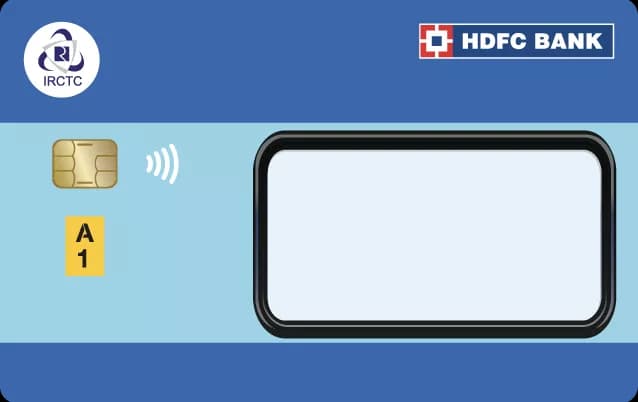
The HDFC IRCTC Credit Card is a RuPay co-brand card for people who book trains often enough to notice the fee IRCTC adds at checkout. It waives that 1% transaction charge, pays 5% cashback on train ticket bookings through HDFC's SmartBuy, and adds eight railway executive lounge visits a year. Away from the railways it's an ordinary 1% cashback card. That makes it a strong companion card for regular rail travellers and a weak primary card for almost everyone else.
Fees and eligibility at a glance
The card carries a ₹500 joining fee and a ₹500 annual fee, waived once you spend ₹1.5 lakh in a year. That works out to about ₹12,500 a month, which is a real target for a card you might only use for train tickets, so expect to route some everyday spend through it if you want the waiver. Applicants need to be between 21 and 60, salaried or self-employed (HDFC will run its usual credit and income checks).
New cardholders get a ₹500 Amazon voucher on activating the card and making a first transaction within 30 days of issue. In practice that pays back the first year's joining fee. The forex markup is 3.5%, and as a RuPay-only card its acceptance abroad is narrower, so this isn't a card for international use.
Rewards and how they actually work
Train bookings get two benefits stacked together. First, the 1% IRCTC transaction charge on website and app bookings is waived. Second, train ticket bookings earn an extra 5% cashback through HDFC SmartBuy, capped at ₹1,000 a month. Because that 5% is described as SmartBuy cashback, it's worth confirming your booking goes through the route HDFC counts before assuming it will credit.
Someone spending ₹6,000 a month on train tickets earns ₹300 in cashback and saves ₹60 in IRCTC charges, ₹360 a month in all, or about ₹4,300 a year. That's an effective 6% on rail spend, far above what a general-purpose card returns on the same tickets. The ₹1,000 cap kicks in at ₹20,000 of bookings a month, a level only a large family travelling AC class several times a month is likely to reach.
Everything else earns a flat 1% cashback. It's credited automatically as a statement credit with no redemption fee, so there are no points to track and nothing to convert.
Railway lounges and other perks
The card includes 8 complimentary IRCTC executive lounge visits a year at participating stations. On a long wait for a delayed overnight train, that's worth more than the visit count suggests. The catch is that it only works at participating stations, so its value depends on the routes you actually travel.
There's also a 1% fuel surcharge waiver on transactions between ₹400 and ₹1,00,000, capped at ₹250 per statement cycle. Cash withdrawals cost 2.5% or ₹500, whichever is higher, with interest from the day of withdrawal. There's no airport lounge access and no travel insurance. The "travel" in this card means rail and nothing else.
How it compares with the IRCTC SBI Card
The IRCTC SBI Card is the natural rival. Both cost ₹500 a year, both run on RuPay and both waive the 1% IRCTC transaction charge. The difference is in the rewards. SBI earns 1 point per ₹125 everywhere, an effective 0.8%, with no accelerated rate on train tickets, and charges ₹99 plus taxes on every redemption request. On the same ₹6,000 a month of train bookings, SBI returns about ₹48 in points plus the ₹60 fee saving, roughly ₹108 a month against HDFC's ₹360.
SBI's advantages are elsewhere. Its fee waiver needs only around ₹20,000 of annual spend, far easier than HDFC's ₹1.5 lakh if trains are the only thing you put on the card, and its published eligibility bar (680 credit score, ₹18,000 monthly income) is low. For anyone booking more than a couple of tickets a month, though, HDFC's 5% puts it well ahead.
What's genuinely good about this card
The stacked benefit on train tickets, a 1% fee waiver plus 5% cashback, is the card's real strength and comfortably beats SBI's IRCTC card. Cashback lands automatically, with no redemption fee. Eight railway lounge visits a year is a genuinely useful extra for overnight travellers, and the ₹500 Amazon welcome voucher effectively covers the first year's fee.
Where it falls short
The 1% base rate on non-rail spend is weak, and the ₹1.5 lakh waiver threshold is high for a card this specialised. Train cashback is capped at ₹1,000 a month, so very heavy bookers lose out. The 3.5% forex markup and RuPay-only acceptance make it a poor choice abroad, and there's nothing here for flights or hotels.
Who this card actually makes sense for
The HDFC IRCTC card suits people who book train tickets every month, for themselves or for family back home, and who can put enough other spend on it to reach ₹1.5 lakh a year, or who don't mind paying ₹500 for the rail returns. Pair it with a stronger cashback card for everything else. If you take a train only a few times a year, the SBI card's easier waiver or a plain cashback card will serve you better.
Where to go from here
For every rail-focused option side by side, read the best credit cards for IRCTC train bookings, and to see which cards get you into station lounges, check the credit card railway lounge access guide. For the rest of the bank's lineup, the HDFC credit cards guide covers it all.
Related reading
- HDFC Diners Club Premium Review: The Sweet Spot Below Diners Black?
How the HDFC Diners Club Premium's 8X travel rate, lounge access, and ₹1 crore air accident cover compare against Diners Club Black and Regalia Gold.
- Marriott Bonvoy HDFC Bank Card Review: A Hotel Co-Brand That Earns Its Fee
How the Marriott Bonvoy HDFC Bank Card's free night awards, elite status, and 24 fixed lounge visits stack up against its ₹3,000 fee.
- HDFC Regalia Credit Card Review: Is It Still Worth It?
A detailed look at the HDFC Regalia's rewards rate, lounge access, and fees — and who it actually makes sense for in 2026.