
Lifetime Free vs Paid Credit Card: Which Should You Choose?
13 October 2026 · BestCard Editorial Team
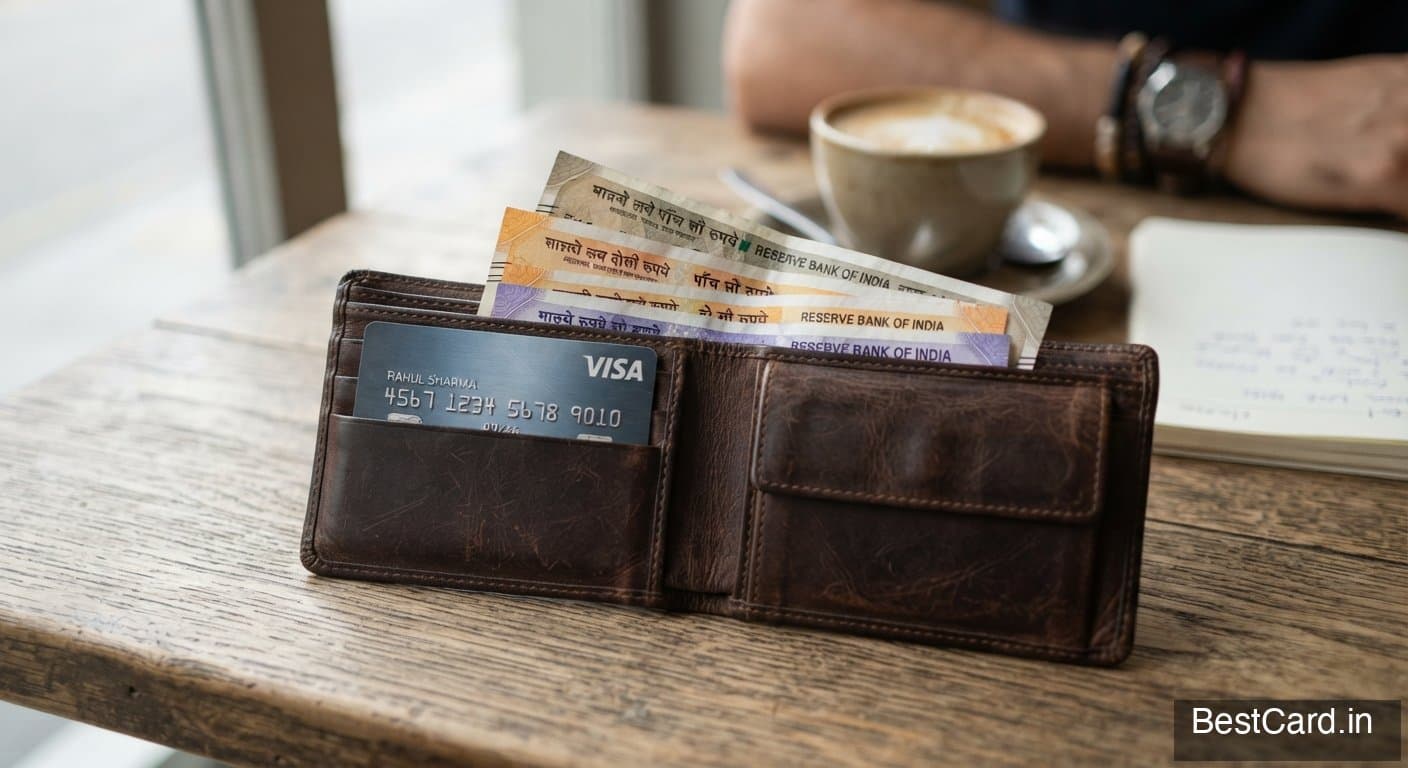
Choose a lifetime free card if you spend modestly or your spending is spread thin; choose a paid card when the extra rewards it earns on your actual spending clearly beat its fee plus GST. For most people the answer comes down to a quick break-even calculation, which this guide walks through with real cards and rupee figures.
What "lifetime free" and "paid" actually mean
A lifetime free (LTF) card has no joining fee and no annual fee, ever. You don't have to hit a spend target to keep it free. Examples in BestCard's data include the ICICI Amazon Pay card, the IDFC FIRST Millennia card and the Federal Bank Scapia card.
A paid card charges a joining fee, an annual fee, or both. Many paid cards offer a fee waiver if you spend a set amount in a year. That is not the same as lifetime free: in any year you fall short, the fee is charged.
There is also a middle ground: "first year free" cards, which waive the joining fee but charge from year two. Read the fine print, because these are sometimes marketed loosely as free cards. Our explainer on joining fee vs annual fee covers the terms.
Why anyone pays for a credit card
Paid cards earn their fee in one of three ways:
- Higher reward rates. The SBI Cashback Card charges ₹999 a year but pays 5% on online spends (capped at ₹2,000 a month). Most lifetime free cards pay 1% or less outside their partner merchants.
- Travel benefits. HDFC Regalia Gold costs ₹2,500 but includes 6 international lounge visits a year via Priority Pass and up to ₹10,000 of flight vouchers at the ₹5 lakh and ₹7.5 lakh spend milestones.
- Category boosts. Axis ACE costs ₹499 and pays 2% on general spends and 5% on utility bills (capped at ₹500 a month).
If none of those benefits matches how you spend, you are paying for perks you won't use.
The break-even formula
Here's the calculation that settles most decisions:
Break-even spend = (Annual fee + 18% GST) ÷ (Paid card rate − Free card rate)
GST at 18% applies to card fees, so a ₹999 fee really costs ₹1,179.
Example 1: SBI Cashback vs a 1% lifetime free card
- Fee with GST: ₹999 × 1.18 = ₹1,179
- Reward difference on online spends: 5% − 1% = 4%
- Break-even: ₹1,179 ÷ 0.04 = ₹29,475 of online spend a year
That's under ₹2,500 a month online. Almost anyone who shops online regularly clears it, and if your total card spend crosses ₹2 lakh a year, SBI waives the fee anyway.
Example 2: two real spenders
Priya spends ₹20,000 a month: ₹10,000 online and ₹10,000 offline.
- On a 1% lifetime free card: ₹200 a month, ₹2,400 a year
- On SBI Cashback: (₹10,000 × 5%) + (₹10,000 × 1%) = ₹600 a month, ₹7,200 a year
- Her annual spend is ₹2,40,000, so the fee is waived
The paid card earns her ₹4,800 more a year. Easy decision.
Rahul spends ₹8,000 a month: ₹3,000 online and ₹5,000 offline.
- On a 1% lifetime free card: ₹80 a month, ₹960 a year
- On SBI Cashback: (₹3,000 × 5%) + (₹5,000 × 1%) = ₹200 a month, ₹2,400 a year
- His annual spend is ₹96,000, below the waiver, so he pays ₹1,179
- Net: ₹2,400 − ₹1,179 = ₹1,221
Rahul is only ₹261 a year better off with the paid card. One missed month, a reduced cap, or a lost waiver and it flips. For him, a lifetime free card is the calmer choice.
When lifetime free wins
- Low or irregular spending. Under about ₹10,000 a month, few paid cards earn enough extra to justify their fee.
- Your first card. When you're building a CIBIL history, an LTF card you keep open for years helps your credit age. See choosing your first credit card.
- A backup or niche card. A zero-forex LTF card like Federal Scapia makes sense as a travel-only card you use a few times a year.
- Your spending matches a free co-brand. The ICICI Amazon Pay card pays 5% on Amazon with Prime (3% without) at zero fee, so a heavy Amazon shopper gets paid-card returns without paying.
When a paid card wins
- You spend heavily in its bonus category. Online shoppers on SBI Cashback, Shoppers Stop regulars on a co-brand, frequent flyers on an airline card.
- You'll cross the fee waiver anyway. If your normal spend clears ₹2 lakh or ₹3.5 lakh a year, the fee effectively disappears.
- You'll actually use travel perks. Lounge visits, milestone vouchers and memberships have real rupee value, but only if you fly. Our piece on whether premium cards are worth the fee runs these numbers.
Common mistakes
- Assuming free means no cost. LTF cards still charge interest, late fees and forex markup. Carrying a balance at credit card interest rates wipes out any reward gap within a month or two.
- Overspending to hit a waiver. Spending ₹30,000 extra to save a ₹999 fee is a bad trade unless it's spending you'd do anyway.
- Ignoring caps. SBI Cashback's 5% stops at ₹2,000 a month. Paid cards often look better on paper than after caps.
- Forgetting GST. Always add 18% to the fee in your maths.
- Not asking for a reversal. Banks sometimes reverse a fee for good customers who ask. Our guide to getting an annual fee waived has the steps.
A practical setup
Many people end up with one of each: a lifetime free card as their long-running credit history anchor, plus one paid card that matches their biggest spending category. If online shopping is your biggest category, apply for SBI Cashback. If bills and everyday spends dominate, Axis ACE is a low-fee alternative. Fees and rates here reflect BestCard's latest card data, so confirm current terms on the issuer site before applying.
For a shortlist of the best fee-free options, see our lifetime free credit cards guide. To find the card that fits your own spending, try the BestCard matcher.
Frequently asked questions
Is a lifetime free credit card better than a paid card?
Not automatically. A paid card is better when the extra rewards it earns on your spending exceed its fee plus GST. If you spend little or your spending doesn't match the paid card's bonus categories, lifetime free wins.
Do lifetime free credit cards have any charges?
Yes. There is no joining or annual fee, but interest, late payment fees, forex markup, cash withdrawal fees and some transaction fees still apply, along with 18% GST on those charges.
What is the difference between lifetime free and annual fee waiver?
A lifetime free card never charges a fee. A fee-waiver card charges a fee each year unless you cross a set annual spend, such as ₹2 lakh, so the fee comes back in any year you spend less.
How do I calculate if a paid credit card is worth it?
Divide the fee plus 18% GST by the difference in reward rate between the paid card and your free alternative. If your yearly spend in that category is above the result, the paid card pays for itself.
Related reading
- Credit Card Annual Fee Waiver Thresholds by Bank (2026 List)
Annual fee waiver spend thresholds for popular HDFC, SBI, Axis, ICICI, Kotak, Amex, Yes, AU and other cards in 2026, plus how to hit them without overspending.
- Best Credit Cards Under ₹500 Annual Fee in India (2026)
Best credit cards under ₹500 annual fee for 2026: Axis ACE, Flipkart Axis, Swiggy HDFC, SBI SimplyCLICK, IDFC Power+ and Amex SmartEarn, with caps and waivers.
- Dynamic Currency Conversion Explained: Always Pay Local
Dynamic currency conversion explained: why paying in rupees abroad costs more, a worked example, how to spot DCC at terminals and ATMs, and which cards help.