
PNB vs SBI Credit Cards: Cheap Metal and RuPay Lounges Against Brand Partnerships
24 October 2026 · BestCard Editorial Team
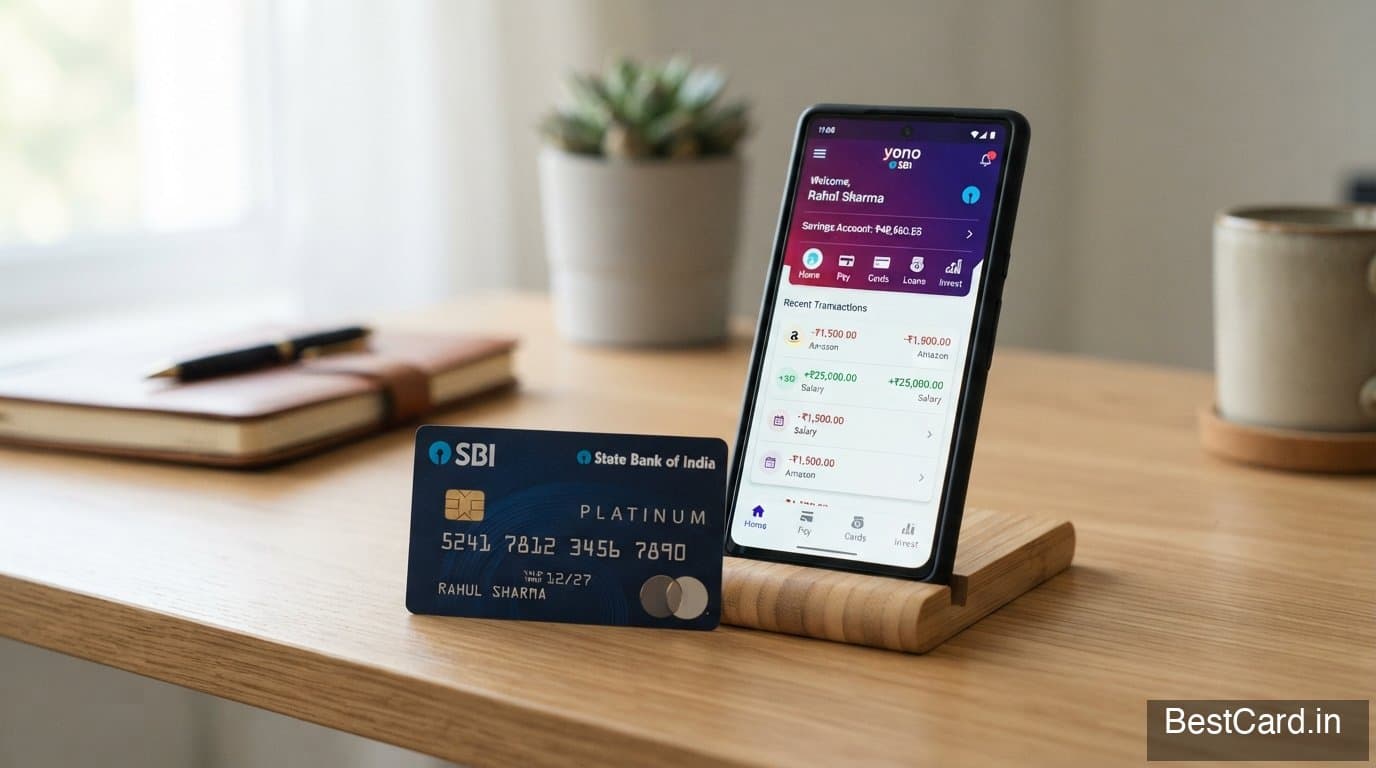
Both are state-linked names, but the cards are built differently. SBI Card sells a broad range tied to retailers, airlines and wallets, and almost all of them carry a joining fee. PNB sells a smaller set, mostly on the RuPay network, with lounge visits baked into cards that cost very little, plus a pair of metal premium cards that undercut SBI's top tier on forex.
Entry cards with lounge access
PNB's RuPay Platinum charges a ₹500 annual fee and no joining fee, yet includes 2 domestic lounge visits per quarter and 2 international visits per year. The RuPay Select (₹500 joining, ₹750 annual) adds a slightly higher base rate of 0.33%. Salary-account holders can get the Platinum with 4 domestic visits a year and the Select with 8 domestic and 2 international visits, both at zero fee. The Parakram, a card for Army personnel, is free with a zero forex markup, 3% cashback capped at ₹1,500 a month and 4 domestic plus 1 international lounge visit a year.
SBI's entry cards rarely carry lounge access. The SimplyCLICK costs ₹499, the Cashback card ₹999 and the SimplySAVE ₹499, none with lounge visits on our list. If a lounge on a budget matters, PNB is stronger.
Metal premium: LUXURA against Elite and Aurum
The PNB LUXURA Visa Infinite Metal costs ₹4,999 to join and ₹1,999 a year, waived at ₹6,00,000, with zero forex, a 1% base, 3% on travel and dining, and unlimited domestic and international lounge access. The income floor is ₹1,50,000. The RuPay LUXURA version costs ₹9,000 joining and ₹7,500 a year.
SBI's comparable cards are the Elite (₹4,999 a year, 1.99% forex, 8 domestic and 6 international lounge visits, ₹10,00,000 waiver) and the Aurum (₹9,999, unlimited international lounges plus 4 domestic visits per quarter, ₹3,30,000 income floor). Our SBI Elite review has the full benefit list. On paper PNB offers more lounge access and lower forex for less, though unlimited access can carry spend or usage rules, so read the terms. SBI's argument is a larger set of partner cards around the premium tier. PNB wins on terms.
Co-brands and fuel
SBI is far stronger here. IRCTC SBI (₹500, RuPay) pays 10% on travel bookings; the Premier version costs ₹1,499. BPCL SBI OCTANE costs ₹1,499 and focuses on fuel. IndiGo SBI Elite and Air India SBI Signature (₹4,999) serve airline loyalists. PNB's co-brands are fewer: the EaseMyTrip RuPay (₹2,000), the Patanjali RuPay Select and Zaggle Twin (₹499, 8 domestic and 2 international lounge visits a year). For brand-specific rewards, SBI.
Defence personnel and UPI
PNB Rakshak RuPay Platinum is free, and the Select version adds lounge access. PNB Kiwi is a free RuPay credit-on-UPI card with 1.5% cashback. SBI has Shaurya for defence (₹250) and Shaurya Select (₹1,499 annual, 4 domestic visits). The SBI SimplySAVE UPI RuPay costs ₹499. For defence and UPI users, PNB's free options win on cost; see our RuPay on UPI guide.
Choosing between them
For a low-cost starter card with a lounge: PNB RuPay Platinum or Select. For a metal card at a lower fee and zero forex: PNB LUXURA Visa Infinite. For brand loyalty (railways, fuel, airlines, retail): SBI. For top-tier lounge access with a long track record: SBI Aurum. Many holders combine a PNB RuPay card for UPI and an SBI brand card for category spend.
Next steps
Our PNB guide and SBI guide hold the full lineups. For another look at public-sector cards against SBI, try Canara Bank vs SBI Card.
Related reading
- PNB vs Canara Bank Credit Cards: A Wider Range Against Strictly Zero-Fee Simplicity
Canara keeps every own-brand card free with a flat 0.5% reward. PNB adds paid RuPay tiers, metal LUXURA cards and cashback co-brands. Here is who wins each tier.
- SBI vs Yes Bank Credit Cards: Everyday RuPay Range Against a Top-Heavy Lineup
Yes Bank has strong premium cards in Reserv and Marquee but thin entry options; SBI Card is the reverse. See where the split lands for UPI, travel and fees.
- SBI vs Kotak Credit Cards: A Wide Shelf Against a Few Sharp Cards
SBI Card sells something for almost every spending pattern; Kotak's lineup is smaller, but Zen Signature, Cashback+ and Air+ still earn a place. Where each bank leads.