SBI vs Axis Bank Credit Cards: Which Issuer Fits You Better
23 August 2026 · BestCard Editorial Team
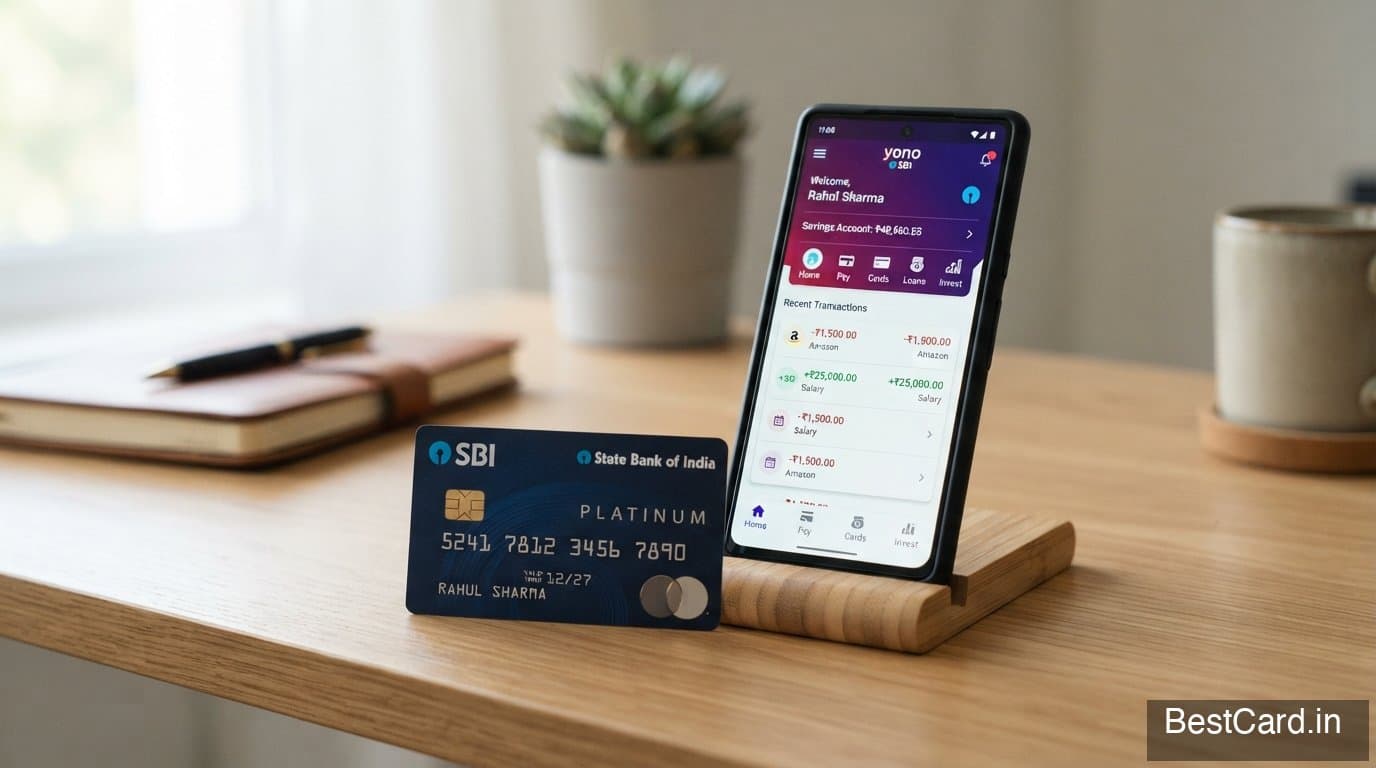
SBI Card and Axis Bank run two of the largest and most diverse credit card catalogues in India, and both cover roughly the same ground — cashback, travel, shopping, entry-level. The real difference is where each concentrates its strongest cards, and that's a more useful way to choose than comparing brand loyalty alone.
Cashback and everyday spending
SBI Card's SBI Cashback Card pays a flat 5% cashback on all online spends (up to ₹2,000/month) and 1% offline, with cashback credited automatically — no manual redemption, no bonus-category tracking. It's arguably the simplest high-earning card in the market for someone whose online shopping isn't concentrated on one or two merchants.
Axis Bank's flat-rate cashback cards work on a similar principle but tend to sit at a slightly lower earn rate once you account for category restrictions. Where Axis pulls ahead is card variety — if you want a cashback card layered with a bit of travel or lifestyle benefit, Axis's mid-tier range gives you more blended options, while SBI's cashback card is deliberately single-purpose.
Verdict: for a pure online-shopping cashback engine, SBI's Cashback Card is hard to beat. For a blended everyday-plus-lifestyle card, Axis has more shapes to choose from.
Travel and lounge access
This is where the two issuers diverge most. Axis Bank's Atlas card — the bank's flagship travel-miles product — earns 5% accelerated EDGE Miles on bookings through its Travel EDGE portal, offers tiered lounge access that grows with annual spend, and lets you transfer miles to 20+ airline and hotel loyalty programs. It's built for people who actually redeem points for flights, not just accumulate them.
SBI's travel-oriented cards lean more toward straightforward mile-earning and airline/railway tie-ups (IRCTC, Air India, Club Vistara among others) rather than a single flagship transfer-partner card. If you want one card that does frequent-flyer transfers well, Axis Atlas is the stronger pick; if you fly specific airlines regularly, an SBI co-brand card matched to that airline may earn better on those routes specifically.

Shopping cards
SBI Card's SimplyCLICK earns roughly 2.5% on partner online merchants at a low ₹499 fee, making it a solid low-commitment shopping card for newer applicants. Combined with the Cashback Card at the next tier up, SBI covers the shopping use case at two clearly differentiated price points. Axis's shopping-oriented cards exist but are less singularly focused on e-commerce than SBI's SimplyCLICK/Cashback pairing — see our best SBI credit cards for shopping roundup for the full detail.
Entry-level and building credit
Both issuers have accessible entry cards with income thresholds around ₹20,000–25,000/month and credit score requirements in the 680–700 range, so neither has a meaningfully easier approval bar at the entry tier. The deciding factor here is usually which bank you already have a relationship with — a salary account or FD tends to speed up approval regardless of issuer.
Which issuer should you pick
If cashback simplicity and shopping-specific earn rates matter most, lean SBI Card. If travel miles, lounge access that scales with spend, and airline transfer flexibility matter more, lean Axis Bank. Many cardholders in India carry one of each rather than picking a single issuer — the two lineups are complementary more than they're competitive.
Where to go from here
Read our full SBI credit cards guide and Axis Bank credit cards guide for the complete card-by-card breakdown, or jump straight to best Axis credit cards for travel if lounge access and miles are your priority.