
Slice Borderless Card Review 2026: Low Forex, No Annual Fee
21 September 2026 · BestCard Editorial Team
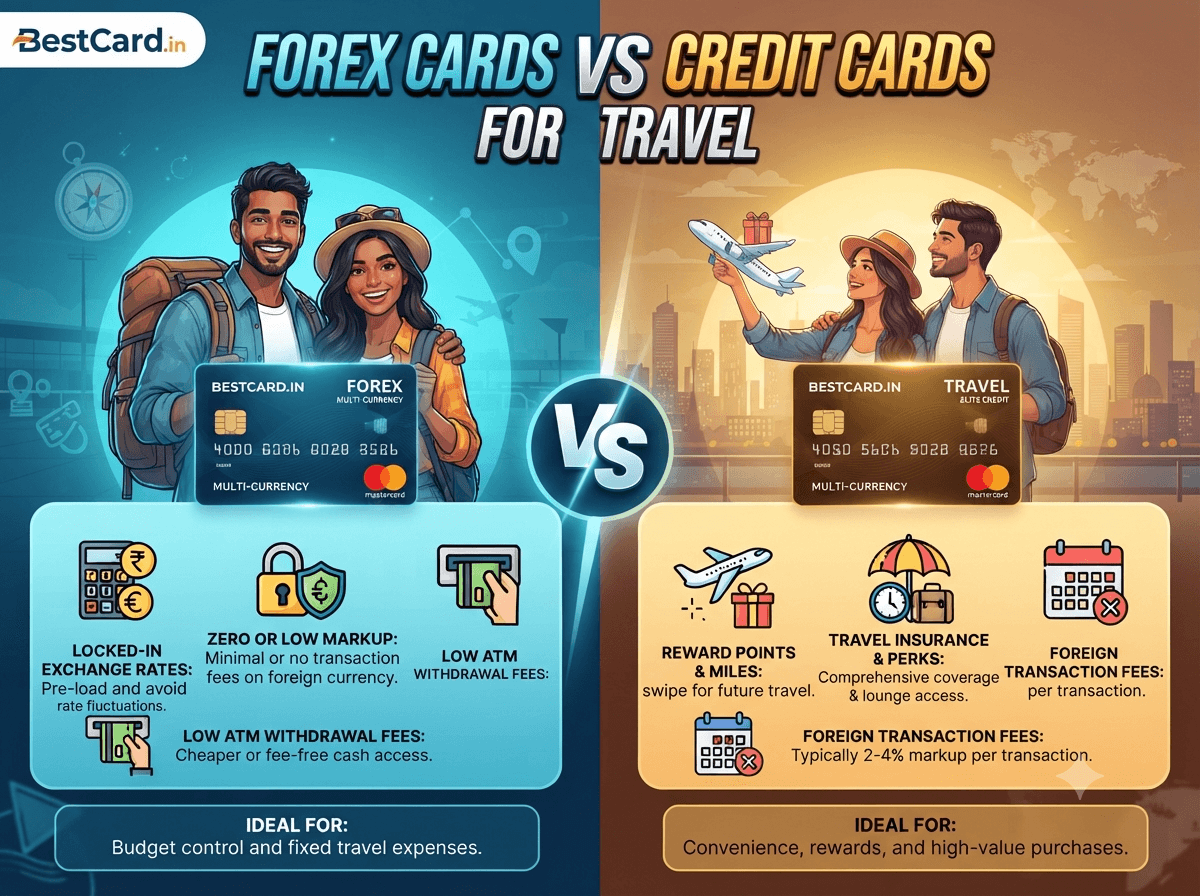
The Slice Borderless Card is a free Visa card built for one job: making international spending cheaper. It charges no joining or annual fee, has a forex markup of about 1% instead of the usual 3.5%, and pays 1% cashback on general spend and 2% on travel. If you shop on foreign websites, pay for overseas subscriptions or travel abroad on a budget, it's an easy card to add. If you want lounges or big rewards, look elsewhere.
Who Slice Borderless is for
- Cross-border shoppers buying from US, UK or other foreign websites
- Students and young professionals paying for international software, courses or subscriptions in dollars
- Budget travellers who want lower markup without paying for a premium card
- Existing Slice users who already like the app and want a Visa card for international use alongside the RuPay Super Card
It suits people earning ₹30,000 a month or more, per BestCard's data.
Fees and charges
| Item | Slice Borderless |
|---|---|
| Joining fee | ₹0 |
| Annual fee | ₹0 |
| Forex markup | about 1% |
| Network | Visa |
| Issuer | Slice / SBM Bank India |
| Domestic lounge | None |
| International lounge | None |
| Min. monthly income | ₹30,000 |
No fee means no break-even maths. Anything the card saves or earns is a net gain.
How much the low forex markup saves
Forex markup is the percentage a card adds to every foreign currency transaction, and 18% GST is charged on top of that markup. Here's what that means on ₹20,000 of international spend:
| Card markup | Markup | GST on markup (18%) | Total cost |
|---|---|---|---|
| 3.5% (typical entry card) | ₹700 | ₹126 | ₹826 |
| 1% (Slice Borderless) | ₹200 | ₹36 | ₹236 |
That's ₹590 saved on a single ₹20,000 bill. On a ₹1,50,000 overseas trip, the difference grows to about ₹4,425.
Zero-markup cards save even more, which we cover below. Our guide to hidden forex markup costs explains the full fee stack, including dynamic currency conversion, which you should always decline at foreign terminals.
Cashback structure, with a worked example
BestCard's data lists 1% cashback on general spend and 2% on travel, tracked in the Slice app.
Example: ₹30,000 a month
- Travel bookings: ₹5,000 × 2% = ₹100
- Everything else: ₹25,000 × 1% = ₹250
- Monthly cashback: ₹350
- Yearly cashback: ₹4,200
Example: ₹15,000 a month, mostly international online shopping
- Travel: ₹2,000 × 2% = ₹40
- Other spend: ₹13,000 × 1% = ₹130
- Monthly cashback: ₹170, or ₹2,040 a year
If ₹10,000 of that ₹15,000 is in foreign currency, you'd also save about ₹295 a month in markup and GST compared with a 3.5% card, or roughly ₹3,540 a year. For a card with no fee, that's a decent combined return.
Cashback rules, exclusions and caps can change, so check the current terms in the Slice app before relying on these figures. They reflect BestCard's latest card data.
Other benefits and limits
Slice Borderless is deliberately simple. You get the low markup, the cashback and the Slice app's spend tracking and controls. You don't get:
- Airport lounge access
- Premium travel insurance
- Milestone or welcome bonuses listed in our data
Credit limits also tend to start conservative for new applicants. That matters if you plan to book flights or hotels abroad, where a single booking can eat most of a small limit.
A practical point for international use: remember that tax collected at source (TCS) rules can apply to some overseas spending under the Liberalised Remittance Scheme. Card rules have changed in recent years, so check the current position with your issuer or a tax advisor. Our planned explainer on TCS on international credit card spends will cover this.
Pros and cons
Pros
- No joining or annual fee
- About 1% forex markup, far below most entry cards
- 2% cashback on travel, 1% on everything else
- Simple app-based management
- Visa network works widely abroad and on foreign websites
Cons
- No lounge access or premium travel insurance
- Reward rate is modest next to dedicated travel cards
- Conservative starting credit limits
- Zero-markup cards beat it on pure forex savings
Eligibility
BestCard's data lists a minimum monthly income of ₹30,000. Applications run through the Slice app, which makes onboarding quick for salaried applicants with a reasonable credit history.
How it compares with other low-forex cards
| Card | Annual fee | Forex | Base rate | Travel rate | Lounges |
|---|---|---|---|---|---|
| Slice Borderless | ₹0 | 1% | 1% | 2% | None |
| Niyo Global | ₹0 | 0% | 0.5% | 1% | None |
| Federal Bank Scapia | ₹0 | 0% | 2% | 4% | Unlimited domestic (spend-linked) |
| IDFC FIRST WOW | ₹0 | 0% | 0.5% | n/a | None |
| Amazon Pay ICICI | ₹0 | 1.99% | 1% | n/a | None |
Federal Bank Scapia is the standout alternative. It's also free, has zero markup, and earns more: 2% base and 4% on travel, with spend-linked domestic lounge access. Read our Federal Bank Scapia review.
Niyo Global has zero markup but earns less. It's a good backup card abroad. See our planned Niyo Global review.
IDFC FIRST WOW is a zero-markup option that's easier to get for people with thin credit files.
For the full field, see best zero forex markup credit cards for 2026 and best low forex markup credit cards.
Verdict
Slice Borderless does what it promises. It's free, it cuts forex costs by more than two-thirds compared with a typical entry card, and it pays a small amount of cashback on top. For students, cross-border shoppers and occasional travellers who already use Slice, it's a sensible addition.
It isn't the best low-forex card, though. Federal Bank Scapia is also free, charges zero markup and earns more. Pick Slice Borderless if you prefer its app or can't get Scapia. For international online purchases in particular, our guide to credit cards for international shopping compares more options, and the BestCard matcher can tell you which card fits your spending.
Frequently asked questions
Does the Slice Borderless card have an annual fee?
No. BestCard's data lists no joining fee and no annual fee.
What is the forex markup on Slice Borderless?
About 1%, which is well below the 3.5% common on entry-level Indian cards. GST at 18% is charged on the markup.
Does Slice Borderless give airport lounge access?
No. It has no domestic or international lounge access, and no premium travel insurance.
Who issues the Slice Borderless card?
It is a Visa card from Slice issued with State Bank of Mauritius (SBM Bank India), managed through the Slice app.
Related reading
- Niyo Global Credit Card Review 2026: Zero Forex, Little Else
Niyo Global credit card review: lifetime free, zero forex markup, 0.5% base cashback and no lounges. Who it suits, forex savings maths and better alternatives.
- Best Credit Cards for Black Friday International Shopping 2026
The best credit cards for Black Friday 2026 orders from foreign sites: zero and low forex cards, the real cost of markup and GST, and mistakes to avoid.
- Bank of Baroda Premier Credit Card Review: Is It Worth It?
Bank of Baroda Premier credit card review: 2.5% on travel and dining, the ₹1,000 fee and ₹1.2 lakh waiver, lounge access, caps, worked maths and alternatives.