
TCS on International Credit Card Spends Explained (2026)
3 October 2026 · BestCard Editorial Team
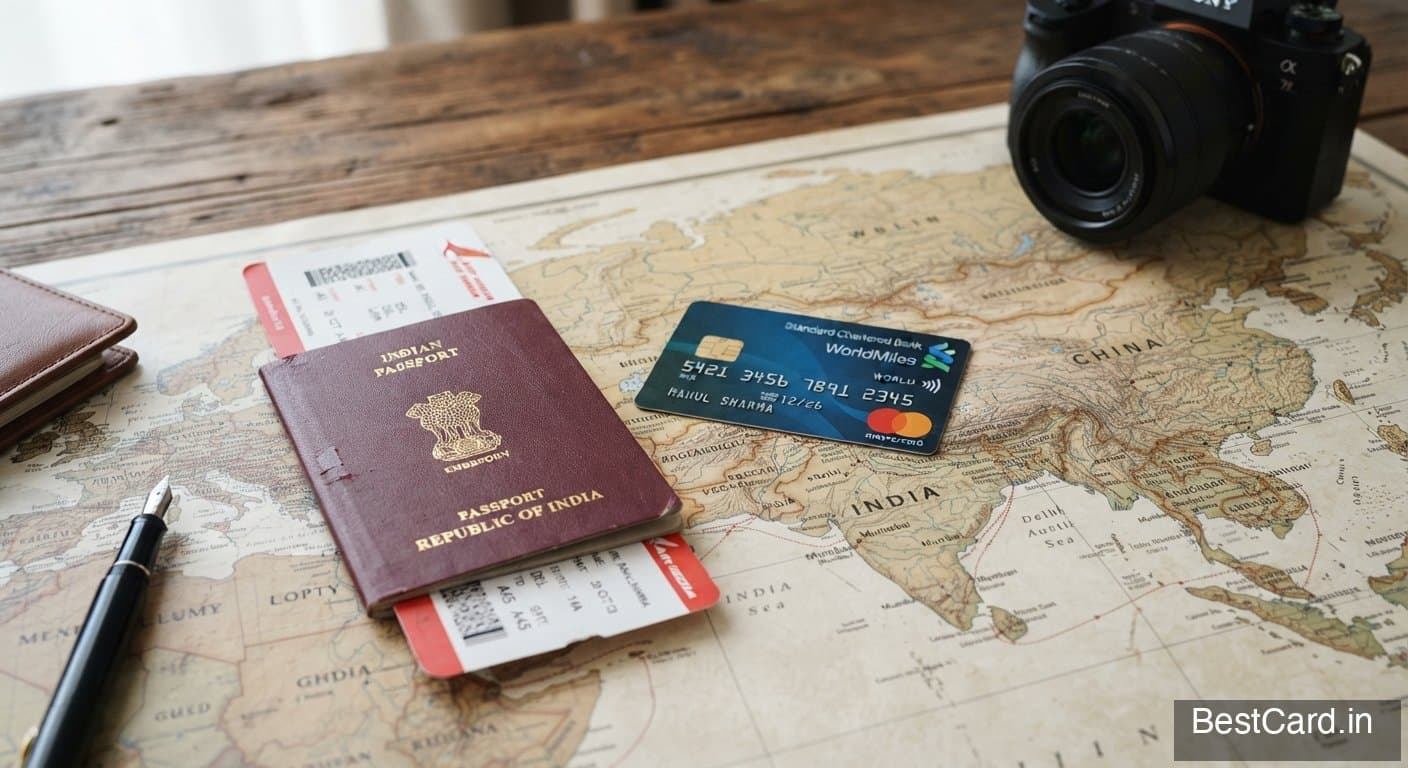
TCS is not currently charged on international credit card spends made while you are abroad. In 2023 the government stated that such spending would not be counted under the Liberalised Remittance Scheme (LRS), so the 20% TCS that applies to large remittances doesn't touch your credit card bill. What you do pay is the forex markup and 18% GST on that markup.
That's the short answer. The longer one explains why forex cards and remittances are treated differently, what TCS actually costs you, and how to keep the costs you can't avoid as low as possible.
This explainer covers well-established rules as we understand them. Tax and FEMA rules change, so confirm the current position with your bank, RBI notifications or a tax advisor before making large payments.
What TCS is and where it applies
Tax Collected at Source (TCS) is tax that a seller or bank collects from you at the time of a transaction and deposits with the government against your PAN. For foreign spending, it applies under Section 206C(1G) of the Income Tax Act to money sent abroad under LRS.
LRS is the RBI framework that lets resident individuals remit up to USD 2,50,000 a financial year for permitted purposes: overseas education, medical treatment, travel, gifts, investments and so on. Forex card loads, foreign currency purchases and outward wire transfers all count as LRS remittances.
TCS rates depend on the purpose. Since October 2023, most purposes attract 20% above the annual threshold, while education and medical treatment have lower rates, and education funded by a loan from a financial institution is lower still. The threshold was raised from ₹7 lakh to ₹10 lakh per financial year in the 2025 Union Budget. Overseas tour packages bought from Indian operators have their own rate structure. Check the current figures before you plan a large remittance.
Why credit cards are treated differently
In May 2023 the government notified a change that would have brought international credit card spending under LRS, which would have made it liable for TCS. After pushback from banks and card networks over implementation, the change was deferred. In June 2023 the government clarified that use of international credit cards while overseas would not be counted under LRS and therefore wouldn't attract TCS.
That position has held since. In practice:
- Credit card spends abroad (hotels, restaurants, shopping, transport): no TCS.
- Forex card loads: LRS, so TCS above the threshold.
- Buying foreign currency notes: LRS, so TCS above the threshold.
- Outward wire transfers (tuition fees, family support, investments): LRS, so TCS above the threshold, at the rate for that purpose.
Online purchases from foreign merchants paid with an Indian credit card are generally handled the same way as spends abroad, but this is exactly the kind of detail that can change. If you're making large cross-border payments, ask your issuer how they will be treated.
Is TCS really a cost?
Not in the way a fee is. TCS is an advance payment of your income tax. It appears in your Form 26AS and Annual Information Statement, and you claim it when you file your return. If your total tax for the year is lower than what was deducted and collected, you get the difference back as a refund.
The real cost is cash flow. Say you load ₹12 lakh onto a forex card for a family member's study abroad (not loan-funded) in one financial year. TCS applies only on the amount above the threshold, at the rate for that purpose. That money sits with the tax department until you file your return and the refund is processed, which could be over a year away. For high-value travel, that's a real reason to prefer a card over a forex card for spending abroad.
The costs you do pay on international card spends
No TCS doesn't mean no cost. Three charges apply:
1. Forex markup. The issuer adds a percentage on top of the network's exchange rate. In BestCard's data, most mainstream cards charge 3.5%. Travel cards charge less: HDFC Regalia Gold and Axis Magnus charge 2%, while Niyo Global, Federal Bank Scapia and IDFC FIRST Wealth charge 0%.
2. GST on the markup. 18% GST applies to the markup amount.
3. Dynamic currency conversion (DCC). If a merchant abroad offers to charge you in rupees, the conversion rate is usually worse than your card's, and many issuers still levy their cross-currency fee on top. Always choose to pay in the local currency. Our DCC explainer covers this in detail.
Worked example: ₹2 lakh of spending on a two-week trip
| Card type | Markup | Markup cost | GST at 18% | Total extra cost |
|---|---|---|---|---|
| Mainstream card | 3.5% | ₹7,000 | ₹1,260 | ₹8,260 |
| Travel card | 2% | ₹4,000 | ₹720 | ₹4,720 |
| Zero-forex card | 0% | ₹0 | ₹0 | ₹0 |
On a single trip, the choice of card is worth more than ₹8,000. Rewards earned on the spend reduce the effective cost further, but a 3.5% markup wipes out most cards' reward rates. Figures here reflect BestCard's latest card data, but issuers change markups, so verify on the issuer's site before you travel. Our foreign transaction fees guide breaks down the maths further.
Reporting: no TCS doesn't mean invisible
High-value credit card payments are reported to the Income Tax Department through Specified Financial Transaction (SFT) reporting, and they show up in your AIS. This is reporting, not a tax. But if your card spending looks out of line with your declared income, it can prompt questions. See credit card spends and income tax notice limits for how this works.
Practical tips
- Spend abroad on a low or zero-forex credit card. No TCS, low markup and some rewards. The best zero forex markup cards are the obvious place to start.
- Use a forex card for budgeting, not for big spends. It's useful for controlling a student's or family member's spending, but large loads can attract TCS.
- Plan remittances separately. Tuition and large transfers go through LRS whatever method you use, so build any TCS into your cash flow.
- Always pay in local currency. Decline DCC every time.
- Claim your TCS. Check Form 26AS after each quarter and make sure it matches before you file.
For a broader comparison of payment methods abroad, read forex cards vs credit cards for travel.
The bottom line
As things stand, international credit card spends while abroad are outside LRS and don't attract TCS, while forex cards and remittances can. That makes a low or zero-markup credit card the cheapest way to pay for most of a foreign trip. If you need one, the BestCard matcher can shortlist cards by forex markup and travel benefits.
Frequently asked questions
Is TCS charged on international credit card transactions?
Under the rules in force as we write this, no. In 2023 the government clarified that spending on an international credit card while abroad is not counted under the Liberalised Remittance Scheme, so TCS does not apply. You still pay the card's forex markup and GST on it. Confirm the current position with your bank or a tax advisor, as rules can change.
Is TCS charged when I load a forex card?
Forex card loads are remittances under LRS, so TCS can apply once your total LRS remittances in a financial year cross the exempt threshold. Below that threshold, no TCS is collected on most purposes.
Is TCS an extra cost?
Not permanently. TCS is collected against your income tax and shows up in your Form 26AS and AIS. You can claim it against your tax liability when you file your return, or get it back as a refund. It does tie up cash until then.
What charges apply when I use my credit card abroad?
The forex markup (commonly 3.5% on mainstream cards, lower or zero on travel cards), 18% GST on that markup, and possibly a dynamic currency conversion charge if you let the merchant bill you in rupees.
Related reading
- Dynamic Currency Conversion Explained: Always Pay Local
Dynamic currency conversion explained: why paying in rupees abroad costs more, a worked example, how to spot DCC at terminals and ATMs, and which cards help.
- Best Credit Cards for Visa and Passport Fees in 2026
Which credit cards to use for visa and passport fees in 2026: zero forex cards for foreign-currency visa fees, reward exclusions on government spends and tips.
- Credit Card Forex Markup by Bank in 2026: Full Comparison
Forex markup on credit cards from SBI, HDFC, ICICI, Axis, IDFC FIRST and 10 more banks in 2026: the usual rate at each bank and its lowest-markup cards.