
Credit Card Forex Markup by Bank in 2026: Full Comparison
1 October 2026 · BestCard Editorial Team
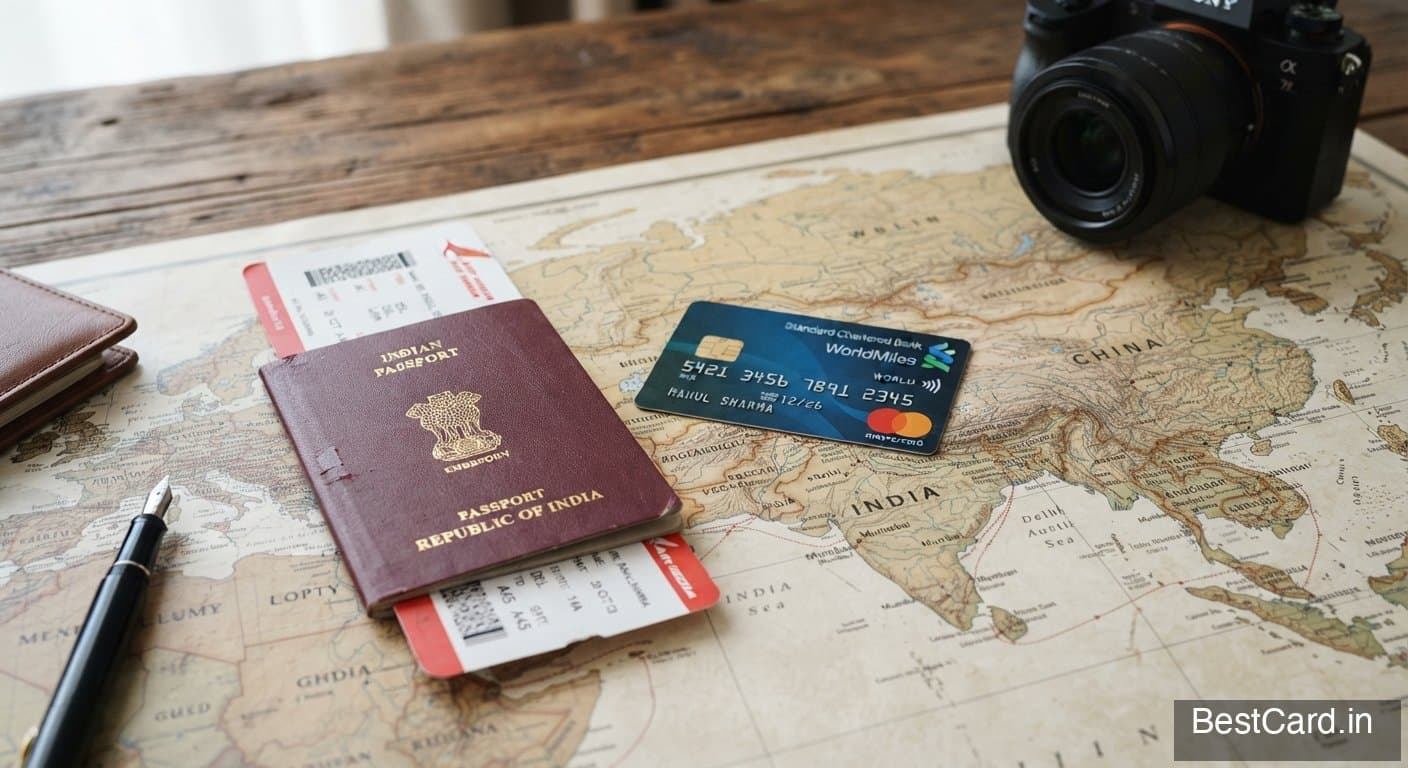
Most Indian banks charge a 3.5% forex markup on the majority of their credit cards, plus 18% GST, so a foreign transaction effectively costs you about 4.13% extra. The exceptions are IDFC FIRST Bank, which charges 0% on every card, and Canara Bank at a flat 3%. Every other big issuer has a handful of low-markup cards, usually its travel or premium ones. The table below shows each bank's usual rate and the cards worth looking at if you spend abroad.
How forex markup is calculated
When you pay in a foreign currency, or pay a merchant billed from abroad, the network converts the amount to rupees. Your bank then adds its markup as a percentage of the converted amount, and GST at 18% is charged on that markup.
On a ₹2,00,000 trip:
| Markup | Markup amount | GST (18%) | Total extra |
|---|---|---|---|
| 3.5% | ₹7,000 | ₹1,260 | ₹8,260 |
| 2% | ₹4,000 | ₹720 | ₹4,720 |
| 1.5% | ₹3,000 | ₹540 | ₹3,540 |
| 0.99% | ₹1,980 | ₹356 | ₹2,336 |
| 0% | ₹0 | ₹0 | ₹0 |
Going from a 3.5% card to a 0.99% card saves almost ₹6,000 on one big trip, often more than the low-markup card's annual fee. Our explainer on hidden forex costs covers the less obvious charges.
Forex markup by bank
These counts are for cards with a published forex figure in BestCard's data. "Most common" is the rate most of that bank's cards charge.
| Bank | Cards counted | Most common markup | Lowest-markup cards worth considering |
|---|---|---|---|
| IDFC FIRST Bank | 27 | 0% (all cards) | Every card, e.g. Select, Wealth, Millennia |
| SBI Card | 68 | 3.5% (63 cards) | Miles Elite 1.99%, Aurum 1.99%, Elite 2% |
| HDFC Bank | 41 | 3.5% (30 cards) | Regalia Gold, Tata Neu Infinity, Infinia, Diners Club Black: all 2% |
| ICICI Bank | 39 | 3.5% (30 cards) | MakeMyTrip 0.99%, Emirates Emeralde 1.5%, Emeralde Private Metal 1.5%, Amazon Pay 1.99% |
| Axis Bank | 49 | 3.5% (38 cards) | Scapia 0%, Reserve 1.5% |
| RBL Bank | 39 | 3.5% (27 cards) | World Safari 0%, World Safari Lite 0% |
| Yes Bank | 27 | 3.5% (13 cards) | Private 0.5%, Marquee 1%, Reserv 2% |
| AU Small Finance Bank | 26 | 3.49% (16 cards) | ixigo 0%, Zenith+ 0.99% |
| IndusInd Bank | 22 | 3.5% (14 cards) | Tiger 1.5%, Avios 1.5% |
| Kotak Mahindra Bank | 21 | 3.5% (14 cards) | Air+ 2%, White Reserve 2% |
| Bank of Baroda | 29 | 3.5% (14 cards) | BOBCARD Scapia 0%, BOBCARD One 1% |
| HSBC India | 8 | 3.5% (4 cards) | Premier 0.99%, Live+ 1.99% |
| Standard Chartered | 9 | 3.5% (7 cards) | Ultimate 2% |
| American Express | 9 | 3.5% (8 cards) | None below 3.5% in the mainstream range |
| Canara Bank | 17 | 3% (all cards) | — |
Bank-by-bank notes
IDFC FIRST Bank. It charges 0% across the range, but the rewards side is changing. On cards such as the Select and Power+, international spends stop earning reward points from 26 October 2026. You save the markup but earn nothing. Even so, 0% beats a 3.5% markup unless your other card earns more than about 4% back on foreign spends.
SBI Card. Almost everything charges 3.5%. The SBI Miles Elite at 1.99% (₹4,999 fee) is SBI's best option for travellers, and it earns miles on top.
HDFC Bank. The premium and upper-mid cards drop to 2%. Regalia Gold at ₹2,500 is the cheapest way into that rate. The Tata Neu Infinity HDFC card also charges 2% at a ₹1,499 fee.
ICICI Bank. It has the widest range of low-markup cards among the big private banks. The ICICI MakeMyTrip card charges 0.99% for a ₹999 fee, one of the cheapest ways to get a sub-1% markup from a large bank. The lifetime-free Amazon Pay ICICI charges 1.99%.
Axis Bank. Its flagship travel card, Atlas, still charges 3.5% in our data, which surprises many people. For low markup, the lifetime-free Axis Scapia at 0% is the one to look at, unless you're in Reserve territory (₹50,000 fee, 1.5%).
RBL Bank. World Safari (₹3,000) and World Safari Lite (₹1,000) both charge 0%. On World Safari, international spends don't earn travel points.
Yes, AU, IndusInd and HSBC. Each has one or two standout cards. The IndusInd Tiger is lifetime-free at 1.5% but earns almost nothing. AU Zenith+ at 0.99% adds 16 international lounge visits a year. HSBC Live+ pairs 1.99% markup with 10% everyday cashback. Yes Private's 0.5% is by invitation only.
Amex and Canara. Mainstream Amex cards charge 3.5%, so keep a Visa or Mastercard with lower markup for trips abroad. Canara charges a flat 3% across its range.
Markup isn't the only cost
- Dynamic currency conversion. If a foreign shop or ATM offers to charge you in rupees, decline. The conversion rate is usually poor, and many cards still add markup on top. See our DCC explainer.
- Rupee-priced foreign websites. A site showing INR prices but billing from abroad still triggers markup.
- Cash withdrawals abroad. These are cash advances, with fees and interest from day one, on top of markup.
- Reward trade-offs. A 3.5% card earning 5% on foreign spends can beat a 0% card that earns nothing, but very few cards actually do that.
If you're comparing a card against a prepaid forex card, our forex card vs credit card guide covers when each one wins. Before you fly, make sure international usage is switched on. Our guide to card controls explains how.
Picking a card for foreign spending
- Occasional trip, low budget: a lifetime-free 0% card (Axis Scapia, AU ixigo, an IDFC FIRST card) used only abroad.
- Regular traveller who wants rewards too: ICICI MakeMyTrip, SBI Miles Elite or HDFC Regalia Gold.
- Frequent flyer who wants lounges: AU Zenith+ or ICICI Emirates Emeralde.
- Big foreign spends: work out the yearly markup saving against the fee using the table above.
Our list of the best zero forex markup cards ranks individual cards in more detail.
All markups and counts reflect BestCard's latest card data. Banks revise forex charges without much notice, so confirm on the issuer's site before you travel. Put two cards side by side on compare, or let the card matcher suggest one.
Frequently asked questions
Which bank has the lowest forex markup on credit cards in India?
IDFC FIRST Bank charges 0% forex markup on all 27 of its cards in BestCard's data. Other banks charge 3.5% on most cards but offer a few low-markup options, such as the ICICI MakeMyTrip card at 0.99% and AU Zenith+ at 0.99%.
What is the standard forex markup on Indian credit cards?
3.5% is the most common rate. It's what most cards from SBI Card, HDFC Bank, ICICI Bank, Axis Bank and several others charge, plus 18% GST on the markup.
Is GST charged on forex markup?
Yes. 18% GST applies to the markup amount, so a 3.5% markup really costs about 4.13% of what you spend.
Do zero forex markup cards earn rewards on international spends?
Not always. On some zero-markup cards, such as the IDFC FIRST Select and RBL World Safari, international spends earn no reward points or no travel points. Check the reward terms as well as the markup.
Related reading
- Dynamic Currency Conversion Explained: Always Pay Local
Dynamic currency conversion explained: why paying in rupees abroad costs more, a worked example, how to spot DCC at terminals and ATMs, and which cards help.
- Best Credit Cards for Visa and Passport Fees in 2026
Which credit cards to use for visa and passport fees in 2026: zero forex cards for foreign-currency visa fees, reward exclusions on government spends and tips.
- TCS on International Credit Card Spends Explained (2026)
Is TCS charged on international credit card spends? How TCS under LRS works, how cards differ from forex cards and remittances, and the costs you do pay abroad.