
Credit Card Spends and Income Tax Notices: Limits to Know (2026)
24 September 2026 · BestCard Editorial Team
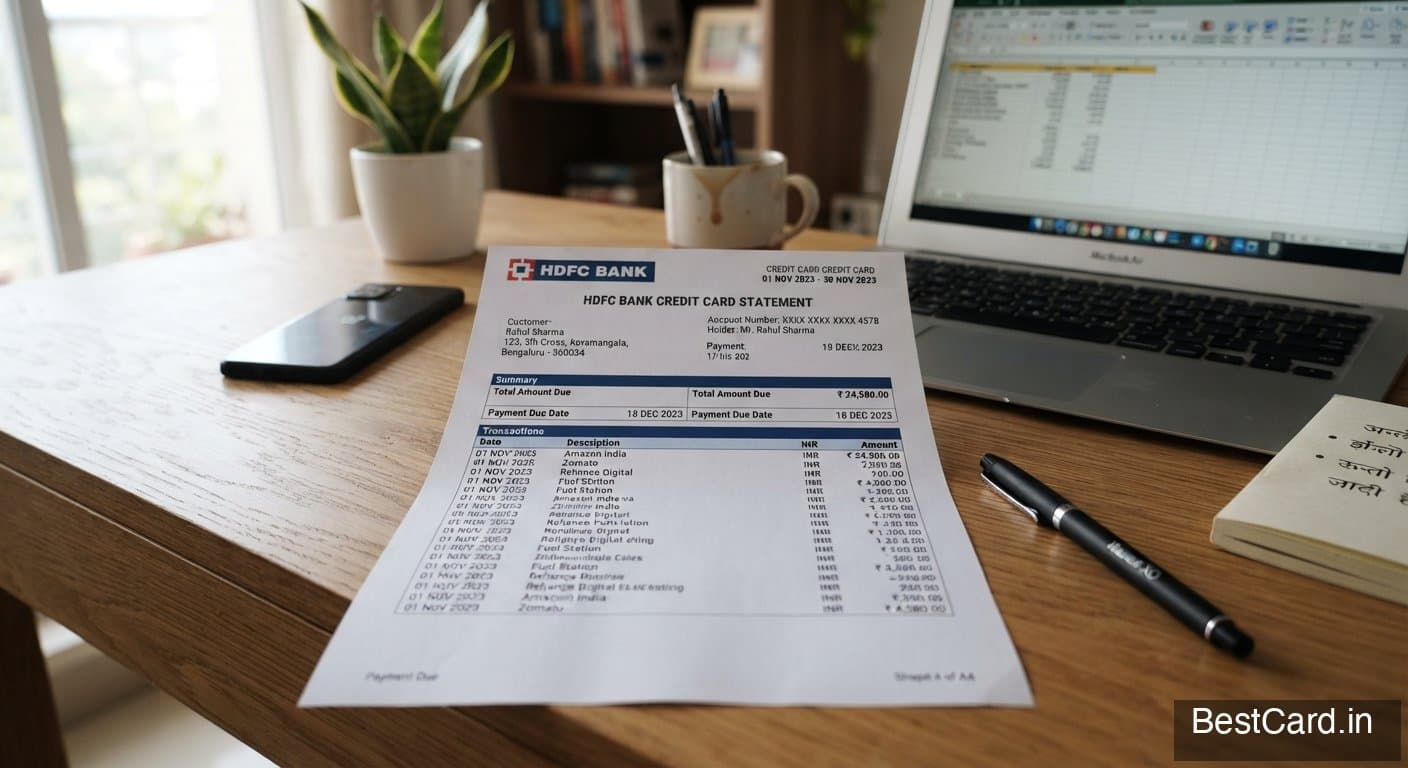
Your bank does tell the Income Tax Department about large credit card payments, but a big card bill on its own won't get you a notice. Card issuers report bill payments that cross set yearly thresholds. A notice usually comes only when that reported spending doesn't fit the income on your tax return. If your spending and declared income line up, you have nothing to worry about.
Here's how the reporting works, which limits matter, and what actually tends to cause trouble.
How credit card spending reaches the tax department
Banks, card issuers and other financial institutions file a Statement of Financial Transactions (SFT) with the Income Tax Department each year. It lists high-value transactions linked to your PAN. That's why you must give your PAN when you apply for a credit card.
The reported data then appears in your Annual Information Statement (AIS) on the income tax e-filing portal. The department compares the AIS with your income tax return. If you've spent far more than your declared income could plausibly support, its systems flag a mismatch.
Notice what gets reported: your bill payments to the card issuer, not each swipe at a shop.
The two thresholds that matter
As the SFT rules stand, card issuers report:
| What | Reporting threshold (per financial year) |
|---|---|
| Credit card bill payments made in cash | ₹1 lakh or more in total |
| Credit card bill payments made by any mode (cash, UPI, net banking, cheque, auto-debit) | ₹10 lakh or more in total |
These thresholds have been around for years, but tax rules do change. Check the current limits with a chartered accountant or on the Income Tax Department's website before you rely on them.
A few points people often miss:
- The ₹10 lakh limit is a yearly total. Paying about ₹85,000 a month crosses it, since ₹85,000 × 12 = ₹10.2 lakh.
- It covers all your cards with that issuer. Three cards from the same bank count together.
- Cash is watched much more closely. The cash threshold is a tenth of the general one. Paying card bills over the counter in cash is the quickest way to get noticed.
What actually triggers a notice
Being reported in the SFT is normal, and lakhs of cardholders are reported every year. What leads to a notice or a "compliance" query is usually one of these:
1. Spending well above your declared income. Say you file a return showing ₹6 lakh of income, but your card bills add up to ₹14 lakh. The department will ask where the other ₹8 lakh came from. Sometimes there's a perfectly good answer: savings, a gift from family, the sale of an asset, an employer reimbursing you. You just need to be able to show it.
2. Large cash payments of card bills. Repeated cash payments, especially ones that add up near or past ₹1 lakh, look like an attempt to spend money that isn't on the books.
3. Not filing a return at all. If your income is below the taxable limit and you don't file, but your AIS shows lakhs of card payments, a query is likely. If you spend heavily on a card, file a return even when you owe no tax.
4. Using your card for other people's spending. If you put friends' or relatives' expenses on your card and they repay you in large amounts, your account shows big inflows your declared income doesn't explain.

A worked example
Two people each spend ₹1 lakh a month on their credit cards, so both report ₹12 lakh of payments a year.
- Priya earns ₹30 lakh a year, files her ITR on time and pays her card bills from her salary account. She crosses the ₹10 lakh threshold and appears in the SFT, but her income easily covers the spending. Nothing happens.
- Rahul declares ₹5 lakh of income and pays part of his bills in cash. Every year his ₹12 lakh of card spending sits next to ₹5 lakh of declared income. He's a likely candidate for a notice asking him to explain the gap.
The spending is the same. Only the paper trail is different.
Common situations that are fine (if documented)
Business or work expenses you get reimbursed for. If you put team travel on your personal card and your employer pays you back, keep the reimbursement records. The repayments show up as credits in your account, and you want to be able to show they aren't income.
Paying rent by credit card. This is common, and our guide to the best apps to pay rent with a credit card covers the fees involved. If you also claim HRA, keep your rent receipts and agreement, and your landlord's PAN when the annual rent is large enough to require it.
Paying income tax or big one-off bills by card. Our guide on paying income tax with a credit card explains the convenience fees. These payments raise your total card payments, so a heavy tax year can push you past ₹10 lakh.
Large international spends. Foreign spending has its own rules, including tax collected at source in some cases. Read our explainer on TCS on international credit card spends, and check the current position with your bank, since this area has changed several times.
Cashback and reward points. Cashback is generally treated as a discount on what you bought, not as income. Our article on whether credit card cashback is taxable goes into the edge cases.
How to stay out of trouble
- File your ITR every year if you use credit cards heavily, even if you owe no tax.
- Pay card bills from your own bank account, never in cash.
- Check your AIS once a year before you file. If a reported figure is wrong, you can give feedback on the portal.
- Keep records of reimbursements, family repayments, gifts and asset sales that fund big spending.
- Don't let others use your card routinely for large purchases without a clear record of repayments.
- Read your statements. Our guide to reading a credit card statement helps you spot what's driving your annual total.
If you do get a notice
Don't panic, and don't ignore it. Most notices linked to SFT data ask you to explain or confirm a transaction. Read exactly what it asks, gather your bank statements, salary slips, ITRs and any supporting documents, and reply on the e-filing portal before the deadline. If the amounts are large or the notice is complicated, get a chartered accountant to help.
This article explains general reporting practice and isn't tax advice. Thresholds and procedures can change, so confirm the current rules with the Income Tax Department or a qualified tax advisor.
Choosing the right card for heavy spending
If your card bills already approach ₹10 lakh a year, you should be earning a lot back on that spending. A premium card with milestone benefits can pay off well at that level. Our card matcher can show you which cards suit your income and how you spend.
Frequently asked questions
What credit card spending limit is reported to the Income Tax Department?
Under the Statement of Financial Transactions rules, card issuers report credit card bill payments totalling ₹10 lakh or more in a financial year by any mode, or ₹1 lakh or more paid in cash. Confirm current thresholds with a tax advisor, as rules can change.
Will I get an income tax notice for spending ₹10 lakh on my credit card?
Not automatically. Being reported is routine. A notice usually follows only when your reported spending looks out of line with the income you declared in your return.
Where can I see what my bank reported about my credit card?
Log in to the income tax e-filing portal and check your Annual Information Statement (AIS). High-value transactions reported by banks and card issuers show up there.
Is it safe to pay family members' expenses on my credit card?
Yes, but if they repay you large sums regularly, keep a record. Big unexplained inflows to your bank account can raise questions if your declared income doesn't account for them.
Related reading
- Can You Pay a Mutual Fund SIP with a Credit Card in India?
Can you pay a mutual fund SIP with a credit card? Why AMCs and apps say no, the costly workarounds to avoid, and a smarter way to use your card for investing.
- Credit Card Autopay and E-Mandates: A Complete 2026 Guide
How credit card autopay and e-mandates work in India: RBI rules, pre-debit alerts, setting up and cancelling mandates, and paying your card bill on autopay.
- Lifetime Free vs Paid Credit Card: Which Should You Choose?
Lifetime free or paid credit card? Use a simple break-even formula, real examples from cards like SBI Cashback and Amazon Pay ICICI, and avoid the common traps.