Best Credit Cards for Everyday Spending in India
19 December 2024 · BestCard Editorial Team
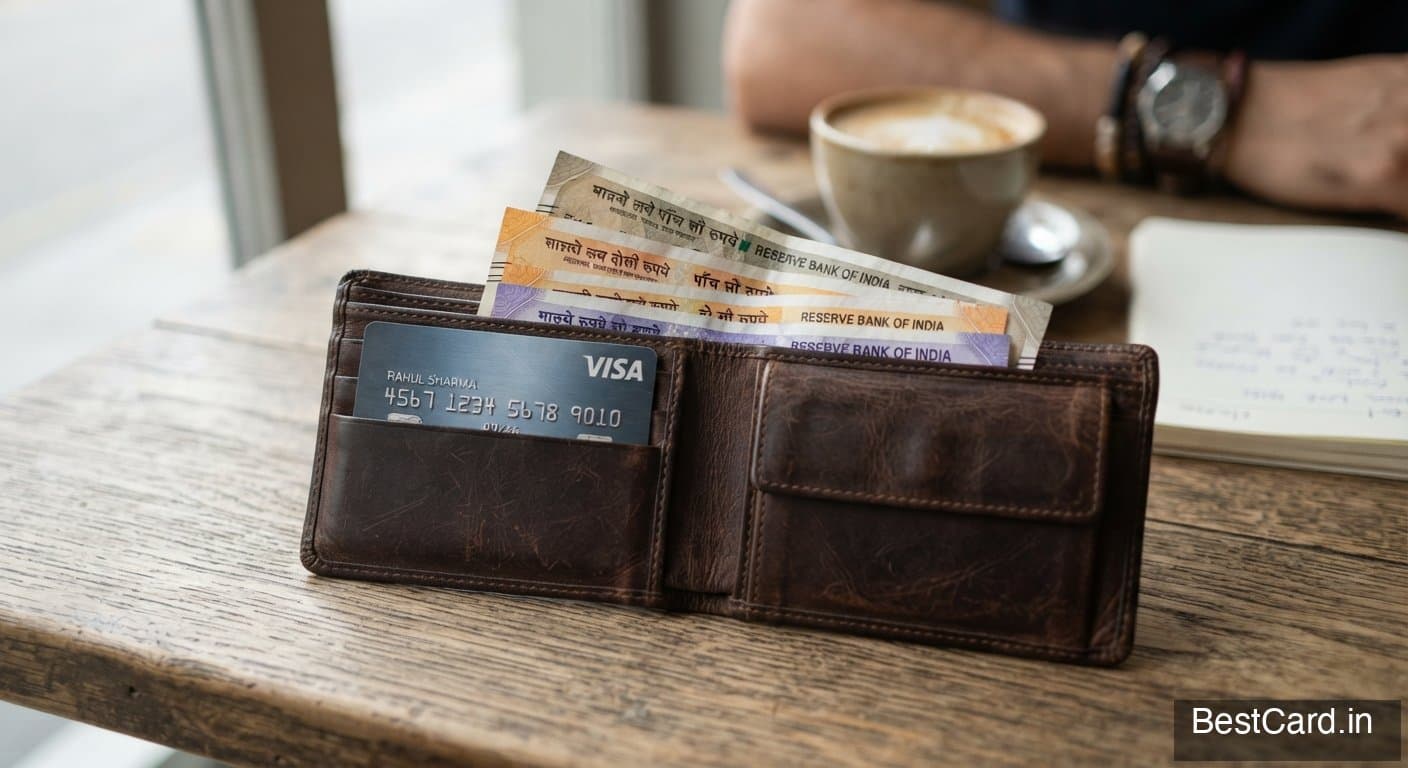
Most credit card content is written for edge cases — the best travel card, the best card for a specific airline, the best card if you spend big at one particular retailer. Almost nobody writes about the card that actually matters most for most people: the one you use for groceries, fuel, electricity bills, mobile recharges, and the fifty other small transactions that make up 80% of your monthly spend.
That's a different design problem. An everyday card doesn't need a five-figure joining fee or airport lounge access. It needs a decent flat rate on spending that doesn't fall into any special bucket, low or waived fees, and no annoying redemption friction.
What "everyday spend" actually looks like
Pull up your last two months of statements before you pick anything. For most Indian households, everyday spend breaks into:
- Groceries and daily essentials (often UPI or debit-heavy, but increasingly on cards via QR)
- Fuel
- Utility bills — electricity, gas, broadband, mobile
- General retail — pharmacy, small local purchases, subscriptions
None of this is glamorous. None of it earns you 5X reward points the way a curated online-shopping category might. That's exactly why flat-rate cashback beats a category-accelerated card here — your spending doesn't concentrate anywhere.
Why flat cashback wins for daily use
We've written about the flat vs category-accelerated cashback tradeoff before, and the everyday-spend case is the cleanest example of it. A card offering 5% back on a specific e-commerce site is useless on the 25th of the month when you're paying your electricity bill. A card offering a flat 1-1.5% back on everything, with no exclusions, quietly earns more over a full year of scattered, ordinary purchases.
The SBI Cashback Credit Card is a reasonable anchor here — 5% cashback on online spends and 1% on offline, auto-credited with no manual redemption. Since a growing share of "everyday" spend (bill payments, grocery delivery apps, recharges) now happens online, it captures more of your daily spend than its "online-only" framing suggests. Just track the monthly cashback cap so you're not assuming you're earning past it.
If you want something closer to true flat-rate simplicity across both online and offline, look at cards with a straightforward 1-1.5% cashback structure and no annual fee, or one that waives the fee on modest annual spend. We cover several of these in our no annual fee credit cards roundup — for a pure daily-use card, paying zero fees changes the math more than chasing an extra 0.5% reward rate does.
Fuel needs a separate line item
Fuel surcharge (1% on most cards) quietly erodes any rewards you're earning on petrol and diesel purchases unless your card waives it. This is small per transaction but adds up over a year of fill-ups. Check whether your everyday card has a fuel surcharge waiver — most co-branded and even several general-purpose cards offer this on transactions within a set range, and it's a bigger everyday saving than most people realize.
UPI-linked RuPay cards are changing the picture
If you're a heavy UPI user, a RuPay credit card linked to UPI can now cover a meaningful slice of "everyday spend" that used to bypass cards entirely — the local grocery store, the roadside vendor, the small merchant with only a UPI QR code. This is worth factoring in for 2026 planning specifically, since reward structures on UPI RuPay transactions are still evolving and not every issuer treats them the same as a swiped transaction.
What to skip
- Don't pick an everyday card based on a welcome bonus alone — it's a one-time number that says nothing about your ongoing rate.
- Don't stack multiple mid-tier cashback cards hoping to "optimize" daily spend across them — the tracking overhead isn't worth it unless you're deliberately running a combo strategy (see our guide to stacking cards for maximum savings if that's the goal).
- Don't ignore the redemption mechanism. Auto-credited cashback beats reward points that expire or require a minimum threshold to redeem, especially on a card meant for routine, low-friction use.
The bottom line
For pure everyday spending, prioritize in this order: fee structure, flat cashback rate with no punishing exclusions, fuel surcharge waiver, and simple auto-credit redemption. Skip the airport lounge marketing and the category gimmicks — none of it matters for the electricity bill you're paying on the 3rd of every month.