Best Credit Cards for NRIs Moving Back to India
11 September 2026 · BestCard Editorial Team
Returning NRIs run into a frustrating gap: years of clean credit history abroad count for almost nothing with Indian issuers, because CIBIL and other Indian bureaus only track domestic credit activity. If you've been away for a decade and are moving back, you're effectively starting your Indian credit profile close to zero, regardless of how good your foreign credit score was.
Why your foreign credit history doesn't transfer
CIBIL, Experian, and Equifax India build scores from data reported by Indian lenders. A spotless US or UK credit history simply isn't visible to them. This means a returning NRI with a high income and years of financial discipline can still get a modest starting credit limit, the same as someone building credit for the first time.
Starting points that work
If you already bank with an Indian institution through an NRE or NRO account, that relationship can help — some banks will extend a card based on your account relationship and fixed deposits rather than pure credit history. A secured card against a fixed deposit is also a reliable starting point; see our secured vs unsecured credit cards guide for how that works and how quickly it typically converts to an unsecured card once you show repayment discipline.
Which issuers to approach first
SBI Card has a wide branch and NRI banking presence, which can make it an easier first application if you're re-establishing banking relationships in India. Once you have one card performing well, an Axis Bank credit card is a reasonable second card to diversify your credit mix and start building toward a stronger limit.
Rebuilding credit efficiently
The playbook for a returning NRI looks a lot like the playbook for choosing a first credit card — start small, keep utilization low, pay in full every cycle, and let the score build over six to twelve months rather than trying to jump straight to a premium card. Our CIBIL score basics guide breaks down exactly what factors carry the most weight during this rebuilding phase.
Understanding APR and fees as a returning resident
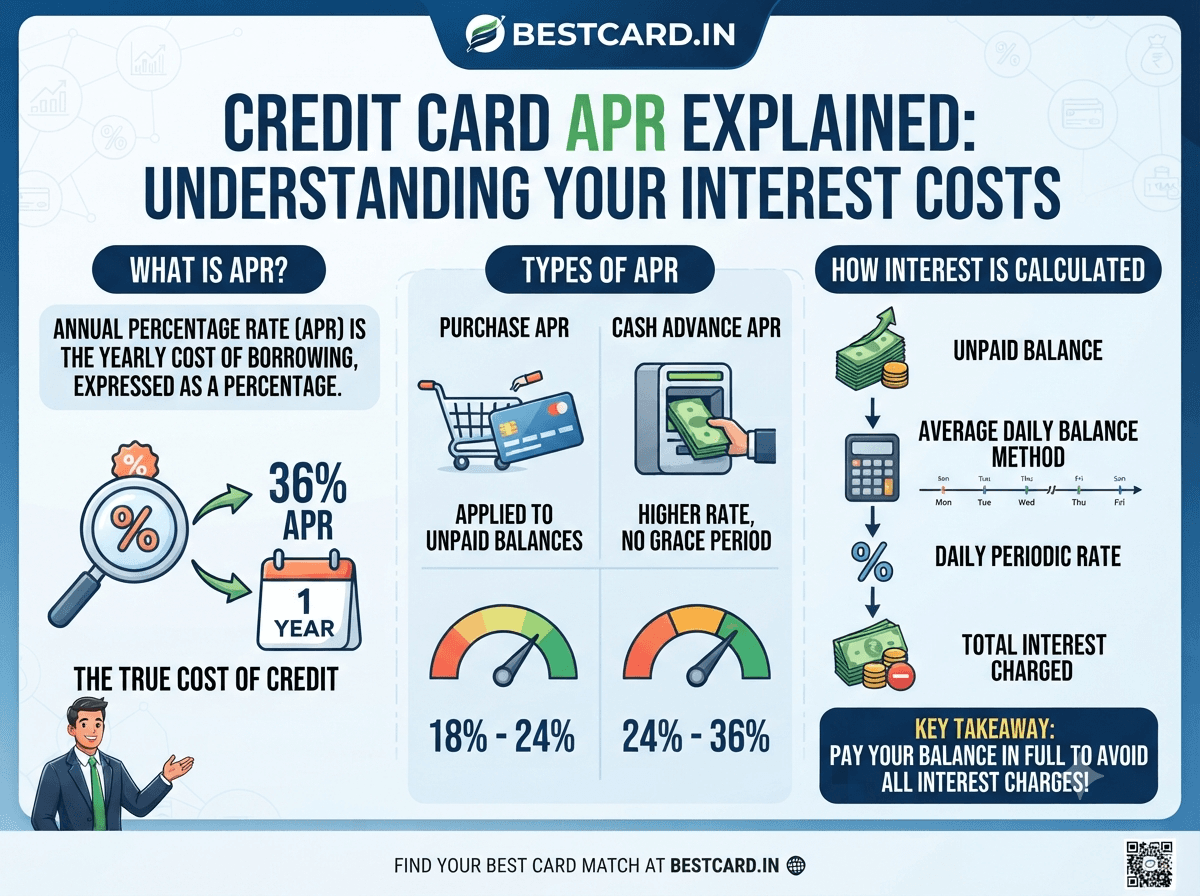
Interest rates and fee structures on Indian cards can look different from what you're used to abroad, particularly around cash advances and foreign currency markup. Our credit card APR explained guide is worth reading before you carry any balance, since Indian card APRs tend to run higher than what's typical in the US or Gulf markets.
Patience pays off
Within a year of consistent, on-time repayment, most returning NRIs see meaningful credit limit increases and qualify for better cards. The key mistake to avoid is applying for multiple cards at once out of frustration with a low starting limit — that hurts your score right when you're trying to build it.