Cash Withdrawal on a Credit Card: Fees, Interest, and When It's Worth It
26 April 2026 · BestCard Editorial Team
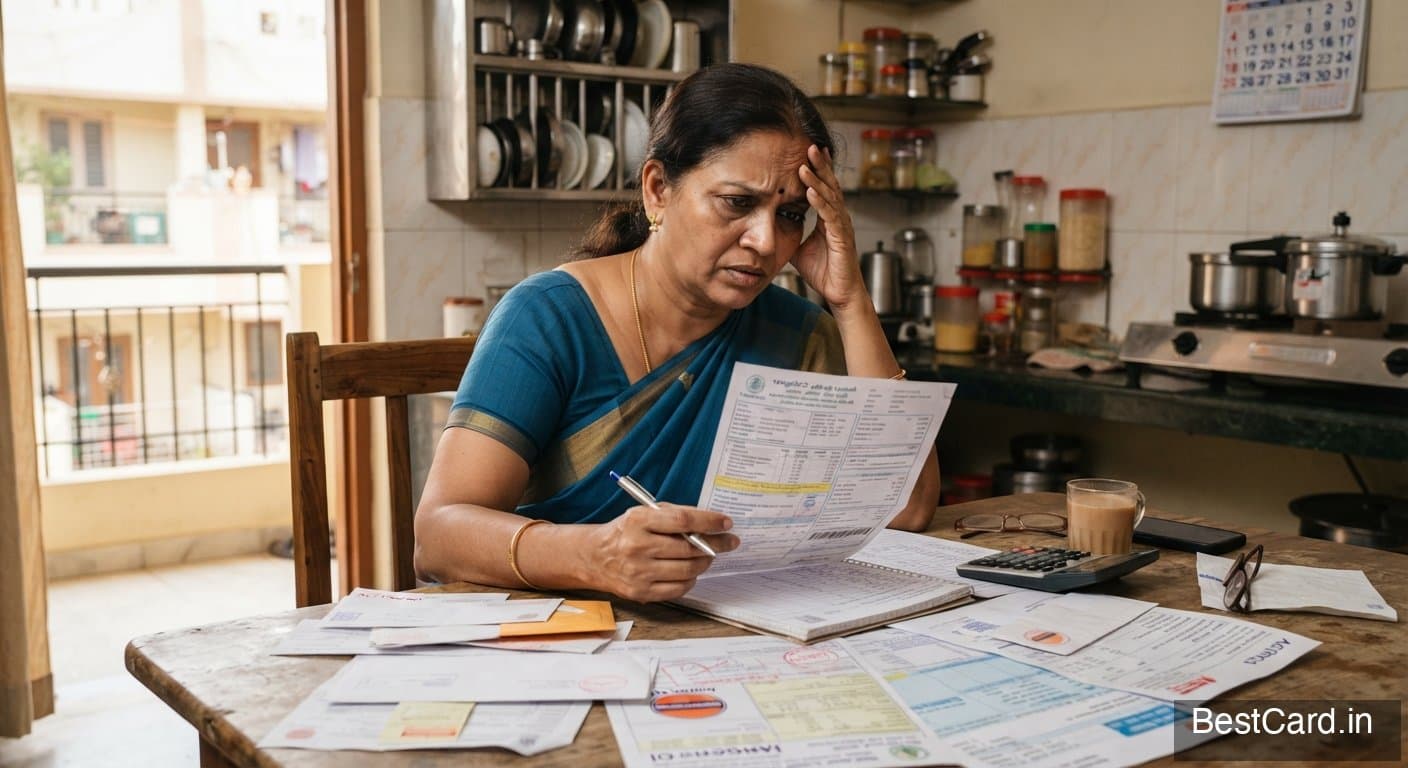
Every credit card lets you pull cash out of an ATM. Almost no credit card wants you to. The feature exists because banks can charge for it heavily, not because it's a good way to get money — and understanding exactly how expensive it is will stop you from reaching for it in a pinch.
What counts as a cash withdrawal
Any ATM withdrawal using your credit card, and in some cases loading a wallet or buying certain instruments through your card, gets classified as a "cash advance" rather than a regular purchase. Banks track this separately because the pricing is deliberately different — this isn't a swipe at a store, it's treated like a short-term loan against your credit limit.
The two costs that make it expensive
Cash advance fee: Most Indian issuers charge 2.5-3% of the withdrawal amount, with a minimum of ₹250-500, deducted immediately. Withdraw ₹10,000 and you've already lost ₹250-300 before any interest kicks in.
Interest from day one: This is the part people miss. Unlike purchases, which get an interest-free grace period of roughly 18-50 days, cash advances start accruing interest the moment the cash leaves the ATM — there is no grace period at all. At 36-42% annualized, interest compounds from day one, so even repaying within a week or two still costs you something meaningful, and repaying over a month or more starts to resemble the minimum due trap in miniature.

Your credit limit isn't your cash limit
Most cards cap cash advances at 20-40% of your total credit limit, not the full limit. A ₹2,00,000 limit card might only let you withdraw ₹40,000-80,000 in cash, even if you haven't spent anything else. Check your card's app or statement for the exact cash limit before you're standing at an ATM assuming you have more headroom than you do.
Does it affect your credit score?
Indirectly, yes. A cash advance increases your outstanding balance and therefore your credit utilization ratio, which CIBIL and other bureaus weigh heavily. It doesn't get flagged as a distinct negative marker the way a missed payment does, but a pattern of frequent cash withdrawals is often read by lenders as a sign of cash flow stress when they review your file for a future loan or card application.
When it's actually worth it
Almost never, but there are edge cases. A genuine emergency with no other liquid option — no debit card access, no UPI, no one to lend cash — where a same-day amount is non-negotiable, is really the only scenario. Even then, compare it against a same-day personal loan or an advance from a digital lending app; both usually still come out cheaper than a cash advance carried for more than a few days, because neither starts charging interest from the very first hour.
Two things it should never be used for: covering another debt payment, or funding discretionary spending because your bank balance is low. Both indicate a bigger cash flow problem that cash advance interest will only make worse — a personal loan at 12-16% is a far cheaper way to bridge a real shortfall.
How to avoid needing it
Keep a small emergency fund in a savings account or liquid mutual fund specifically so a credit card cash advance never becomes the fallback. If you're the kind of person who occasionally needs cash on short notice — for a vendor, a courier, a market that doesn't take cards — a RuPay credit card linked to UPI covers most of those situations without ever needing an actual ATM withdrawal, since UPI-based spends are billed like normal purchases with the usual grace period.
Where to go from here
If you're already carrying a cash advance balance, treat it the way you'd treat any high-interest revolving debt — read our guide on the minimum due trap to understand exactly how the interest compounds, and consider EMI conversion to bring the rate down to something manageable. For everyday spending that doesn't involve cash, our credit card vs BNPL comparison covers safer short-term credit options.