
Credit Card Utility and Education Transaction Fees Explained
6 October 2026 · BestCard Editorial Team
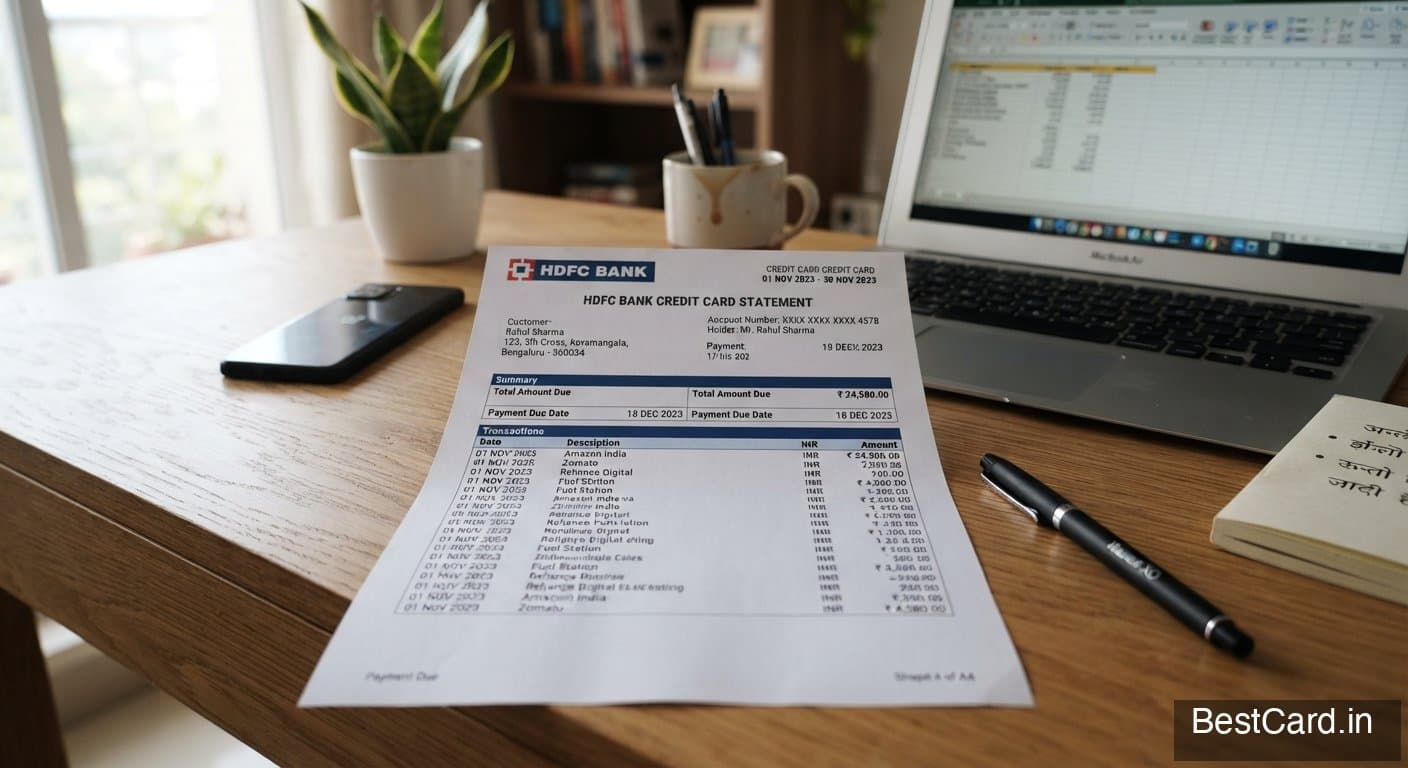
Credit card utility and education transaction fees are charges your card issuer adds when you pay bills such as electricity, gas, water or broadband, or education fees, using a credit card. Typically they're a percentage of the payment, kick in above a monthly threshold or when you pay through a third-party app, and attract 18% GST on top. They exist because these payments carry low margins for banks, and the fee can easily wipe out any rewards you earn.
This guide explains how the fees work, shows the maths, and lists practical ways to avoid them.
Three different charges that look the same
When you see an extra charge on a bill payment, it could be any of these. They're easy to confuse.
1. Issuer transaction fee
Charged by your card issuer and shown on your card statement. Several large Indian issuers now levy one on:
- Utility payments above a monthly spend threshold (some apply it per transaction, with a cap)
- Education payments made through third-party payment apps rather than directly to the school or college
The rate, threshold and cap differ by bank and change from time to time. Always check your issuer's current most important terms and conditions (MITC) or schedule of charges.
2. Merchant convenience fee
Added by the biller, such as a university, an electricity board or a payment gateway, at checkout. You see it before paying. This has nothing to do with your card issuer.
3. Platform fee
Some bill-payment and rent-payment apps charge their own processing or platform fee when you pay with a credit card. Again, this is shown at checkout.
You could, in theory, pay all three on one transaction. Our guide to surcharges on fuel, rent and tax payments covers the related categories.
Why banks charge these fees
Utility and education payments usually carry low merchant fees, so banks earn little from them. At the same time, these were popular categories for chasing milestones and rewards. Fees and reward exclusions are how issuers have rebalanced. That's also why so many cards now earn little or nothing on bills. Our explainer on how banks reduce rewards quietly has more context.
Worked examples
The numbers below are an illustration using a 1% fee. Your bank's actual rate and threshold may differ.
Utility bills
Say your issuer charges 1% on utility payments once monthly utility spend crosses ₹50,000, and you pay ₹65,000 of bills this month (several properties, a large annual broadband plan and electricity).
- Fee: 1% of ₹65,000 = ₹650 (if applied to the whole month's utility spend; some issuers apply it only to transactions above the threshold)
- GST: 18% of ₹650 = ₹117
- Total cost: ₹767
Now the rewards. On a card that pays 1% on utilities capped at ₹200 a month (HDFC Millennia's structure in BestCard's data), you earn ₹200. Net: you're ₹567 down.
Education fees
Say a ₹1,20,000 school fee paid through a third-party app attracts an illustrative 1% issuer fee:
- Fee: ₹1,200
- GST: ₹216
- Total: ₹1,416
Paying the same fee directly on the school's own portal or card machine often avoids the issuer fee, though the school may add its own convenience charge. Compare both before paying.

How cards reward utility and education spend
Reward rates on these categories vary hugely. A few examples from BestCard's latest card data:
| Card | Utility reward | Notes |
|---|---|---|
| HSBC Live+ | 10%, capped at ₹1,000/month | One of the highest utility rates available |
| Tata Neu Infinity HDFC | 5% as NeuCoins | Flat rate on utility bills regardless of merchant |
| Axis ACE | 5%, capped at ₹500/month | Bill payments via Google Pay |
| HDFC Millennia | 1%, capped at ₹200/month | |
| Axis Bank Cashback | 0.5%, capped at ₹100/month | |
| IDFC FIRST Millennia | 0.125% | |
| Amex Membership Rewards | No points | Utilities excluded |
| HSBC Visa Platinum | No rewards | Utilities, insurance, education and government payments excluded |
Card pages: Tata Neu Infinity HDFC and Axis ACE. If bills are a big part of your monthly spend, see our best cards for utility bill payments.
A high reward rate only helps if it exceeds the fee. A 5% card on a payment that costs 1.18% in fee and GST still nets you about 3.8%, until you hit the reward cap.
Practical ways to avoid or reduce the fees
- Read your issuer's schedule of charges. Find the exact threshold, rate and any per-transaction cap. These change, and banks usually announce them by email or SMS.
- Stay under the monthly threshold. If your issuer charges above a set utility amount, split large bills across two cards or two billing months where the biller allows it.
- Pay education fees directly. Use the school's or college's own portal or card machine instead of a third-party app, if your issuer only charges on third-party payments.
- Use a card that rewards the category. If you must pay large bills by card, use one where the reward beats the fee.
- Compare with UPI or net banking. For bills that earn no rewards and attract a fee, paying from your bank account is simply cheaper.
- Don't pay a fee to chase milestones. Many issuers now exclude utility and education spends from milestone and fee-waiver calculations, so check before counting on them.
For school fees specifically, our guide to cards for school fee payments compares options.
Common mistakes
- Assuming the convenience fee is the only cost. The issuer fee shows up later, on your statement.
- Forgetting GST. 18% GST on the fee makes a 1% fee cost 1.18%.
- Paying a big annual bill on a card with a low reward cap. You pay the fee on the full amount but earn rewards on only a small part.
- Not checking for changes. Fee rules have been revised several times across banks; what applied last year may not apply now.
Our explainer on GST on credit card fees and charges goes deeper into how GST adds to card costs.
The bottom line
Utility and education transaction fees are small percentages that add up fast on large payments, especially with 18% GST on top. Know your issuer's threshold, pay education fees directly where possible, and use a card that actually rewards bills, or skip the card for these payments. Rules change, so confirm current charges with your bank before making a large payment.
Want a card that suits your bill-heavy spending? Try the BestCard card matcher.
Frequently asked questions
Why is my bank charging a fee on utility bill payments?
Several Indian card issuers now charge a percentage fee on utility payments once your monthly utility spend crosses a set threshold. The exact rate, threshold and per-transaction cap differ by bank, so check your issuer's schedule of charges.
Do I pay a fee for paying school or college fees by credit card?
It depends on how you pay. Some issuers charge a fee when education payments are made through third-party apps, but not when you pay directly on the institution's own website or card machine. The institution may also add its own convenience fee.
Is GST charged on these transaction fees?
Yes. GST at 18% applies to fees and charges levied by card issuers, so a ₹500 fee actually costs ₹590.
Do utility and education payments earn reward points?
Often only a little, or nothing. Many cards exclude these categories or cap rewards on them. A few cards, such as Axis ACE and Tata Neu Infinity HDFC, actively reward utility payments.
Related reading
- Dynamic Currency Conversion Explained: Always Pay Local
Dynamic currency conversion explained: why paying in rupees abroad costs more, a worked example, how to spot DCC at terminals and ATMs, and which cards help.
- GST on Credit Card Fees and Charges Explained (2026)
Which credit card charges attract 18% GST in India, from annual fees and interest to forex markup and late fees, with rupee examples and ways to pay less.
- Credit Card Interest Rates by Bank 2026: What Indian Banks Charge
Credit card interest rates by bank in 2026: monthly and annual finance charges at HDFC, ICICI, Axis, SBI Card, IDFC FIRST and more, with worked cost examples.