
GST on Credit Card Fees and Charges Explained (2026)
26 September 2026 · BestCard Editorial Team
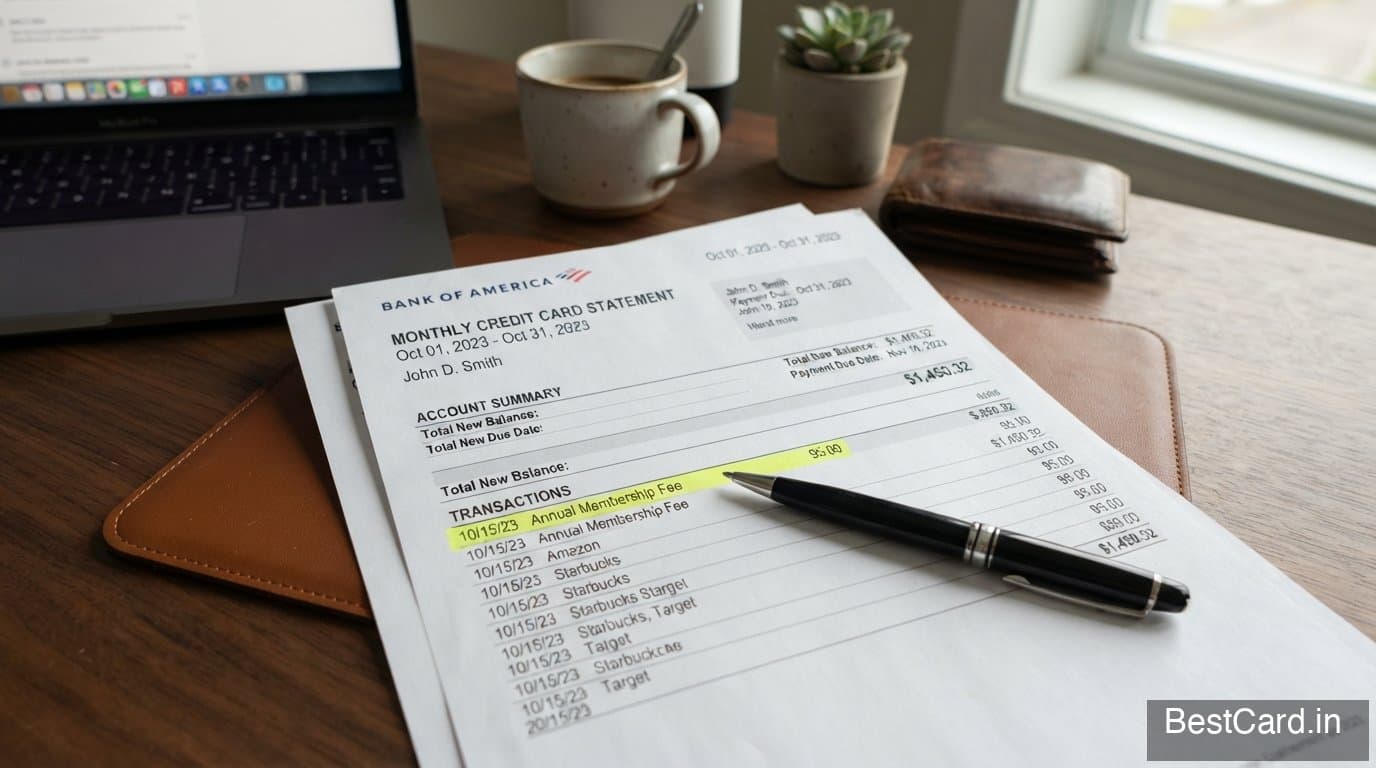
In India, the bank does not add GST to what you buy on your credit card, but it charges 18% GST on almost every fee and charge it levies: annual fees, interest, late payment fees, forex markup, cash advance fees and EMI processing fees. That 18% quietly makes every card charge more expensive than it looks.
What GST applies to and what it doesn't
Think of it this way: the purchase is between you and the merchant, and any GST on the goods is already in the price you paid. The card fees are a service the bank sells you, and financial services attract 18% GST.
Charges that attract 18% GST
- Joining and annual (renewal) fees
- Interest (finance charges) on revolving balances
- Interest on EMI conversions, plus the EMI processing fee
- Late payment fees
- Forex markup on international and foreign-currency transactions
- Cash advance (cash withdrawal) fees
- Fees for rent, wallet loads, education or utility payments where the bank adds a surcharge
- Reward redemption fees, card replacement fees, cheque or payment-return charges
Things that don't carry bank GST
- The purchase amount itself
- Cashback or reward credits
- The principal portion of an EMI
The split appears on your statement as CGST and SGST (if you and the bank's billing state match) or IGST. Either way the total is 18%.
Rupee examples
Annual fee. A ₹1,499 fee, like on the Aditya Birla SBI Card SELECT, costs ₹1,499 + ₹269.82 GST = ₹1,768.82. A ₹4,999 fee, like on the AU Zenith Plus, becomes ₹5,898.82.
Forex markup. You spend ₹1,00,000 abroad on a card with a 3.5% markup. The markup is ₹3,500, and GST on it is ₹630, so the real cost is ₹4,130, or 4.13%. On a card with a 0.99% markup the same spend costs ₹990 + ₹178.20 = ₹1,168.20. A zero-forex card like the Niyo Global charges no markup, so there's no GST on it either.
Interest. You revolve ₹50,000 for a month at 3.5% monthly interest. Interest is ₹1,750, GST adds ₹315, so the month costs you ₹2,065. Interest compounds on the unpaid balance month after month, which our interest calculation explainer walks through.
Late fee. A ₹1,000 late fee becomes ₹1,180. Late fees often come along with interest on the full balance, and both carry GST.
GST on EMI and "no-cost" EMI
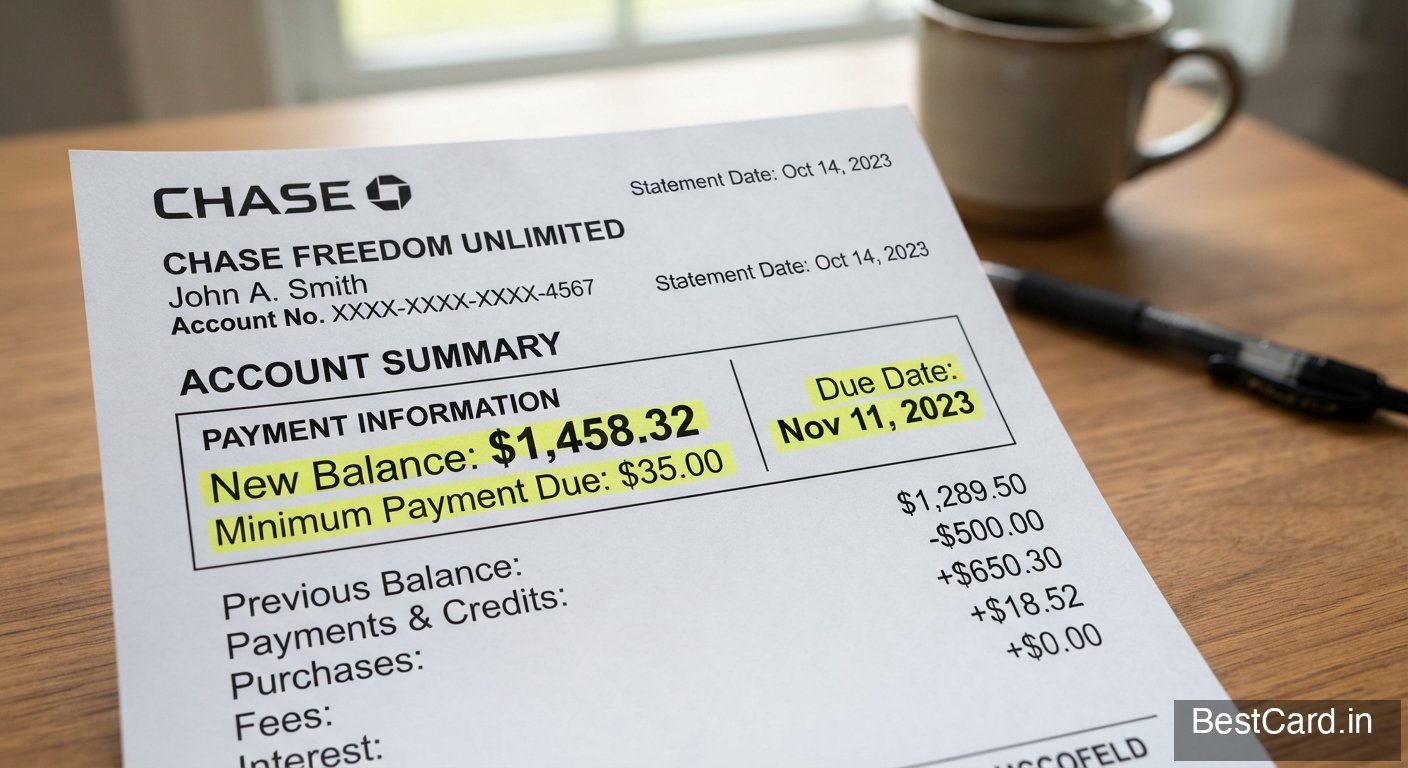
When you convert a purchase to EMI, each instalment has a principal part and an interest part. GST applies only to the interest part and to any one-time processing fee.
On a no-cost EMI, the merchant gives you an upfront discount equal to the interest, so the principal plus interest adds up to the original price. But the bank still records interest, and GST on that interest is charged to you. On a ₹60,000 phone on a 6-month no-cost EMI, interest of about ₹2,000 to ₹3,000 is normal depending on the rate, so the GST alone can come to ₹360 to ₹540, plus GST on the processing fee. We cover this in more detail in the hidden traps in no-cost EMI.
GST on fuel surcharge waivers
Many cards waive the 1% fuel surcharge within a monthly cap. On several cards the waiver covers the surcharge but not the GST charged on it, so a small GST amount stays on your statement even when the surcharge is reversed. It's minor, but it explains why the "waiver" line doesn't always cancel out exactly.
GST on fee-based payments: rent, wallets, utilities, education
Banks have added fees on specific payment types, including rent via third-party apps, wallet loads above a threshold, large utility bills, and education payments through apps. These fees attract GST too. A 1% fee on a ₹30,000 rent payment is ₹300 + ₹54 GST = ₹354 every month, or ₹4,248 a year. That can wipe out the rewards earned on rent. Our guides to utility and education transaction fees and wallet load charges list how each bank handles this.
Is GST refunded if the fee is reversed?
Yes. When a bank reverses an annual fee (for example after you hit the spend waiver, or as a goodwill gesture), it should reverse the GST charged on that fee too. Check that the reversal line includes the tax. If it doesn't, ask customer care to reverse the GST portion as well.
The same applies to late fees and interest reversed after a successful dispute or a one-time waiver request.
GST for business cardholders
If you use a card for business, some banks let you link your GSTIN so the fees show up on a tax invoice with your business details. Whether you can claim input tax credit depends on your registration, the nature of the expense and the invoice format. Confirm the details with your bank and your CA before claiming anything.
How to pay less GST on card charges
GST is a fixed 18% of the charge, so the only way to pay less GST is to pay fewer charges.
- Pay the full statement balance on time. No interest and no late fee means no GST on either. The minimum due trap is where most people end up paying GST on interest without noticing.
- Hit the fee waiver spend, or pick a lifetime-free card. A waived fee carries no GST.
- Use a zero or low forex card abroad. You save the markup and the GST on it.
- Avoid cash withdrawals on a credit card. The cash advance fee and interest from day one both carry GST.
- Check before paying rent or loading wallets. Work out whether the fee plus GST is more than the rewards you'll earn.
- Read the EMI breakup. Ask for the interest and processing fee before you convert, so you know the GST cost upfront.
Common mistakes
- Treating the advertised annual fee as the full cost. Add 18%.
- Comparing forex markups without GST. A 3.5% markup costs 4.13% in practice.
- Assuming "no-cost" EMI is fully free.
- Not checking whether GST was reversed along with a waived fee.
The bottom line
GST at 18% is applied to the bank's charges, not your purchases. The card fees and markups quoted above come from BestCard's latest card data, and issuers revise them regularly, so verify on the issuer's site before you apply. The 18% rule itself is well established, but the details of which fees a bank levies change often, so check your card's most important terms and conditions (MITC) and confirm any business tax treatment with a tax advisor. When you compare cards, include GST in the fee and forex columns; our comparison tool shows fees and forex side by side, and the card matcher can point you to lifetime-free options if you'd rather avoid annual fees altogether.
Frequently asked questions
Is GST charged on credit card bills in India?
GST is not charged on your purchases by the bank. It is charged at 18% on the bank's own fees and charges, such as annual fees, interest, late fees, forex markup and EMI processing fees.
Is GST charged on credit card interest?
Yes. Finance charges (interest) on a revolving balance or on EMIs attract 18% GST, which shows up as a separate line on your statement.
Do I pay GST on a no-cost EMI?
Usually yes. The merchant or brand discounts away the interest, but the bank still charges interest on paper and levies 18% GST on it, so you end up paying the GST portion.
Can a business claim input tax credit on credit card GST?
Some banks let you register a GSTIN against the card so the GST appears on a proper tax invoice. Whether you can claim credit depends on your business and the invoice, so confirm with your bank and a tax advisor.
Related reading
- Dynamic Currency Conversion Explained: Always Pay Local
Dynamic currency conversion explained: why paying in rupees abroad costs more, a worked example, how to spot DCC at terminals and ATMs, and which cards help.
- Credit Card Utility and Education Transaction Fees Explained
How credit card fees on utility bills and education payments work in India, when they apply, how GST adds to them, and practical ways to avoid or reduce them.
- Credit Card Interest Rates by Bank 2026: What Indian Banks Charge
Credit card interest rates by bank in 2026: monthly and annual finance charges at HDFC, ICICI, Axis, SBI Card, IDFC FIRST and more, with worked cost examples.