UPI Lite vs Credit Card on UPI: Which Should You Use for What
25 March 2026 · BestCard Editorial Team
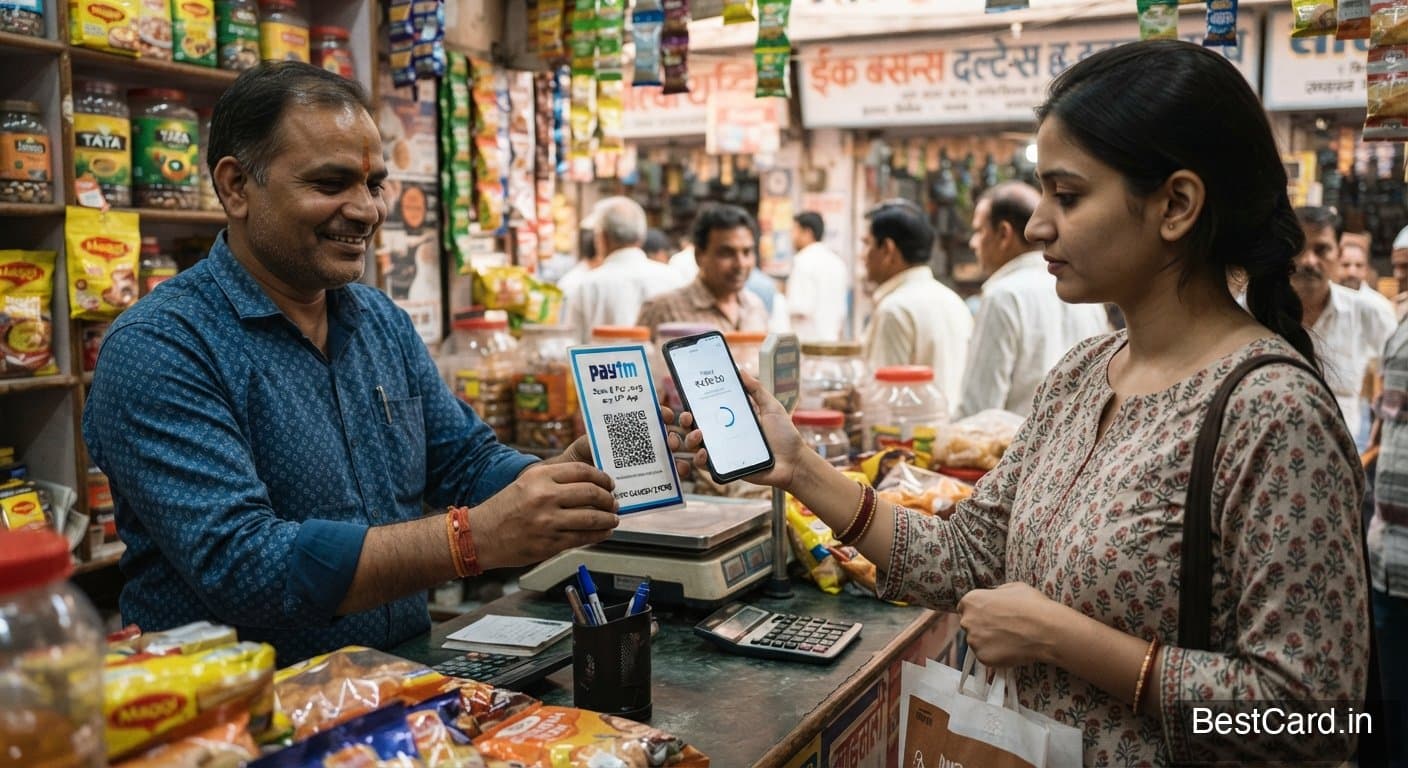
UPI has quietly split into two very different payment rails that both sit under the same QR code and the same app icon: UPI Lite, a wallet-style feature built for small, fast, low-friction payments, and RuPay credit cards linked to UPI, which let you pay by scanning a QR code while spending on credit instead of your bank balance. They solve different problems, and using the wrong one for the wrong transaction either wastes a feature or costs you money you didn't need to spend.
What UPI Lite actually is
UPI Lite is a low-value, on-device wallet within your UPI app. You load it up from your linked bank account — up to ₹2,000 per transaction and a total balance cap set by NPCI — and payments from that balance skip the full UPI authentication flow (no PIN needed under the transaction limit) and can even go through when connectivity is patchy, because the transaction gets queued and settled once the network catches up. It's designed for the transactions that don't need a paper trail fuss: the ₹40 tea stall, the ₹150 auto fare, the ₹300 grocery top-up.
The tradeoff is that UPI Lite draws directly from money you already have. It's not credit, it doesn't earn rewards, and it doesn't build any kind of credit history. It's a faster, lower-friction version of a normal UPI debit payment — nothing more, nothing less.
What paying with a RuPay credit card on UPI actually is
Since RuPay credit cards were allowed onto the UPI network, you can link an eligible RuPay card in your UPI app and pay any UPI QR code — the same street vendor, the same grocery store — but the money comes from your credit line instead of your bank account. You get your card's full interest-free period on that spend, you earn whatever reward rate the card offers on UPI transactions (some cards now specifically reward or specifically exclude UPI spend, so it's worth checking your card's terms), and the transaction still shows up on your monthly statement like any other card purchase.
This is meaningfully different from UPI Lite in almost every respect: it's credit, not your own money; it requires your card PIN for authentication above small thresholds; and it depends on network connectivity working properly, since there's no offline queuing involved. Our RuPay credit cards on UPI guide and linking credit cards to UPI cover the setup mechanics in more depth if you haven't linked a card yet.
When UPI Lite is the better choice
UPI Lite wins for genuinely small, high-frequency spends where you'd rather not touch your credit line at all — daily commute, canteen food, small cash-replacement payments where the amount is trivial enough that earning reward points on it isn't worth thinking about. It also wins in patchy-connectivity situations: a local train platform, a basement parking payment counter, anywhere your signal drops for a few seconds. And for anyone consciously trying to spend only what they have — no credit temptation at all — UPI Lite is a genuinely better daily habit than defaulting to a card for every ₹50 transaction.
When the RuPay credit card is the better choice
Once a transaction crosses into "worth tracking for rewards" territory — anything from a few hundred rupees upward that you'd normally put on a card anyway — paying via UPI on a RuPay card usually makes more sense, especially if your card earns cashback or points on UPI spend specifically. It also matters when the amount exceeds UPI Lite's per-transaction cap, since Lite simply can't process it. And if you're trying to build a spending history that eventually improves your credit limit or supports a future card application, routing spend through a credit card — even small UPI spend — contributes to that in a way a debit-linked wallet never will.
The catch: if you're someone who tends to forget statement due dates, moving daily small spends onto a credit card multiplies the number of transactions you need to track and reconcile at statement time, even though they were all trivial individually. If that's a real risk for you, keeping small daily spends on UPI Lite and reserving the card for larger, more deliberate purchases is the safer default.
A simple way to decide
Under roughly ₹200-300 and genuinely routine — use UPI Lite. Larger, occasional, or reward-worth-chasing — use the RuPay card via UPI. If you're deciding which card to actually link for this in the first place, our guide to credit cards that reward UPI spends and best credit cards for UPI payments narrow down the options that make routing spend through UPI worthwhile rather than neutral.
Neither replaces the other completely — most people end up running both side by side, UPI Lite for the small stuff, a linked card for everything that's worth the interest-free float and the rewards. Treating them as competitors misses the point; they're built for opposite ends of the same spending pattern.